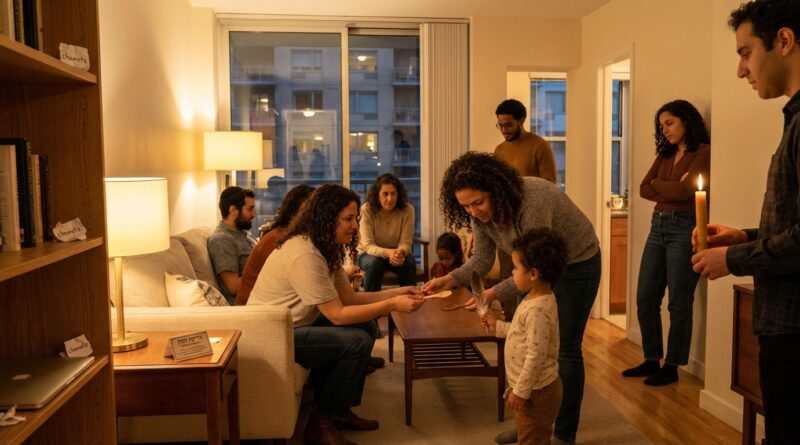
Bedikat Chametz Tonight: The Hidden Pre‑Passover Ritual That Can Turn Your Whole Home Into A Jewish Moment
You already have enough on your plate tonight. There are the last grocery runs, the group chat questions, the school emails, the seder logistics, and that vague feeling that you are forgetting something important. Then someone mentions Bedikat Chametz, the search for chametz on the night before Passover, and it can sound like one more religious box to tick. That is exactly why this moment gets missed. But tonight does not have to feel like a technical inspection of couch cushions. It can be the simplest Jewish ritual of the week, maybe of the whole season. You turn off the distractions, say a blessing, pick up a flashlight, and search your own space for the bits of bread and crumbs that do not belong in Passover. That is it. In a house, apartment, dorm room, or senior residence, Bedikat Chametz can turn your home into a Jewish moment right now, not just tomorrow night at the seder.
⚡ In a Hurry? Key Takeaways
- Tonight, 13 Nisan, you do Bedikat Chametz after dark by checking your home for chametz, usually with a flashlight, and setting aside what you find for disposal the next morning.
- Keep it simple. Pick the spaces where food may have gone, say the blessing if you use one, involve whoever is home, and make it feel shared instead of stressful.
- If you live alone, are traveling, feel overwhelmed, or are in a small space, this still counts. The value is not doing it perfectly. It is marking Jewish time in your real life.
Bedikat Chametz 2026 what to do tonight
The plain answer is this. After dark on the night of 13 Nisan, you search your home for chametz, meaning leavened food products and the crumbs or pieces that may still be around. In 2026, that means tonight is the time to do it.
You do not need a giant house, a formal hosting plan, or a perfect pre-Passover cleaning system. If you live in a studio, check the places where you eat, store food, or toss snacks. If you share space with roommates or family, search the areas that are yours or do it together. If you are helping a parent or grandparent in senior housing, the same ritual works there too.
Traditionally, people do the search by candlelight. Many now use a flashlight because it is easier and safer. A phone flashlight works fine. A small flashlight is even better if you have one.
Why tonight matters more than people say
The seder gets all the attention because it is public, dramatic, and packed with symbols. Bedikat Chametz is quieter. It happens at home, with ordinary objects, in the middle of ordinary mess. That is exactly why it can hit harder.
This is one of the few Jewish rituals that really meets people where they are. Not in synagogue. Not at a ticketed event. Not at someone else’s carefully set table. In your actual home. Your kitchen counter. Your junk drawer. The back seat of your car if that is where the granola bars live.
If you have felt disconnected, priced out, too tired to socialize, or just emotionally fried, tonight offers a smaller doorway in. You are not preparing for Jewish life. You are doing Jewish life.
What you actually need
Not much.
- A flashlight, candle, or phone light
- A bag or napkin for any chametz you find
- A basic plan for which rooms or areas you will check
- Optional. Other people, if you want to make it communal
Some families also place a few small pieces of bread in visible but not too obvious spots before the search, so the ritual includes “finding” chametz. If that custom speaks to you, do it carefully so nothing gets lost. Wrap each piece well and count how many you hide.
How to do Bedikat Chametz without turning it into a project
1. Start after dark
That is the classic timing. You are marking the beginning of the evening as Jewish time, not just another night of errands and cleanup.
2. Say the blessing if that is part of your practice
Many people recite the traditional blessing before beginning the search. If you know it, use it. If you do not, this can still be a meaningful search. Some people also read the formula nullifying any chametz they may have missed, though that text is often said again more fully the next morning.
3. Search the places where chametz really may be
This is not a home inspection for strangers. It is a practical search. Check kitchen shelves, dining tables, backpacks, lunch boxes, car seats, couch corners, coat pockets, desk drawers, and kids’ rooms if snacks happen there. Be real about your life.
4. Set aside what you find
Put the remaining chametz you plan to dispose of in a bag. Traditionally, it is burned or otherwise gotten rid of the next morning before the deadline for owning or eating chametz. If your community has a safe burn, use that. If not, follow local guidance and your rabbi’s instructions on disposal.
5. End with intention, not perfection
If you missed a crumb, Passover is not ruined. The point is a serious search, done in good faith. Tonight is about attention. About clearing space. About making the shift.
How to make it feel like connection, not just compliance
This is where Bedikat Chametz can become more than a task.
For parents with kids
Give each child a flashlight. Let them be the “crumb detectives.” Keep it short. Ten or fifteen minutes is enough for small kids. End with one question, like, “What are we getting ready for?” or “What do we want our home to feel like tomorrow night?”
For young adults and roommates
Make it social without making it silly. Put on no music for ten minutes. Walk through the apartment together. If everyone is comfortable, say the blessing, then split up rooms. When you finish, have tea or a snack that is definitely not chametz if your kitchen is already Passover-ready.
For converts and interfaith families
This ritual can be especially grounding because it is concrete. You do not need to know every law or every melody. You are physically preparing a home for a Jewish holiday. That matters. If someone in the home is still learning, just say out loud what is happening. “Tonight we search for chametz before Passover begins.” That simple sentence does a lot of work.
For older adults or people in senior residences
Keep it manageable. Search the food drawer, the kitchenette, the side table, the handbag, and any place snacks tend to gather. If bending or reaching is hard, ask a family member, aide, or neighbor to help. The mitzvah is not about strain. It is about presence.
For people who are alone tonight
You are not left out of this ritual. Text a friend, “Doing Bedikat Chametz now.” Ask someone else to do the same from their own home. That tiny act can create a feeling of shared time across distance.
What if your home is not fully cleaned yet?
That is more normal than people admit.
Bedikat Chametz is not a prize you earn after finishing every other Passover task. It is part of the process. If your counters are still chaotic or the dining room is full of half-sorted holiday things, do the search anyway. Search the places that matter most. Keep going tomorrow.
Think of it like this. The ritual is not there to punish the unprepared. It is there to help you cross the threshold into the holiday.
What if you are not hosting a seder?
Then tonight may matter even more.
A lot of people feel like they are “really” doing Passover only if they host, travel to family, or attend a polished communal meal. That leaves out a lot of Jews. Students. Singles. Divorced parents on the off year. People caring for sick relatives. People who cannot afford tickets. People who do not feel safe going out. Bedikat Chametz is one of the rituals that says, clearly, your home counts too.
Even if tomorrow night you are at someone else’s table, tonight you can still mark your own space as part of the holiday.
A few common questions
Do I need a candle?
No. A candle is traditional, but a flashlight is common and easier to use. If there are kids around, pets around, oxygen equipment in the home, or any safety concern, use a flashlight.
Do I have to hide pieces of bread?
No. It is a widespread custom, not the core requirement. If hiding pieces adds stress, skip it.
Do I search the whole house?
You search places where chametz might realistically be. If there is a storage shelf no food has touched in years, that is not your starting point. Focus on lived-in food zones.
What about the car, stroller, or office bag?
If chametz goes there during the year, yes, it is worth checking. The family car can be a major chametz habitat.
What if I already cleaned thoroughly?
Then Bedikat Chametz is the final intentional check. It still has a purpose. It turns cleaning into ritual.
The hidden power of this ritual
Most Jewish rituals ask you to do something. Bedikat Chametz also asks you to notice something. What is left over. What got tucked away. What has been sitting there longer than you thought.
That can be spiritual without becoming abstract. You are looking for actual crumbs. But you are also practicing attention, and attention is one of the rarest things we have right now.
Tonight can be a small reset. Not a perfect one. Just a real one.
If you want to make it communal in five minutes
Try one of these:
- Text a sibling or friend a photo of your flashlight and say, “Starting Bedikat Chametz.”
- Ask grandparents to tell kids where they used to search when they were young.
- In a building with Jewish neighbors, set a loose time and do the search at the same hour in your separate apartments.
- Send one short note to a family chat after you finish. “Chametz searched. Ready for Pesach.”
That is enough to make the ritual feel shared.
At a Glance: Comparison
| Feature/Aspect | Details | Verdict |
|---|---|---|
| Best time | After dark on 13 Nisan, before Passover begins the next night | Do it tonight, not “whenever you get around to it” |
| How detailed it must be | Search food areas and realistic crumb zones, not every inch of your life | Serious and practical beats perfect and exhausting |
| Who it is for | Families, singles, roommates, seniors, travelers, people not hosting a seder | One of the most accessible home rituals in the Jewish calendar |
Conclusion
Today is 13 Nisan, the night of Bedikat Chametz on the Jewish calendar, and most Jews are thinking about big seders while skipping the one ritual that literally happens in every home, from studio apartments to senior residences. If you reframe tonight’s search for chametz as a bite-sized, shareable community practice instead of a technical obligation, it becomes much easier to enter. Stressed parents, young adults, converts, and interfaith families can all come away feeling, “I am participating in Jewish time right now,” even if they are not hosting a full seder. That matters. Especially for people who cannot afford programs, who feel unsafe going out, or who are simply worn down by heavy news and heavy schedules. So use a flashlight. Check the places where crumbs live. Say the blessing if that is your practice. Invite someone else in, or text a friend from afar. Tonight does not have to be huge to be holy.