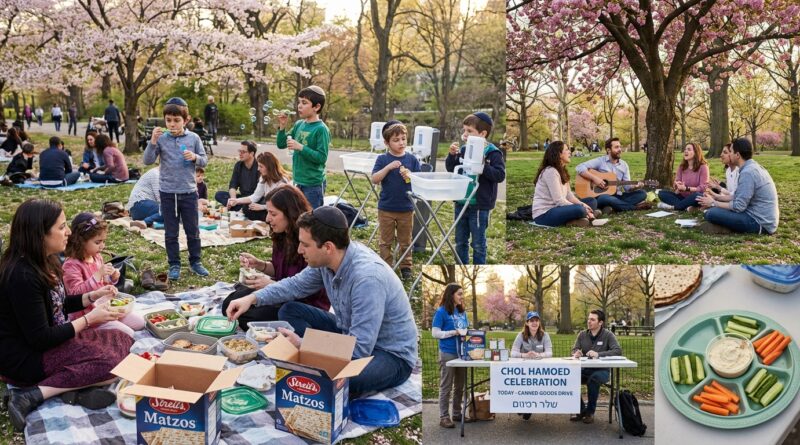
Chol HaMoed 2026: The Overlooked Middle Days Of Passover That Are Suddenly Packed With Pop-Up Jewish Life
If you hit the middle days of Passover and suddenly felt the energy drop, you are not imagining it. The first Seder gets all the attention. Then, almost immediately, people switch to travel mode, kid-management mode, or stress about getting back to work. That leaves Chol HaMoed feeling oddly blurry, especially if you want something Jewish to do that is relaxed, social, and not a huge production. The good news is that these days are often much fuller than they look from the outside. On Friday April 3, 2026, communities across North America and Israel are quietly running park meetups, family hikes, holiday concerts, volunteer drives, museum trips, outdoor prayer gatherings, and matzah-and-crafts afternoons. They just do not always show up in national headlines. If you know what to look for, Chol HaMoed can become the sweetest part of Passover. Less formal. More flexible. Much easier to say yes to with kids, cousins, friends, or neighbors.
⚡ In a Hurry? Key Takeaways
- Chol HaMoed Passover community events 2026 are happening right now, even if they are easy to miss.
- Look for low-pressure formats like park picnics, family outings, concerts, art sessions, and service projects, then build a simple two- or three-stop mini calendar.
- Choose events with clear logistics, accessibility, and security planning so the day feels joyful instead of stressful.
Why the middle days feel so easy to overlook
Chol HaMoed has a branding problem. It is neither the big ceremonial opening nor the clean finish line. It sits in the middle, where people are juggling half-holiday, half-regular-life reality.
For parents, that often means kids are home but structure is gone. For singles and couples, it can mean everyone seems busy with family plans. For smaller Jewish communities, it can feel like not quite enough people are around to make something happen.
But that middle space is exactly why these days can work so well. They are more casual. People are often off schedule. And there is more room for Jewish life that feels open rather than formal.
What is actually happening on Chol HaMoed in 2026
If you search only for major city events, you will miss the real story. A lot of Chol HaMoed programming happens through synagogues, JCCs, day schools, Chabad houses, local federations, neighborhood WhatsApp groups, and informal parent networks.
On Friday April 3, 2026, and across the remaining intermediate days, the patterns are pretty clear. Communities are putting together events that are practical, festive, and easier to join on short notice.
The most common types of events to look for
Family trips and outdoor days. Think zoo outings, hikes, botanical gardens, local farms, nature centers, and picnic meetups. These work because kids can move around and adults can actually talk.
Holiday concerts and live entertainment. Some communities book second-night concerts or Chol HaMoed music nights. Others bring in storytellers, magicians, or family performers.
Amusement park or museum buyouts. These sound fancy, but many are simply group-rate afternoons organized by schools or community centers. They are often one of the easiest ways to get a lot of people together.
Matzah-and-art afternoons. Crafts, baking for after the holiday, hands-on Judaica projects, and drop-in activity rooms are especially useful for younger families.
Outdoor prayer and learning. Pop-up minyanim, park-based tefillah, short Torah talks, and picnic-style study sessions can feel less intimidating than walking into a building where you know no one.
Service projects. Meal packing, visiting seniors, assembling care kits, and volunteer shifts give people a way to mark the holiday with purpose.
Why this matters more than it seems
This is not just about filling time between Seders. These events solve a real problem. They create low-barrier Jewish connection at the exact moment many people feel unstructured and disconnected.
That matters for overextended parents who need somewhere kid-friendly to go. It matters for people spending Passover away from extended family. And it matters in a year when many Jews are balancing celebration with worry, security concerns, and the emotional weight of staying connected to Jewish life worldwide.
Small, joyful gatherings count. They build memory. They build trust. They remind people they are part of something larger.
How to find Chol HaMoed Passover community events 2026 near you
The trick is to stop looking in only one place. These events are often scattered across channels.
Start with these sources
Synagogue calendars. Not just your own. Check Reform, Conservative, Orthodox, independent, and campus Hillel listings in your area.
JCC and federation event pages. These often have family-friendly and cross-community options.
Day schools and preschool newsletters. Even if you are not enrolled, public events are sometimes listed there first.
Local Facebook groups and WhatsApp chats. This is where informal meetups often appear.
Israel-focused and travel groups. If you are in Israel for the holiday, city municipality pages and local English-language groups can be especially useful.
Use better search terms
Instead of only searching “Passover events,” try combinations like:
“Chol HaMoed Passover community events 2026”
“Passover family event April 2026 [your city]”
“Chol Hamoed trip [your city] Jewish”
“Pesach concert 2026 [your area]”
A simple micro-calendar that actually works
You do not need a packed holiday schedule. In fact, too much planning can make these days feel harder. A better move is to build a tiny Chol HaMoed calendar with just three types of activity.
Option 1: The family version
Morning: Outdoor event, hike, zoo, or playground meetup.
Afternoon: Low-key food, crafts, or quiet recharge time.
Late afternoon or evening: Concert, community barbecue, or a short visit with friends.
Option 2: The friend-group version
Late morning: Coffee and park walk.
Afternoon: Museum, volunteer shift, or pop-up learning event.
Night: Music, board games, holiday meal leftovers, or an outdoor gathering.
Option 3: The small-community version
One anchor event. Pick one thing people can rally around, like a picnic or service project.
One easy add-on. Kids’ crafts, a short singalong, or a 20-minute teaching.
One sharing tool. A group text or flyer so everyone knows what is happening next.
This model works because it lowers the pressure. You are not trying to create a full festival overnight. You are making it easier for people to say yes.
What makes an event feel welcoming instead of exhausting
Not every event that sounds good on paper feels good in real life. The best Chol HaMoed events usually have a few things in common.
They are easy to join late
People are on holiday schedules. Someone will show up after nap time. Someone else will only make the second half. Good events leave room for that.
They work for mixed levels of observance
The sweet spot is often a clearly Jewish event without too many hidden rules. A family should know what to bring, what food setup to expect, and whether the event is very structured or just relaxed.
They explain logistics clearly
Parking. Cost. Stroller access. Bathroom access. Security check. Start and end time. These are small details until they are the reason someone stays home.
They give adults something too
Kids’ programming is great. But if adults can also talk, sing, learn, or simply breathe for a minute, the event is far more likely to feel worth repeating.
If your area has nothing obvious, try this tiny DIY version
Sometimes the problem is not that nothing exists. It is that nobody gathered it in one place. If you are in a smaller community, you can still make Chol HaMoed feel alive without planning a giant program.
The 48-hour pop-up formula
Pick a location. Park, synagogue social hall, school yard, or community room.
Pick one time block. Two hours is enough.
Pick one clear hook. Matzah pizza, holiday crafts, family picnic, local hike, or pack kits for a cause.
Invite widely. “Come for 20 minutes or stay the whole time” is magic language.
Keep it simple. A folding table, name tags, water, and a WhatsApp flyer go a long way.
You are not trying to impress anyone. You are giving people a place to land.
Safety and comfort still matter
This part cannot be ignored. Jewish events in 2026 often require a little more thought around security and comfort than they did years ago. That does not mean staying home. It means choosing well.
Look for events that communicate basic security expectations, especially in larger public spaces. Ask whether registration is required. Check whether there is staff on site. If you are bringing kids or older relatives, confirm seating, shade, restrooms, and food details.
A safe, calm event is much more likely to turn into a good memory.
The bigger opportunity hidden in the week
There is a useful lesson here for Jewish communities. People often say they want more open, welcoming Jewish life. Chol HaMoed is a real-world test of what that can look like.
Not everyone wants another formal dinner. Not everyone can commit to a class series. But many people will come to a hike, a concert, an art table, a volunteer project, or an outdoor gathering with friends.
That is why these middle days matter beyond Passover itself. They show that Jewish public life can be festival-style, flexible, and easy to enter.
At a Glance: Comparison
| Feature/Aspect | Details | Verdict |
|---|---|---|
| Best event style | Low-pressure options like park meetups, concerts, crafts, hikes, and service projects | Most people will find these easiest to join |
| How to find them | Check synagogue calendars, JCCs, federations, school newsletters, and local group chats | Better than relying on national coverage or one big event site |
| Best planning method | Use a micro-calendar with one outdoor activity, one social stop, and one backup plan | Keeps the holiday joyful without turning it into work |
Conclusion
If Chol HaMoed has felt vague or forgettable in past years, this is a good moment to change that. On Friday April 3, 2026, we are in the heart of Passover’s intermediate days, and communities across North America and Israel are quietly running family trips, second-night concerts, Chol HaMoed amusement park buyouts, matzah-and-art afternoons, outdoor prayer gatherings, and service projects that almost never make it into national coverage. Once you start noticing them, these middle days stop feeling like dead space and start feeling like a use-it-or-lose-it window for joyful Jewish connection. That can mean shared memory-making for families, relief for tired parents and caregivers, and real-time solidarity with Jews worldwide who are also balancing holiday, work, and security concerns. And for smaller communities, even a simple pop-up plan can turn this week into a model for a more open, festival-style Jewish public square that lasts well beyond Passover.