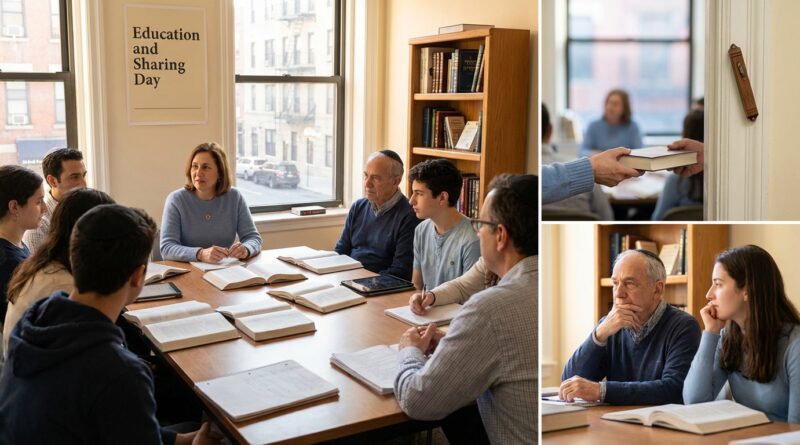
Education and Sharing Day 2026: The Overlooked Jewish-Inspired Holiday That’s Quietly Shaping Community Life Right Now
If your brain is already full of Passover shopping lists, school schedules and the latest security alerts, you are not alone. A lot of Jewish families are running on fumes right now. That is exactly why Education and Sharing Day 2026 matters more than it looks. Today, March 29, 2026, is a national observance with Jewish roots that almost nobody talks about outside a few official proclamations and local community circles. It is not a major festival. You do not need a ticket. You do not need to cook. You do not need to know all the words. At its core, this day points to something simple and steady: education is not just about grades, and community is not just about showing up when there is a crisis. It is about kindness, moral responsibility and teaching people how to live with one another. In a noisy season, that is a pretty welcome pause button.
⚡ In a Hurry? Key Takeaways
- Education and Sharing Day 2026 is being observed on March 29, 2026, and it reflects Jewish-inspired values of education, character and kindness.
- You can mark it today with one small act: teach something useful, thank a teacher, volunteer, or start a family conversation about responsibility.
- This is an open, low-pressure observance. It is rooted in Jewish tradition but welcoming to interfaith families, neighbors and anyone who wants a calmer, values-first way to connect.
What Education and Sharing Day actually is
Education and Sharing Day is a U.S. observance that highlights the role of education in building a healthier society. Not just academic education. Moral education too. Think character, empathy, service, responsibility and care for other people.
Its modern public identity is closely tied to the teachings of Rabbi Menachem Mendel Schneerson, the Lubavitcher Rebbe, whose emphasis on education, ethical living and the dignity of every person helped shape how the day is discussed in proclamations and community programs.
That is why people often describe it as Jewish-inspired. It grows out of Jewish ideas about chinuch, which means education in a full human sense. Not only what you know, but who you are becoming.
Why it feels especially relevant in 2026
This year, the timing lands in a tender spot. Many Jewish households are juggling holiday prep while also feeling worn down by public tension, antisemitism concerns and the general stress that has wrapped itself around communal life.
Education and Sharing Day 2026 Jewish conversations can offer something different. Less spectacle. More substance.
It gives families and communities a chance to ask a better question than, “What do we need to get done?” The better question is, “What kind of people are we trying to raise and be?”
The Jewish ideas underneath it
Chinuch is bigger than school
In Jewish life, education has never been just a classroom issue. It starts at the table, in the home, in the way adults speak to children, in how neighbors treat each other, and in what a community rewards or ignores.
That is part of what makes this observance so useful. It reminds people that teaching happens everywhere.
Kindness is not extra credit
Jewish tradition treats acts of care, fairness and responsibility as central, not optional. Education and Sharing Day lines up with that instinct. A community that teaches math but not decency is missing something important.
Every person can contribute
You do not need to be a rabbi, principal or elected official to take part. Parents, grandparents, teens, teachers, volunteers and even curious neighbors all fit here.
Why so many people miss it
Honestly, because it is quiet.
It does not come with the built-in visibility of Passover, Hanukkah or Purim. There are no standard decorations in store windows. No universal menu. No big consumer push. It often lives in proclamations, school programs, synagogue remarks and local service efforts rather than in pop culture.
But quiet does not mean unimportant. Sometimes it means overlooked.
How to observe Education and Sharing Day today without making your life harder
For families
Keep it simple. Over dinner, ask one question: “What is one value we want our home to teach?” Let everyone answer. Even the kid who is half paying attention.
You can also read a short story together, write thank-you notes to teachers, or choose one kind act as a family project for the week.
For interfaith families
This is one of the easier entry points on the calendar. It is Jewish-rooted without being hard to access. You do not need to know a full ritual structure to participate meaningfully. Talk about the values you share across traditions. That alone is a real observance.
For schools and community centers
Use the day to highlight character education, literacy, mentoring, anti-bullying work or service projects. If you are in a public setting, the focus can stay on universal civic values while still acknowledging the day’s Jewish inspiration respectfully and accurately.
For people feeling isolated
If you have been craving a connection to Jewish life but do not have the energy for a full event, this day is a gentle on-ramp. Call someone. Share a teaching. Donate a book. Offer help. Small counts.
What makes this different from a regular “be nice” message
A fair question. Plenty of observances tell people to care more and do better. What makes this one distinct is the framework behind it. Education and Sharing Day ties kindness to education and education to communal responsibility.
In other words, it is not just “be nice.” It is “build systems, homes and institutions that teach people how to live with conscience.”
That is a much stronger idea.
Where you may see it showing up right now
Depending on where you live, Education and Sharing Day 2026 may appear in mayoral statements, school district announcements, synagogue newsletters, Chabad programming, youth recognition ceremonies or local volunteer drives.
Some places will keep it formal. Others will make it practical. A reading event. A food drive. A classroom conversation about respect. A proclamation honoring educators and mentors.
Even if the language varies, the center is usually the same: society works better when people are taught to value one another.
Why this matters for Jewish community life
Jewish calendars can feel crowded with intensity. Beautiful intensity, yes. But still a lot. Big holidays. Heavy history. Security planning. Public scrutiny. Fundraising. Crisis response.
A day like this widens the picture.
It says Jewish public life is also about building good people, strong neighborhoods and habits of care. That matters, especially now.
It also creates a point of entry for people who might not walk into a synagogue program but would absolutely join a tutoring drive, a school event or a conversation about raising ethical kids.
At a Glance: Comparison
| Feature/Aspect | Details | Verdict |
|---|---|---|
| Purpose | Centers education, ethics, kindness and shared responsibility, with roots in Jewish teaching and broad public appeal. | A meaningful values-based observance. |
| Ease of participation | No special meal, costume, ticket or formal ritual required. You can mark it with one conversation or one act of service. | Very accessible, especially for busy families. |
| Community value | Creates a calmer, open doorway into Jewish life for interfaith families, isolated Jews and neighbors who want shared civic values. | High value, low pressure. |
Conclusion
Education and Sharing Day 2026 is easy to miss, which is exactly why it is worth noticing. On a day when many people are buried in Passover prep or distracted by grim headlines, this quieter observance offers a breather. It puts education, kindness and responsibility back at the center. It is rooted in Jewish tradition, but it is open enough for interfaith families, disconnected Jews and curious neighbors to join without feeling like outsiders. That makes it more than a line on a proclamation. It becomes a practical way to live Jewish values in public and at home. For a community site, that is a healthy reminder that the Jewish calendar is not only about major holidays and emergency responses. It is also about the quieter moments when moral leadership, good teaching and ordinary acts of care shape schools, neighborhoods and community life for the better.