Erev Seventh Day of Passover 2026: The Quiet Yizkor Evening Turning Into A Global Jewish Solidarity Ritual
If you are feeling oddly suspended tonight, you are not alone. The first Seders are behind you. The matzah is still on the counter. Work, school, and regular life are creeping back in. And yet Erev Seventh Day of Passover 2026 brings this heavier note, with Yizkor on the horizon and very little guidance beyond “go to shul” or log into a service. For a lot of people, that feels thin. Especially this year, when being visibly Jewish can feel both comforting and charged. The good news is you do not need to invent a whole new ritual. You can take the gathering that is already happening and give it shape. A simple 30-minute circle before or after Yizkor can turn a quiet holiday evening into something grounded, local, and connected to Jews far beyond your own synagogue. If you are searching for Erev seventh day of Passover 2026 Yizkor ideas, start small, keep it human, and make room for memory, worry, and solidarity in the same room.
⚡ In a Hurry? Key Takeaways
- You do not need a full program. A 30-minute pre- or post-Yizkor circle is enough to make Erev Seventh Day of Passover feel meaningful tonight.
- Use a simple format: one reading, one memory prompt, one prayer or song, and one action for Jewish solidarity.
- Keep it gentle and optional. Yizkor can bring up grief, anxiety, and raw feelings, so no one should be pushed to speak.
Why this night feels so strange, and why that matters
Passover has a built-in emotional whiplash. The opening is loud, full, structured. Then the middle days arrive and things loosen up. By the time you get to the eve of the seventh day, many people feel spiritually underdressed.
That is not a personal failure. It is just how the holiday works for many modern Jews. The family centerpiece has passed. The calendar still says chag. The heart is somewhere in between.
This year adds another layer. Communities are carrying grief, fear, defiance, and a strong need to be together without always knowing how. That makes Yizkor feel bigger than a memorial prayer. It can become a doorway into communal steadiness.
The simplest answer: build a micro-gathering around Yizkor
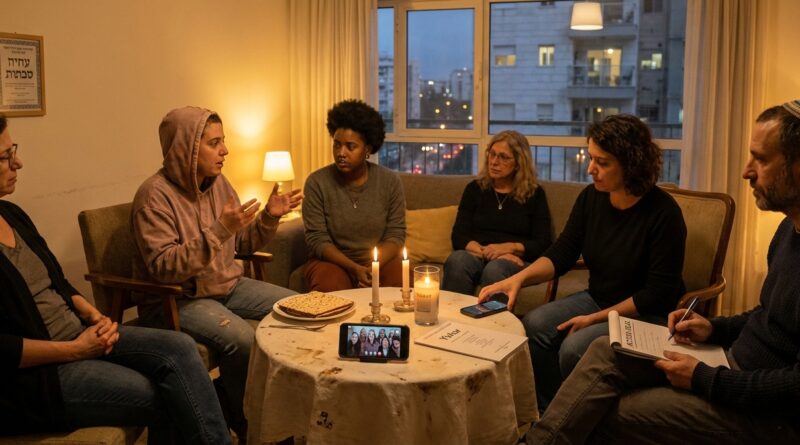
If you want practical Erev seventh day of Passover 2026 Yizkor ideas, here is the clearest one. Do not plan a second Seder. Do not wait for a rabbi to script the whole thing. Just gather 4 to 20 people for 30 minutes before or after the service.
This can happen:
- In a synagogue social hall
- In someone’s living room
- On Zoom right after the livestream ends
- Outside, if your community feels safer and more comfortable that way
The goal is not production value. The goal is to help people move from attendance to connection.
A ready-to-use 30-minute template
Option 1: Before Yizkor
This works well if people want to enter the service feeling held instead of rushed.
Minute 0 to 5: Arrive and set the tone
Welcome people. Say one simple sentence: “Tonight we are making a little more room for memory and for each other.”
Minute 5 to 10: Read one short text
Choose something brief. A Psalm. A paragraph about memory. A line from the Haggadah about moving from narrowness to openness. Keep it under two minutes.
Minute 10 to 20: One prompt, one minute each
Ask: “What is one person, one teaching, or one Jewish memory you are carrying into Yizkor tonight?”
Let people pass if they want.
Minute 20 to 25: Name the wider Jewish picture
Say a few words about Jews gathering tonight in many cities, campuses, homes, and online rooms. This is where the solidarity piece comes in. Not as a speech. Just as framing.
Minute 25 to 30: Close simply
End with a prayer for those we miss, for those under strain, and for Jewish communities everywhere. Then go into the service together.
Option 2: After Yizkor
This is often even better. Yizkor can leave people quiet, cracked open, or a little dazed. A short circle after the service gives that feeling somewhere to land.
Minute 0 to 5: Reset gently
Offer water, tea, or just a breath. Do not rush into talking.
Minute 5 to 15: Memory round
Prompt: “Whose name or face was with you during Yizkor?”
Minute 15 to 25: Solidarity round
Prompt: “What helps you feel less alone as a Jew right now?”
Minute 25 to 30: One next step
Invite everyone to do one small act this week in someone’s memory. Call a relative. Attend minyan. Give tzedakah. Check on a student. Show up for another Jew.
What to say if you are leading and not sure you are “qualified”
You do not need clergy language. You need calm, warm, ordinary language. Something like this works:
“Thank you for staying a few minutes.”
“Yizkor can leave people with a lot of feeling and not much structure.”
“Tonight we are taking half an hour to remember, to listen, and to remind each other that none of us is carrying this alone.”
That is enough. Really.
Good prompts that do not feel forced
Avoid prompts that sound like a retreat worksheet. Choose ones people can answer in one or two sentences.
- Who are you remembering tonight?
- What Jewish value did that person teach you, even by accident?
- What part of Passover feels different to you this year?
- Where have you seen Jewish courage lately?
- What would help our community feel more like a community this week?
How to make it feel like solidarity, not just another discussion group
This part matters. People are hungry for visible Jewish belonging right now. But they are also tired. They do not want a giant campaign deck. They want something real.
So keep solidarity concrete:
- Name one community, campus, or family under strain in your circle of concern
- Say a prayer for Jews gathering in other cities and countries tonight
- Invite one practical follow-up, like a meal train, student care package, or donation
- Take a group photo only if people want it, and only if sharing it publicly feels safe
The ritual becomes more powerful when it says, quietly, “We see each other, and we are still here.”
For online communities, this can still work
If your synagogue is streaming Yizkor or your family is spread across time zones, do the same thing on video. In some ways, online is easier. No room booking. No cleanup. No awkward standing around.
Best setup for Zoom or another video platform
- Keep cameras optional
- Use one host and one timekeeper
- Put the prompts in the chat
- Mute by default, but invite people to unmute when sharing
- End on time
If turnout is small, that is not failure. Six people can make a deeply meaningful circle. Two can, too.
What not to do
Sometimes the easiest way to improve a ritual is to remove the parts that make people tense.
- Do not make everyone speak
- Do not turn it into a debate about politics
- Do not over-program with handouts, slides, and five songs
- Do not force cheerfulness onto a memorial moment
- Do not assume everyone relates to Yizkor the same way
Keep it light on logistics and heavy on permission.
If you are on a campus or in a city with lots of young adults
This is where the idea may travel fastest. Students and young professionals often want a Jewish space that is real but not overproduced. A post-service tea, rooftop circle, lobby hangout, or dorm lounge gathering can hit exactly the right note.
The key is not to market it as an “event.” Market it as a place to land.
Try wording like: “After Yizkor, we are staying for 30 minutes to remember people we love and to hold each other up. Come as you are.”
A sample script you can copy tonight
Welcome: “Thanks for being here. Erev Seventh Day of Passover can feel quiet and in-between. Tonight we are using that quiet on purpose.”
Framing: “Yizkor asks us to remember people we miss. This year many of us are also carrying concern for the wider Jewish community. We are making room for both.”
Prompt 1: “Say the name of someone you are remembering, or share one word that describes what they gave you.”
Prompt 2: “What helps you stay connected to Jewish life when things feel heavy?”
Closing: “May the memories we carry be a blessing. May those who feel alone feel accompanied. May our people find strength, safety, and peace.”
At a Glance: Comparison
| Feature/Aspect | Details | Verdict |
|---|---|---|
| Pre-Yizkor circle | Helps people enter the service with focus, intention, and a sense of being accompanied. | Best for communities that want a gentle on-ramp. |
| Post-Yizkor circle | Gives people a place to put feelings that surface during memorial prayers. | Best all-around choice for depth and emotional usefulness. |
| Online version | Easy to organize, good for distant family and small groups, but needs clear facilitation. | Strong option if in-person logistics or safety are a concern. |
Conclusion
Tonight does not need a big production to matter. Today, Tuesday April 7, 2026, is the bridge into the seventh day of Passover in most communities, with many synagogues holding a special Yizkor service online or in person. That means Jews everywhere are already gathering or logging on. They are ready for one extra layer of meaning that does not require more planning, only better framing. A ready-to-use 30-minute pre- or post-Yizkor circle fits the moment because it meets people where they already are. It also matches what many Jews are craving right now: small, visible, heartfelt ways to stand together without waiting for a huge institution to set the table. If you have been looking for Erev seventh day of Passover 2026 Yizkor ideas, this is your permission slip. Keep it simple. Start tonight. Let an in-between holiday evening become a real act of memory and global Jewish solidarity.