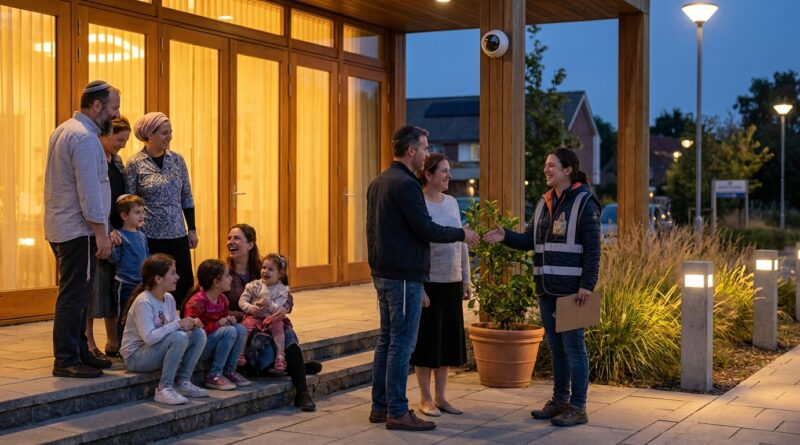
From Fear To Togetherness: How Synagogues Are Quietly Re‑Inventing Security As Community Care In 2026
After the March 12 attack at Temple Israel in Michigan, a lot of Jews are asking the same hard question in private. Is it still safe to show up. For Shabbat. For Hebrew school. For a lecture, a tot program, or minyan on a rainy Tuesday night. That fear is real, and it gets worse when the only security talk you hear sounds like two bad choices. Either pretend everything is fine, or turn your synagogue into a bunker. But a quieter, more hopeful model is taking shape in 2026. Some synagogues and JCCs are treating security less like a secret system run by a few experts, and more like community care practiced by everyone. That means greeters who actually know faces, staff trained to notice changes, parents who understand pickup rules, neighbors who check in, and leaders who explain plans in plain language. The goal is not to live in fear. It is to make people safer by making them less alone.
⚡ In a Hurry? Key Takeaways
- Strong synagogue security in 2026 works best when it combines trained protection with real community connection, not just locks and cameras.
- This week, ask your synagogue or JCC who welcomes people at the door, how concerns are shared, and how members can help without becoming amateur cops.
- A safer community is one where people know each other’s names, notice when something feels off, and have a clear, calm plan for what to do next.
Why the old security conversation has felt so unsatisfying
Most people are not asking for a 40-page emergency manual. They are asking something much simpler. If I go this Shabbat, will someone be paying attention. If I drop off my kid, will there be a plan. If something feels wrong, will I know who to tell.
That gap matters. Generic advice like “stay vigilant” is not very useful when you are carrying a diaper bag, trying to find a siddur, and making sure your child gets to class on time. On the other hand, highly technical security talk can make regular members feel shut out.
The communities making progress are starting in a more human place. They explain what is visible. They make roles clear. They build habits that help people feel both welcome and protected.
What “security as community care” actually looks like
This phrase can sound soft until you see how practical it is. It does not mean replacing professionals with goodwill. It means adding a layer of human awareness that technology alone cannot provide.
People at the door who do more than check a list
The best greeters are not there only to say hello. They are trained to welcome, observe, and communicate. They know the difference between a first-time visitor who looks nervous and someone trying to avoid basic questions. They know when to call over clergy, staff, or security support.
Clear, normal ways to report a concern
In healthier communities, members know exactly how to raise a concern. There is a staff contact. There is a volunteer lead. There is a process for “this feels off” that does not require panic and does not shame people for speaking up.
Familiar faces, not anonymous crowds
One of the simplest safety upgrades is also one of the oldest. People know each other. In a strong minyan or synagogue community, someone notices when a regular does not show up. Someone notices when a child seems lost. Someone notices when a visitor needs help and when a situation needs a second look.
Visible plans that do not feel theatrical
Members do not need every operational detail. But they do need confidence that a plan exists. Where do people enter. Who watches the preschool wing. How are doors managed during services. What happens if there is a medical emergency, a threatening call, or a person causing concern in the lobby.
When leaders explain these basics plainly, fear usually comes down. Mystery tends to make anxiety worse.
What to do in your own community this Shabbat
If you are a member, parent, rabbi, board volunteer, or just someone trying to decide whether to go, start small and concrete.
1. Ask three plain-language questions
You do not need to ask for classified information. Ask:
- Who is the point person if I have a safety concern when I arrive?
- How are visitors welcomed and screened?
- What can members do to help without getting in the way?
If leadership can answer those calmly and clearly, that is a good sign. If nobody knows, that is not a reason to panic. It is a reason to start the conversation.
2. Find out whether there is a greeter system
A greeter table sounds ordinary because it is. That is part of its strength. It creates a human checkpoint that feels warm instead of hostile. It also helps members learn names, spot newcomers who need support, and reduce the chaos that bad actors often rely on.
3. Pair security with hospitality
The communities getting this right are not saying, “Safety first, welcome later.” They are doing both at once. Someone greets. Someone helps late arrivals. Someone walks a new family to the right room. Someone quietly alerts staff if a situation needs attention.
4. Make sure children’s areas have their own plan
Preschools, religious schools, and youth programs need tighter routines than the sanctuary. Pickup procedures, locked interior doors, sign-in systems, and adult identification rules are not overreactions. They are basic care.
5. Stay after services for ten extra minutes
This sounds almost too simple, but it matters. Community is not built during the announcements. It is built while people talk over cookies, introduce a new family, ask after an elder, and learn who belongs where. A congregation where people know one another is easier to protect and harder to isolate.
What clergy and lay leaders can say without causing panic
Many leaders avoid the topic because they do not want to scare people. That instinct is understandable. But silence often leaves members to fill in the blanks with their own worst fears.
Better language sounds like this:
- “We want this to be a warm, open community, and we take safety seriously.”
- “You may notice a few changes at the door. They are there to help us care for one another.”
- “If something concerns you, please tell this person right away.”
- “Security is not only the job of guards or staff. It is also the job of a community that pays attention and looks out for each other.”
That framing helps people understand that synagogue security community response 2026 is not about fear theater. It is about shared responsibility.
What strong communities are doing differently in 2026
Across North America, the smarter shift is not just toward more equipment. It is toward better coordination.
They train ushers, teachers, and office staff together
Security is weakest when only one person knows the plan. When front desk staff, clergy, teachers, and volunteers all understand their role, the whole building works better.
They build ties with nearby neighbors
Some synagogues now make a point of knowing the shop owner next door, the apartment manager across the street, or the church and mosque nearby. That matters more than it may seem. Safety often begins before someone reaches the front door.
They practice communication, not just lockdowns
Many incidents do not begin with an active attack. They begin with confusion. A threatening email. A person behaving strangely. A domestic dispute spilling into synagogue space. Communities are getting better results when they practice who calls whom and how information moves quickly.
They understand that isolated members are more vulnerable
A person who attends alone, knows no one, and slips out right after services may not be in immediate physical danger. But isolation weakens communal resilience. Stronger synagogues are making sure newcomers, seniors, and less-connected members are woven into actual relationships.
If you do not currently belong anywhere
This is where many readers are. You may be unaffiliated. You may have drifted away. You may want Jewish life without feeling like you are stepping into a target.
Start by looking for signs of healthy community, not only signs of hard security. Does someone answer your email personally. Does the synagogue explain arrival procedures clearly. Is there a small group, class, or minyan where people actually know one another. Can you attend once and have at least one person remember your name the next time.
That is not a small thing. It is one of the strongest forms of care a Jewish community can offer right now.
What not to do
There are a few traps communities fall into when fear is high.
Do not confuse secrecy with preparedness
Some details should stay limited. Of course. But if members are told nothing, they cannot participate well and they may assume the worst.
Do not turn every member into a suspicious amateur
“See something, say something” is useful only when it is paired with training, judgment, and respect. Communities need alertness, not profiling or paranoia.
Do not let security erase Jewish life
If every improvement makes the place feel colder, smaller, and less human, something has gone wrong. Safety should protect the community’s mission, not replace it.
A simple roadmap for this month
If your synagogue or JCC wants to move from vague worry to practical action, here is a workable sequence.
- Identify one security lead and one hospitality lead.
- Review entry, greeting, and visitor procedures.
- Set up one obvious way for members to report concerns.
- Train greeters, ushers, teachers, and office staff together.
- Create a phone tree or check-in habit for vulnerable or isolated members.
- Explain the basics to the community in plain language.
- Repeat, adjust, and keep it human.
None of that requires a huge budget to begin. It requires attention, honesty, and follow-through.
At a Glance: Comparison
| Feature/Aspect | Details | Verdict |
|---|---|---|
| Fortress model | Heavy focus on barriers, secrecy, and visible control, with little member communication or relationship building. | Can help physically, but often raises anxiety and weakens trust if used alone. |
| Community care model | Greeters, trained staff, clear reporting, child safety routines, and members who know one another. | Best overall approach for most synagogues and JCCs in 2026. |
| Technology-only approach | Cameras, keycards, apps, and alerts without much human follow-up or clear process. | Useful tools, but not enough on their own. People still make the difference. |
Conclusion
After a high-profile attack, it is normal to want certainty. No synagogue, JCC, or school can promise that. What they can do is something more real. They can make sure people are not walking into Jewish life alone and uninformed. In the wake of the March 12 Temple Israel attack in Michigan, Jews across North America are looking for something steadier than generic safety advice or hot political takes. They want to know what to actually do this Shabbat and this month. The most useful answer is not only more hardware or more fear. It is a community where plans are clear, roles are shared, and people notice each other. If your congregation can build that, even one small step at a time, anxiety starts to turn into action. And action, done together, is often where courage returns.