Passover 2026: How Community Seders Are Quietly Becoming the New Front Door to Jewish Life
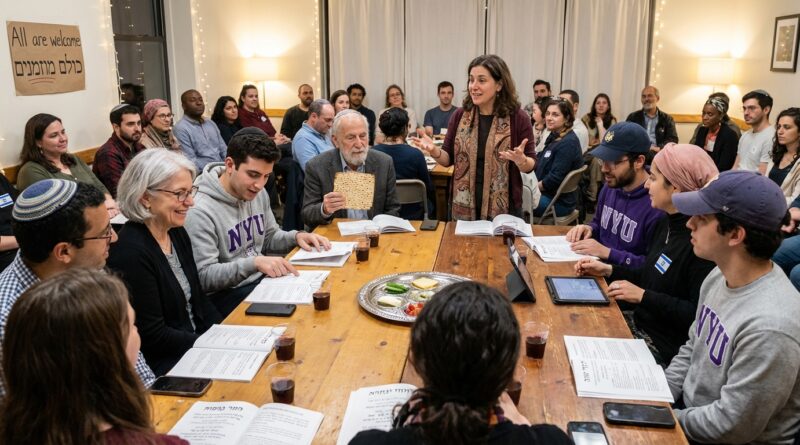
If you are searching “community Passover seder near me 2026” with one eye on the clock and the other on your outfit, you are not the only one. A lot of people walking into seders tonight feel rusty, anxious, underdressed, overdressed, not Jewish enough, too Jewish to ask basic questions, or unsure whether bringing a non-Jewish partner or friend will make things awkward. That nervous feeling is real. It is also exactly why community seders matter so much right now. Quietly, they have become the new front door to Jewish life. Not everyone starts with synagogue membership or a family table anymore. Many people start with a campus Hillel dinner, a Chabad rabbi texting “come as you are,” a senior-center second-night meal, a humanistic reading circle, or a social-justice seder trying to hold grief, war, freedom, and hope in the same room. The point is not perfect Hebrew. The point is showing up.
⚡ In a Hurry? Key Takeaways
- Community seders are now one of the easiest and most welcoming ways to step into Jewish life in 2026, even if you know very little.
- If you want to go, send a simple message now: “Hi, I’m interested in joining the seder tonight. Is there still space, and is it beginner-friendly?”
- You do not need fluent Hebrew, the perfect outfit, or a polished Jewish backstory to belong at most public seders. You just need respect, curiosity, and a willingness to participate.
Why community seders matter more than people realize
For a long time, many people pictured Passover as a private family event. Grandma’s brisket. The same jokes. The same stains on the same Haggadah. That still exists, of course.
But for a growing number of Jews and Jewish-adjacent people, the family table is not where Passover starts. Maybe they moved. Maybe they married into a Jewish family. Maybe they are in college. Maybe their family is estranged, far away, secular, or simply not hosting this year. Maybe they are converting. Maybe they are just curious.
That is where the community seder comes in. It fills the gap between “I want in” and “I already belong.”
And in 2026, that gap matters. Jewish communities are carrying fear, political stress, grief from war, campus tension, rising loneliness, and the basic wear and tear of trying to stay connected in a scattered world. A public seder gives people an actual table to sit at. Sometimes that is more powerful than a hundred explainers.
What a community seder looks like in real life
The phrase sounds formal. In practice, it can mean a lot of different things.
Campus seders
These are often the softest landing spot for students who are homesick, spiritually curious, or trying Jewish life for the first time on their own terms. You will usually find lots of explaining, lots of name tags, and someone making sure nobody eats alone.
Chabad seders
These are often designed for maximum welcome. The vibe can be lively, warm, and low-pressure, even if the ritual itself is traditional. Many Chabad houses go out of their way to say, plainly, that no one should spend Passover alone.
Synagogue and JCC seders
These can range from formal to family-friendly. Some are geared toward young professionals. Others are built for interfaith families, elders, or parents with children who need to wiggle during the plagues.
Humanistic or secular seders
These often focus less on God-language and more on history, ethics, memory, and liberation. They can be a strong fit for people who want meaning without heavy ritual expectations.
Social-justice seders
These connect the Exodus story to current events. Expect readings about refugees, war, climate, labor, or civil rights. For some people, this is the first seder that feels emotionally honest.
Senior-center and assisted-living seders
These are often overlooked, but they are a core part of communal life. They matter deeply for elders who cannot host anymore, who live alone, or who need a second-night gathering that is accessible and familiar.
Improvised seders in hard places
In Israel, and in Jewish communities under stress elsewhere, seders have also been held in shelters, on military bases, in hotels for displaced families, and in makeshift community rooms. That reality changes the meaning of “Let all who are hungry come and eat.” It makes the invitation feel less symbolic and more urgent.
The quiet shift: seders are becoming the new front door
Here is the bigger story. A lot of people do not enter Jewish life through doctrine or membership forms. They enter through hospitality.
Passover is especially good at this because the ritual itself assumes beginners are in the room. The whole night is built around questions. Children ask. Adults ask. People interrupt. Someone always flips pages too fast. Someone else says, “Wait, what are we eating now?” It is one of the few Jewish rituals where not knowing can actually fit the script.
That makes the community seder a rare thing. It is structured, but not closed. Ancient, but usually explained. Serious, but also full of food, singing, side conversations, and spilled grape juice.
For many people, it is the first Jewish space where they do not feel like they have to fake fluency.
If you feel underprepared, here is what you actually need to know
Not much. Really.
You do not need to know Hebrew
Most public seders expect mixed experience levels. Many have transliteration and English. You can follow along when you can and listen when you cannot.
You do not need to understand every symbol
You will pick things up as you go. Bitter herbs mean bitterness. Matzah is the flat bread of leaving in a hurry. Four cups of wine or grape juice show up over the evening. That is enough to start.
You do not need to perform Jewish confidence
If someone says “turn to page 19” and you are lost, look at the person next to you and whisper, “Can you help me find where we are?” This is normal seder behavior.
You should check a few practical things
Ask whether you need to RSVP. Ask about cost. Ask if it is family-friendly, wheelchair accessible, or okay for non-Jewish guests. Ask if food is provided and whether there are allergy accommodations.
If you are still looking, Last-Minute Passover Events This Week: How To Find A Seder, Class, Or Cleanup Crew Before You Give Up is a good place to start when you are not already plugged into a synagogue, campus group, or Jewish group chat.
Simple scripts for showing up without overthinking it
Sometimes the hardest part is the message you send or the words you say at the door. Here are a few low-stress scripts.
If you are texting or emailing an organizer
“Hi, I’m looking for a community Passover seder near me for 2026 and saw your event. I’ve never been to your group before. Is there still space, and would it be okay if I came on my own?”
If you are in an interfaith relationship
“Hi, my partner is Jewish and I’m not, but we’d love to attend if your seder welcomes interfaith families or guests.”
If you are Jewish but feel disconnected
“I grew up with some Passover traditions but I’m out of practice. I’d really like somewhere welcoming and beginner-friendly.”
If you are a student far from home
“I’m a student staying on campus for Passover and looking for a place to join tonight. Is your seder open to students who don’t know anyone yet?”
If you are at the table and feel awkward
“Hi, I’m glad to be here. I’m a little rusty on all this.”
That one line does a lot of work. It tells kind people how to help you. It also saves you from pretending.
What to bring, and what not to worry about
Bring
A respectful attitude. A small host gift if the event is in a home and that feels appropriate. An open mind. Maybe a sweater. Seder rooms get weirdly hot or cold.
Do not worry too much about
Perfect pronunciation. Knowing when to drink. Singing every song. Having a deeply thought-out answer to “What does freedom mean to you?” on the spot.
Dress code
If you are unsure, “neat casual” is usually safe. For synagogue or hotel seders, move one notch dressier. If the organizer posts photos from past years, that can help.
The real etiquette that matters
People often focus on ritual mistakes. Socially, the bigger things are simpler.
Arrive on time if you can. Public seders often run long, and late arrivals can feel disruptive.
Let the host or leader set the pace. Some seders are fast and meal-focused. Others really do read a lot.
Put your phone away unless you know the setting is casual about it.
Do not joke about “real Jews” versus “bad Jews,” even lightly. A lot of people at public seders are carrying insecurity already.
If you brought a guest who is not Jewish, give them the basic reassurance beforehand: nobody expects them to know what is going on.
Why this matters for Jews globally, not just locally
This year, Passover lands in a moment when Jewish life feels both fragile and stubbornly alive. In some places, people are gathering under visible security. In others, students are searching for safe rooms and familiar faces. In Israel, some families are holding seders with loved ones absent, displaced, or serving nearby. Elsewhere, older adults are leaning on second-night community programs because that is what keeps holiday loneliness from swallowing the week.
When a person walks into a seder tonight, they are not just attending a meal. They are helping keep a chain going. They are saying Jewish life is still public, shared, and worth showing up for, even when the world feels sharp-edged.
How to choose the right kind of seder for you
If you have options, do not ask which seder is “best.” Ask which one lowers your barrier to entry.
If you want lots of explanation
Look for campus, beginner, family, or interfaith-friendly seders.
If you want traditional ritual with lots of warmth
Try Chabad or an Orthodox outreach setting.
If you want discussion and contemporary themes
Look for synagogue social-action committees, progressive groups, or independent community organizers.
If you want a lower-pressure cultural experience
Humanistic, secular, or arts-based seders may fit better.
If mobility or timing is your issue
Check senior centers, local JCCs, assisted living programs, and daytime second-night options.
At a Glance: Comparison
| Feature/Aspect | Details | Verdict |
|---|---|---|
| Best entry point for beginners | Campus, JCC, interfaith-friendly, and Chabad seders often explain the flow and welcome newcomers openly. | Strong choice if you feel nervous or out of practice. |
| Level of ritual and Hebrew | Traditional seders may use more Hebrew and a longer structure. Secular or humanistic seders may use more English and discussion. | Pick the style that feels welcoming, not the one you think you “should” attend. |
| Emotional fit in 2026 | Some seders focus on comfort and tradition. Others directly address war, displacement, climate, or justice. | There is no single correct mood for Passover this year. Choose the room where you can be honest. |
Conclusion
If you have been hesitating, this is your nudge. Community seders are not a backup plan for people who failed to get invited somewhere better. For many people in 2026, they are the real center of Jewish communal life. They catch the student far from home, the widow at the senior center, the interfaith couple testing the waters, the Israeli family making ritual under pressure, the curious friend who wants to understand, and the Jew who thought they had drifted too far to come back. You do not need the perfect Hebrew accent or a polished answer about identity. You need a seat, a little courage, and a table willing to make room. That is why these seders matter right now. They turn readers into participants. They make Jewish life feel reachable tonight, not just theoretical. And sometimes, that first shared cup of grape juice is the beginning of finding your people.