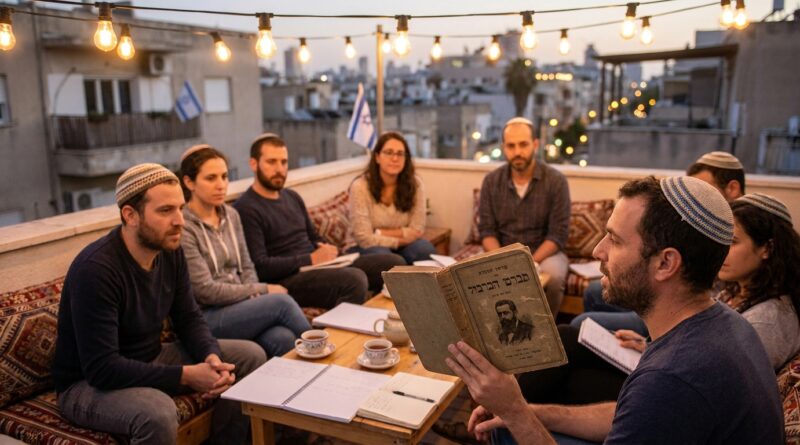
Herzl Day 2026: The Quiet Zionist Anniversary That Could Recenter Jewish Community This Week
If you are feeling emotionally wrung out by the Jewish calendar right now, you are not imagining it. The stretch from Yom HaShoah to Yom HaZikaron to Yom HaAtzmaut can feel like spiritual whiplash. First grief. Then remembrance. Then celebration. Then, somehow, back to work, school pickup, and unread texts. For a lot of people, that quick turn leaves a gap. There is not much room to ask the quieter question: what kind of Jewish future are we actually trying to build? That is why Herzl Day 2026 matters more than its low profile suggests. It begins Monday night and continues Tuesday, April 27, 2026. It is an official Israeli national day, but many diaspora communities barely notice it. That is exactly what makes it useful. Herzl Day can be the missing pause in the season. Not another huge production. Just a simple, local chance to gather, think, and talk about purpose.
⚡ In a Hurry? Key Takeaways
- Herzl Day 2026 is Monday night through Tuesday, April 27, and it can fill the emotional gap between memorial days and “normal life.”
- The easiest way to mark it is with a small “vision circle” at home, in a synagogue, school, cafe, or community room.
- Because it is low-pressure and not widely claimed by any one format, it is a safer, more welcoming entry point for burnt-out communities.
Why Herzl Day hits differently this year
Most Jewish communal events in this season ask people to show up for mourning, vigilance, solidarity, or celebration. Those all matter. But they do not always leave much room for imagination.
Herzl Day is different. It centers on Theodor Herzl, the journalist and political thinker who pushed modern Zionism from vague longing into public argument and organized action. You do not have to agree with every part of Herzl’s worldview to see the opening here. His core habit was asking a future-facing question: what should Jewish collective life look like, and what do we need to build now to make it real?
That makes Herzl Day 2026 a useful moment for Jewish community events that are less about speeches and more about honest conversation.
The real opportunity: a low-pressure community reset
Here is the hidden advantage of Herzl Day. Almost nobody expects a giant gala. There is no fixed meal, no packed sanctuary requirement, and no strong social script that says you have to do it one specific way.
That freedom is gold.
If your community is tired of events that need weeks of security planning, endless registration lists, and a full production crew, Herzl Day gives you a lighter option. Ten people in a living room counts. So does a school lunch discussion. So does a synagogue classroom with cookies and folding chairs.
Why small may be better
Big events can inspire people. They can also make them passive. Small gatherings ask people to talk, listen, and contribute. That is often what people are missing after a heavy few weeks.
A Herzl Day circle works best when it feels human. Not polished. Not performative. Just real.
What a Herzl Day 2026 Jewish community event can actually look like
You do not need a panel of experts. You need a host, a room, and a few smart prompts.
Option 1: The living room vision circle
Invite 8 to 15 people. Keep it to 75 minutes. Put out tea, seltzer, and something sweet. Start with one short reading from Herzl or a modern reflection on Jewish peoplehood. Then ask:
- What kind of Jewish community do we want in this town in five years?
- What feels healthy right now, and what feels broken?
- What is one small thing we could start this spring?
Option 2: The synagogue “four questions for the future” night
This works especially well for communities that do not want another formal lecture. Put people at round tables. Give each table one question. Ask someone to take notes. End by collecting one practical idea from each group.
Option 3: The teen and young adult version
Keep it shorter and more direct. Ask what would make Jewish life feel meaningful, welcoming, and worth showing up for. You may get better answers from a pizza table than from a stage mic.
Option 4: The intergenerational format
Pair older members who have seen institutions built over decades with younger members who can name what no longer works. That mix can be surprisingly hopeful when it is structured well.
How to host it without making it feel like homework
This is where many well-meaning programs go sideways. They become too abstract, too long, or too “community strategic plan” too fast.
Try this simple outline instead:
1. Start with the emotional reality
Say out loud that people may be arriving tired, sad, proud, angry, confused, or numb. That alone helps.
2. Use one short text, not ten
One paragraph is enough. The goal is not to teach a seminar on Herzl. The goal is to create a shared starting point.
3. Ask present-tense questions
Not “What did Herzl mean?” Try “What do Jews in our town need now?” You will get richer answers.
4. End with one next step
Maybe it is a volunteer project. Maybe it is a monthly salon. Maybe it is a mutual aid list, a chavruta match, or a parent gathering. Pick one thing that can happen within 30 days.
What to talk about if the room feels stuck
Some groups warm up right away. Others need a nudge. Here are a few prompts that usually get people moving:
- Where do people in our community feel lonely?
- What kind of Jewish spaces feel safe but not sterile?
- How do we support Israel connection without making every event security-centered?
- What would make young families, singles, students, or seniors feel more at home?
- If someone moved here tomorrow and wanted Jewish belonging, where would we send them first?
These are not theoretical questions. They lead to practical ideas fast.
Why this matters beyond one night
The best Herzl Day 2026 Jewish community events will not just honor a date. They will change the tone of what comes next.
That is the key point. After weeks of communal intensity, many people drift into doomscrolling because there is nowhere to put all that feeling. A local vision circle gives that energy a container. It turns private overwhelm into shared thought. Sometimes even shared action.
That matters for community health. It also matters for retention. People are more likely to stay involved when they feel they are helping shape something, not just attending it.
A few mistakes to avoid
Do not turn it into a debate club
The goal is not to win an argument about Zionism in one evening. The goal is to ask what a strong, decent, connected Jewish future could look like where you live.
Do not overbrand it
If the flyer looks like a corporate campaign, people may assume it will be stiff. Keep it simple and warm.
Do not make people feel unqualified
You do not need to be a Herzl scholar to host or attend. If you care about Jewish future, you are qualified enough for the conversation.
Sample invitation you can copy
“This Tuesday is Herzl Day, an often-overlooked date on the Israeli calendar. After the intensity of the past few weeks, we are gathering for a simple conversation about Jewish future, right here in our community. No speeches, no pressure. Just people, ideas, and one question: what do we want to build next?”
At a Glance: Comparison
| Feature/Aspect | Details | Verdict |
|---|---|---|
| Emotional tone | Less about grief or ceremony, more about reflection, purpose, and practical hope | A strong fit for communities feeling emotionally overloaded |
| Event format | Works well as a small salon, living room circle, school discussion, or synagogue roundtable | Easy to host without a big budget or major production |
| Community value | Creates space to turn heavy feelings into shared ideas and one next step | High value, especially if your community needs re-centering |
Conclusion
Herzl Day falls this Monday night and Tuesday, April 27, 2026, and most communities will barely notice. That is not a weakness. It may be the whole point. Because it sits quietly on the calendar, outside the usual rush, it offers a rare kind of opening. If your community is tired of big, security-heavy programming but still hungry for connection, Herzl Day can be a gentle on-ramp. Gather a few people offline. Ask better questions. Talk about what a healthy Jewish future should look like in your town. Then choose one small thing to do next. That is how this day can help recenter Jewish community this week. Not through spectacle, but through clarity, honesty, and a little shared imagination instead of one more night of doomscrolling.