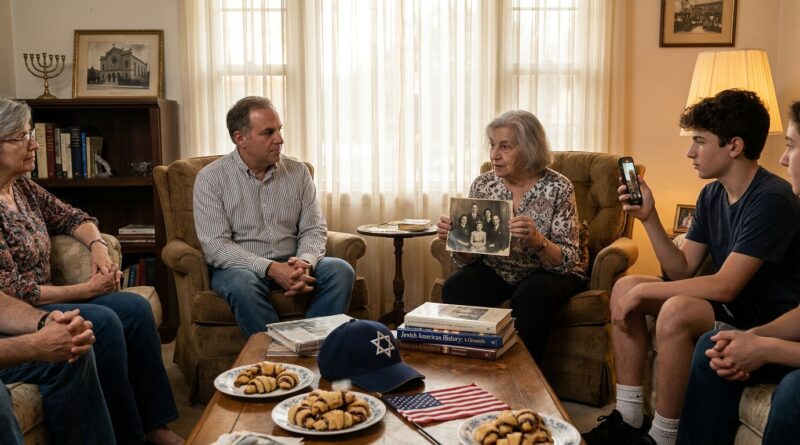
Today’s Jewish American Heritage Month Pop‑Ups: The Local Micro‑Events Quietly Reclaiming May For Jewish Stories
If you just realized today that May is Jewish American Heritage Month, you are not behind. You are also not the only one doing that strange double take of feeling proud and a little annoyed. Proud that there is a whole month for Jewish American stories. Annoyed because nobody seems to have told you, and your feed is full of bad news instead of good local ideas. That gap is real. A lot of the official Jewish American Heritage Month community events 2026 will happen in museums, campuses, and big-city institutions that many people will never set foot in. So the better question is not, “What major event am I missing?” It is, “What can I start by tonight, this weekend, or before the end of May?” The good news is that the most meaningful pop-ups are often tiny, personal, and surprisingly easy to pull off.
⚡ In a Hurry? Key Takeaways
- Jewish American Heritage Month does not need a big-city budget. Small local pop-ups count, and often work better.
- Start with one easy format: a five-minute family story recording, a hallway conversation, a coffee-station fact sign, or a mini display.
- Keep it welcoming and low-pressure. Public visibility matters, but safety, consent, and comfort matter too.
Why this hits a nerve for so many people
There is a specific kind of frustration here. You see other heritage months get school kits, banners, city calendars, and social posts. Then May shows up, and many Jews are left asking, “Wait, this exists?”
That feeling can quickly turn into self-consciousness. Maybe your synagogue is stretched thin. Maybe your JCC has not posted anything yet. Maybe you are the only visibly Jewish person in your office, dorm, or neighborhood. That can make Jewish American Heritage Month feel abstract instead of real.
It does not have to stay that way.
The quiet fix is to stop waiting for a polished, official program and start thinking smaller. Think pop-up, not conference. Think one table, one sign, one story, one conversation.
What counts as a micro-event?
A micro-event is any small, local action that helps people notice, share, or celebrate Jewish American life. It can last ten minutes or two hours. It can happen in a living room, lobby, classroom, office break room, dorm hallway, or synagogue foyer.
The point is not scale. The point is visibility and connection.
Some examples that actually feel doable
Here are a few ideas that can be started in a day:
- A grandparent or older relative records a five-minute immigration, military, labor, neighborhood, or holiday memory on a phone.
- A JCC, synagogue, or school adds a “Did you know?” sign by the coffee station with one Jewish American history fact each week in May.
- College students host a dorm mezuzah-hanging followed by a casual chat about what Jewish home life looks like.
- A local library table features Jewish American authors, musicians, artists, and public figures from your city or state.
- A workplace ERG or interested staff member hosts a 20-minute lunch conversation on Jewish American contributions to medicine, law, arts, food, or civic life.
- A family puts together a one-evening “Jewish America in our house” display with old photos, recipes, military papers, camp shirts, ketubah copies, or newspaper clippings.
None of these need a keynote speaker. None need a grant. Most just need one person willing to say, “Let’s do something small.”
The easiest way to start: pick one of four formats
1. The story pop-up
This is the fastest win. Ask one person a simple prompt and record the answer on your phone.
Try questions like:
- When did our family first come to America?
- What made you feel most Jewish growing up here?
- What changed between your parents’ generation and yours?
- What do you want younger Jews to remember?
You do not need perfect lighting or edited video. A clear voice memo is enough. The value is in capturing the story while you can.
2. The sign pop-up
This is ideal for JCCs, synagogues, Hillels, schools, and offices. Put one printed sign somewhere people already stop.
Good spots include:
- Coffee station
- Lobby check-in desk
- Bulletin board
- Front desk
- Teacher lounge
Keep it short. One fact. One photo. One sentence on why it matters. Change it every few days if you want.
Examples:
- “Did you know? Jewish American Heritage Month was first proclaimed nationally in 2006.”
- “Did you know? American Jewish history includes labor organizers, civil rights advocates, comedians, judges, athletes, songwriters, and Supreme Court justices.”
- “Did you know? Jewish American stories include Sephardi, Mizrahi, Persian, Ethiopian, Bukharian, Russian-speaking, Latino, Black, and multiracial Jewish communities too.”
3. The conversation pop-up
This works well in dorms, living rooms, and small groups. You do not need a formal speaker. Just a clear topic and 30 minutes.
Try prompts like:
- What Jewish American story do people around us never hear?
- What part of Jewish life feels invisible where we live?
- What family object tells an American Jewish story?
If you want people to actually come, make it simple. Tea and rugelach beats a big title and a complicated RSVP form.
4. The mini-display pop-up
This is great for schools, shuls, and shared spaces. Use one small table. Add books, photos, recipe cards, newspaper cuttings, and captions.
Think of it as a museum display shrunk down to the size of a folding table.
A strong mini-display often has three parts:
- One personal item or family story
- One local connection
- One invitation for others to add their own memory
If your city is doing nothing big, that does not mean nothing is happening
This is the part many people miss. Heritage months often look more alive in big metros because institutions have staff, funding, and press contacts. Smaller communities usually have the same raw material, just not the same megaphone.
You can still create something meaningful in a small town, suburb, campus corner, or one-building community.
In fact, micro-events may work better there because they feel less like programming and more like real life. People who would skip a formal panel may happily stop to read a fact sign, listen to a family story, or stay after services for a 15-minute share-out.
A simple one-day plan for Jewish American Heritage Month community events 2026
If you want a practical playbook, here is one.
By morning
- Pick your format: story, sign, conversation, or display.
- Choose one location that already has foot traffic.
- Text two people, not twenty. Ask for help with one tiny task.
By afternoon
- Write a short invitation. Keep it friendly and clear.
- Print one page or gather three to five items.
- Decide whether photos or recording need permission.
By evening
- Run the event even if only a few people come.
- Take one photo of the setup, if appropriate.
- Save names, stories, or ideas for a second pop-up later in the month.
That last point matters. One tiny event often gives people the confidence to do another.
How to make it welcoming, not awkward
Many people hesitate because they worry a pop-up will feel forced, political, or painfully underattended. Fair concern. A few small choices fix most of that.
Keep the tone open
Avoid making people feel like they need expert-level Jewish history to show up. Use invitations like, “Come share a family story,” or “Stop by for one local Jewish history fact and coffee.”
Make room for different kinds of Jewish stories
Not every Jewish American story is Ellis Island and deli counters. Those stories matter. They are not the whole picture. Make sure your examples reflect the actual mix of American Jewish life.
Use clear labels
If you are putting up facts or displays, cite your source when possible. If something is a family memory, label it that way. People respond well when they know what they are looking at.
Do not confuse low-key with low-value
A ten-minute story circle can matter more than a flashy event that feels distant. Intimacy is not a downgrade.
Safety matters too
Because of rising antisemitism, it is reasonable to think about safety before making anything public. That is not paranoia. It is just planning.
Good common-sense steps
- Choose semi-private spaces if a fully public one feels uncomfortable.
- Do not post home addresses publicly unless you know your audience.
- Ask before sharing anyone’s name, face, or story online.
- Keep signage positive and informative. It does not need to invite debate.
- Work with existing community staff if you are using a synagogue, school, or JCC space.
You are allowed to celebrate visibly and still make careful choices.
Best micro-event ideas by setting
At a synagogue
- Post-Shabbat kiddush story card table
- “Our families came from…” map with stickers
- Lobby board with Jewish American firsts and local member memories
At a JCC
- Coffee station fact signs
- Mini exhibit near the entrance
- Five-minute oral history booth using a phone and quiet corner
On a college campus
- Dorm hallway mezuzah-hanging and discussion
- Library cart of Jewish American books and films
- Quick “share your family migration story” board outside Hillel
At work
- Short lunch-and-learn on Jewish American history
- Internal newsletter spotlight on Jewish employees who want to share
- Recipe exchange featuring Jewish American home cooking
At home
- Record elders on your phone
- Cook one family recipe and write down where it came from
- Invite one friend over to look through old photos and ask questions
What to say when you invite people
Most invitations fail because they sound too formal. Here are a few lines that work better:
- “I just realized it’s Jewish American Heritage Month, and I’d love to mark it with one small thing.”
- “No lecture, no pressure. Just coffee, one story, and a few photos.”
- “Bring an object, recipe, or memory that says something about Jewish life in America to you.”
- “If you have five minutes, stop by and add a family place-name to our map.”
Simple is inviting. Fancy often scares people off.
Why these little pop-ups matter more than they look
They make Jewish life visible in ordinary places. That matters. It reminds Jews that our stories belong in public life, not just in reaction to crisis. It also gives non-Jewish neighbors, classmates, and coworkers a gentler entry point than a headline ever could.
And maybe most important, it breaks the habit of waiting for someone else to authorize celebration.
You do not need a city proclamation in your hand to mark the month. You need one story, one surface, one invitation, and a little nerve.
At a Glance: Comparison
| Feature/Aspect | Details | Verdict |
|---|---|---|
| Big official events | Often polished and meaningful, but usually limited to major institutions and larger cities | Great if accessible, but not the only way to participate |
| Micro-events | Low-cost, local, easy to start in a day, and rooted in real relationships | Best option for most readers |
| Public sharing and safety | Visibility can build pride and connection, but should be balanced with consent and common-sense caution | Worth doing thoughtfully |
Conclusion
May 2, 2026 falls on Shabbat, Iyar 15, right at the start of Jewish American Heritage Month. Yes, organizations across the country are rolling out exhibits, panels, and festivals. Most Jews will never attend most of them. That is exactly why the small stuff matters. A grandparent recording a five-minute immigration story on a phone. A JCC adding a “Did you know?” sign next to the coffee station. College students hosting a dorm hallway mezuzah-hanging and conversation. These are not backup plans. They are the month made real. If this year began with the awkward feeling of “why have I never heard about this before,” let it end with one concrete act of visibility. Start small. Start local. Start now. That is how anxiety and invisibility begin to turn into pride, resilience, and connection.