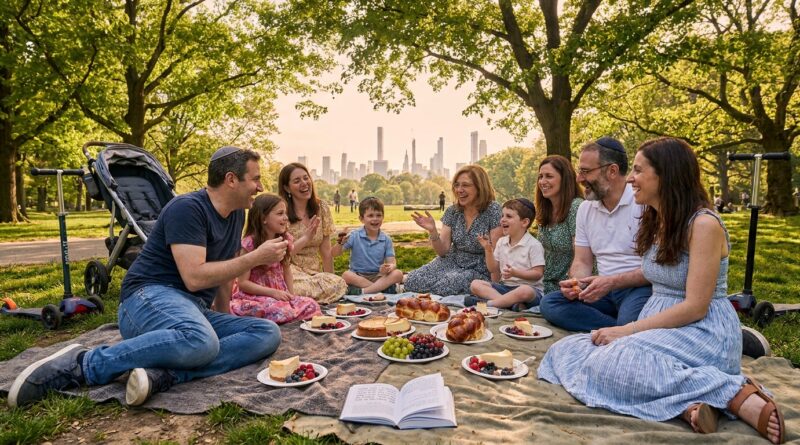
Today’s Shavuot Walking Picnics: The Outdoor Meetups Quietly Turning ‘Holiday Indoors Again’ Into A Breath Of Jewish Fresh Air
You are not wrong if Shavuot feels harder to step into this year. The usual picture, long indoor services, packed social halls, late-night learning that runs past your energy level, can feel like too much when your head is already full and your kids are already climbing the furniture. Add heavy news, rising nerves, and plain old screen exhaustion, and it makes sense that many people want something quieter and more human. That is where today’s Shavuot walking picnics come in. They are simple on purpose. A few families, a park or shady path, some snacks, maybe a short reading or song, and no pressure to perform being “the right kind” of Jewish. For a lot of people, that small shift is the whole point. It turns Shavuot from another thing you are failing to attend into something you can actually show up for, with your body, your neighbors, and a bit of breathing room.
⚡ In a Hurry? Key Takeaways
- Shavuot outdoor community event ideas work because they lower the barrier to showing up. People can join for 20 minutes or two hours without feeling trapped.
- Start small. Pick a nearby park, set a meet-up time, bring dairy snacks and a short text or question, and keep the plan flexible.
- Outdoor gatherings can feel safer and calmer this year, especially for families, anxious attendees, and people not ready for large public spaces.
Why these low-pressure Shavuot meet-ups are catching on
There is a reason these gatherings feel right right now. They meet people where they are.
Not everyone wants an all-night learning session. Not everyone can sit through a long service. Not every family has children who will happily stay still in holiday clothes while adults listen to a sermon. And not everyone wants to mark the chag by staying home and scrolling through everyone else’s holiday photos.
A walking picnic splits the difference. It is still Jewish time. It still feels intentional. But it also leaves room for normal people with normal limits.
You can walk. You can snack. You can talk about revelation, harvest, gratitude, or what feels shaky in the world right now. You can bring kids, grandparents, a friend who did not grow up with Shavuot, or a spouse from a different background. Nobody has to know all the words.
What a Shavuot walking picnic actually looks like
If the phrase sounds a little vague, that is part of its charm. This is not a formal product. It is a format.
The basic version
A host picks a local park, garden, promenade, or easy walking route. People meet at a set time. Some bring blankets, some bring cheesecake or fruit, some bring water bottles and strollers. There may be a short source sheet, a poem, a few blessings, or just one good discussion prompt.
Then people walk a bit, stop a bit, and eat a bit. That is the event.
The family-friendly version
For families, the trick is keeping the structure loose. Think scavenger hunt for flowers and greenery, a tiny Ten Commandments craft, or a “what would you want revealed to the world right now?” question for older kids. If you want more kid-focused inspiration, the ideas in Today’s Shavuot Pop‑Ups For Kids: The Hands‑On Torah Parties Quietly Turning Cheesecake Into Jewish Memory fit beautifully into an outdoor setting.
The gentle adult version
This one is especially good for people who feel spiritually interested but socially tired. Keep the guest list modest. Choose a shaded route. Bring printed copies of one short text. Ask one real question, like: What does receiving mean when everyone already feels overloaded? That can carry a whole gathering.
Why it works better than another holiday spent indoors
Outdoor Jewish gatherings are not new, of course. But this moment gives them fresh force.
First, they reduce friction. You do not need to find parking near a crowded building, commit to a full service, or worry whether your family will make it through the whole thing gracefully. You can arrive late. You can leave early. That matters.
Second, they make room for people on the edge of community life. Someone who feels rusty, nervous, underinformed, or politically drained may skip a formal event but say yes to a walk in the park.
Third, they answer the emotional mood of the year. Many Jews want connection right now, but on a human scale. Not louder. Not slicker. Just more real.
Easy Shavuot outdoor community event ideas that do not feel forced
If you are thinking of organizing one, resist the urge to overbuild it. The best versions are easy to join and easy to copy.
1. Cheesecake and a source sheet
Meet at a park with dairy snacks, iced coffee, and one page of very short readings. Include something traditional, something modern, and one question for conversation.
2. Greenery walk
Shavuot and greenery already go together in many communities. Turn that into a neighborhood walk where kids gather leaves or flowers responsibly, and adults talk about growth, land, and renewal.
3. Sunset picnic with songs
You do not need a whole songleader setup. Even two or three familiar melodies can shift the mood. Keep it acoustic and casual.
4. Stroller-friendly Torah trail
Pick a flat route and place a few stopping points along the way. At each stop, someone reads one sentence or asks one question. It gives shape without creating homework.
5. Mixed-background holiday meet-up
This works well for interfaith families, seekers, and friends who are curious but not ready for formal synagogue space. Use plain language. Explain customs briefly. Nobody should need a decoder ring.
How to host one without turning it into a second job
This is where many good ideas die. People picture planning, sign-up forms, weather charts, backup plans, and twenty unanswered messages. Do less.
Pick one clear location
Say exactly where to meet. “Near the big ficus tree by the south entrance” is better than “at the park.”
Give it a short time window
Ninety minutes is usually enough. Two hours max. A shorter event feels manageable, especially for newcomers.
Tell people what to bring
Blanket, water, hat, dairy snack to share if they want. Keep the list light.
Offer a simple rhythm
For example: 15 minutes to gather, 20-minute walk, 20 minutes of snacks and conversation, optional closing blessing. People relax when they know the shape of things.
Make attendance feel flexible
Say it out loud in the invitation. Drop in late. Leave early. Kids welcome. No Jewish knowledge needed. Those lines do a lot of work.
Safety and comfort matter more this year
It is not cynical to think about safety. It is responsible.
For some people, outdoor gatherings feel more secure than large indoor events. They can scan the space, stay near an exit, keep kids close, and avoid the emotional intensity of a packed room. That alone may be the difference between participating and staying home.
A few common-sense steps help. Choose a visible public area. Meet during daylight or around sunset if the location is well used. Share the plan only with known community channels if that feels wiser. Have one point person people can text if they cannot find the group.
Also remember sensory comfort. Shade, seating, water, and bathroom access are not small details. They are often what decides whether an event feels welcoming.
What people often get wrong about “informal” Jewish gatherings
Some hear “casual” and assume “less meaningful.” That is backwards.
Informal settings can make people more honest. A child asks a basic question and nobody rushes to quiet them. A tired parent admits they have not learned on Shavuot in years. A neighbor says this is their first Jewish event since moving to town. That is not shallow. That is community.
There is also a nice side effect. Once people meet each other in a low-stakes setting, they are more likely to try something else later, maybe a service, maybe a class, maybe a family event. Small gatherings are often the front porch of Jewish life.
At a Glance: Comparison
| Feature/Aspect | Details | Verdict |
|---|---|---|
| Ease of joining | No long service commitment, easy for late arrivals, better for families and first-timers | Best for people who want a real but low-pressure entry point |
| Spiritual depth | Can include short texts, blessings, songs, and discussion without becoming overly formal | Surprisingly strong when the group is small and present |
| Comfort and safety | Fresh air, more room, easier movement, and often less anxiety than crowded indoor events | A smart fit for this year’s mood and concerns |
Conclusion
Shavuot is here, in Israel and around the world, and a lot of people are still stuck between two bad options. Stay home and keep scrolling, or push yourself into a formal holiday setting that may not fit your energy, your family, or your nerves right now. A walking picnic offers a third way. It lets people mark the chag with fresh air, movement, and actual human faces. That matters, especially in a year when anxiety, antisemitism, and news fatigue are making many Jews more cautious about big public spaces. A neighborhood-sized, easygoing ritual can help isolated people find one another close to home. It can welcome mixed-background families and curious friends without making them feel out of place. And quietly, without much fuss, it can widen the circle of who feels that Jewish time belongs to them too. Sometimes that is exactly what a holiday needs.