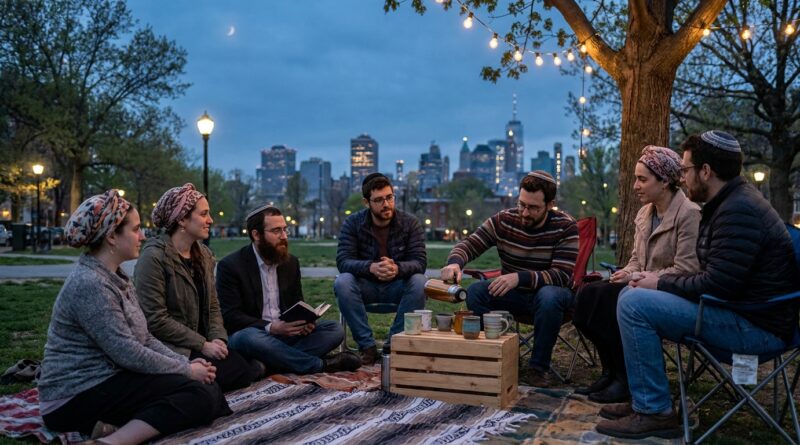
Iyar 1 Pop-Up Gatherings: The Quiet New Moon Meetups That Are Rewiring Jewish Belonging After Passover
There is a weird drop after Passover that a lot of people feel and almost nobody names. You spend days cooking, hosting, traveling, texting family, showing up at seders, maybe even feeling more Jewish than you have in months. Then it ends. Fast. Shul goes back to normal. The group chats go quiet. The dishes are finally done, and suddenly the house feels a little too still. If that sounds familiar, you are not doing anything wrong. You are bumping into a real social gap. That is why Iyar 1 matters more than it gets credit for. Rosh Chodesh Iyar can work like a built-in reset button, a small Jewish calendar moment that says, don’t wait for Shavuot, summer camp, or the next crisis to reconnect. Start now. The good news is this does not need a committee, a rabbi, or a fancy event page. It can be two people, tea, a park bench, a short blessing, and one honest conversation tonight.
⚡ In a Hurry? Key Takeaways
- Rosh Chodesh Iyar community gathering ideas work best when they are tiny, simple, and easy to say yes to.
- Text one or two people today and invite them for a 30 to 60 minute Iyar 1 reset meetup with a snack, a short blessing, and one check-in question.
- Keep it low-pressure and safety-aware. Meet in a public place or a trusted home, skip public posting if needed, and focus on real connection over perfect planning.
Why Iyar 1 is quietly perfect for reconnecting
Most people think Jewish connection has to happen at big moments. Holidays. Services. Community dinners. Fundraisers. School events. That is part of the problem.
Big events are great, but they also make it easy to become passive. You show up when someone else organizes everything. Then the event ends, and regular life takes over again.
Iyar 1 is different. It arrives right after the intensity of Passover, when many people are spiritually full but socially emptied out. That makes it a smart moment to start fresh on purpose.
Rosh Chodesh has always had a “new month, new start” feel. You do not need to turn it into a production. In fact, the smaller it is, the better it works. A pop-up gathering on Iyar 1 gives people a reason to move from “we should catch up sometime” to “want to come by at 7?”
What makes these meetups work
They are tiny
Do not picture a crowd. Picture two to six people. That is the sweet spot. Small enough that nobody has to perform. Big enough that it feels like a gathering and not an appointment.
They are last-minute friendly
You are not planning a gala. You are creating a Jewish excuse to reconnect. Same-day invites are fine. In fact, they often work better because they feel casual.
They do one thing well
The goal is not to cover Torah, politics, grief, community strategy, and dessert in one sitting. The goal is simple. See each other. Mark the new month. Leave feeling a little less alone.
Easy Rosh Chodesh Iyar community gathering ideas
If you want this to happen tonight, keep the format dead simple. Here are a few versions that are easy to pull off.
1. Tea and check-in
Invite one or two people over for tea, coffee, or leftovers. Light a candle if that helps set the mood. Say a short blessing for the new month. Then go around and answer one question: What do you want more of this month?
2. Park bench meetup
Pick a public park or outdoor bench. Bring fruit, cookies, or iced coffee. Spend 30 minutes together. This is great for people who want connection without the pressure of hosting.
3. Post-Passover dessert night
Ask everyone to bring one easy dessert or snack. No cooking contest. No theme needed. The point is to create a low-stakes reason to gather after the holiday rush is over.
4. Walk and blessing
Meet for a neighborhood walk after work. Stop at the beginning or end to mark Rosh Chodesh with a short prayer, Psalm, or personal intention.
5. “Just us” family-and-friends circle
If wider community events feel exhausting right now, do a micro-gathering with one other household. That still counts. Actually, it may count more.
A simple format you can copy
Here is a script you can use almost word for word.
The text invite
“Hey, it is Rosh Chodesh Iyar tonight, and I realized I do not want to let the post-Passover slump just happen. Want to come by for a tiny new-month reset? Nothing formal. Tea, snacks, a short blessing, and a check-in. 7:30 to 8:30.”
The opening
“Thanks for coming. I wanted a simple way to mark the new month and reconnect before life gets busy again.”
The blessing structure
You can keep this traditional, personal, or mixed.
Option 1, traditional: Say “Chodesh tov” to each other. If your group is comfortable, add a short prayer for renewal, healing, strength, and peace in the month ahead.
Option 2, simple English blessing: “May this month of Iyar bring healing, steadiness, good news, and the strength to show up for each other.”
Option 3, one-line intentions: Go around and have each person finish this sentence: “This month, I am asking for…”
The one-question check-in
Choose one question only. Here are good options:
- What has felt heavy since Passover ended?
- What kind of support would help this month?
- What is one thing you want to start again in Jewish life?
- Who have you been meaning to reach out to?
The close
End before people get drained. That matters. A good gathering leaves energy in the tank. Before everyone heads out, ask one practical question: “Should we do this again next Rosh Chodesh?”
Why this matters so much this year
A lot of Jewish life right now feels loud, reactive, and online. People are tired. They are worried about security. They are tired of arguments. They miss normal human warmth.
That is why tiny meetups matter. They are not flashy, but they rebuild trust. They help people remember who is nearby. They create actual social muscle memory. Over time, that is what community is. Not just institutions, but people who know who to text.
You do not need to solve loneliness for the whole Jewish world tonight. You just need to interrupt it for a few people.
How to make it feel welcoming, not awkward
Be clear that it is low-pressure
Say that out loud in the invite. People are more likely to come if they know they do not need to bring deep thoughts, fancy food, or perfect Jewish knowledge.
Do not over-teach
If some guests know a lot and others know very little, keep the explanation short. “Rosh Chodesh means new month. I wanted to mark it together.” That is enough.
Give people a job
One person brings fruit. One person pours tea. One person picks the question. Tiny jobs make people feel included fast.
End on time
This sounds small, but it is huge. A gathering that respects people’s energy is one they will actually come back to.
Safety and privacy matter too
For some communities, posting publicly about a Jewish meetup may not feel wise right now. Trust that instinct.
Private invites are fine. Better than fine. Often better. Text people directly. Use trusted group chats. Meet in homes you know, or in public spaces that feel comfortable and visible. If someone is new to the circle, a coffee shop or park may be the better first step.
The point is connection, not exposure.
If you are shy, here is the easiest version
If hosting a group feels like too much, scale down even more.
Text one person. Just one.
Try this: “It is Rosh Chodesh Iyar, and I realized I want to start the month by seeing an actual person. Want to grab tea tonight or take a walk?”
That is a community gathering too. Small is not lesser. Small is how many good things begin.
At a Glance: Comparison
| Feature/Aspect | Details | Verdict |
|---|---|---|
| Group size | Best with 2 to 6 people. Big enough for warmth, small enough for real conversation. | Ideal for a low-stress Iyar 1 reset |
| Planning level | Can be organized the same day with texts, simple snacks, and one short blessing. | Much easier than waiting for a major holiday event |
| Emotional payoff | Helps stop the post-Passover social drop and creates a practical reason to reconnect now. | High value for very little effort |
Conclusion
Today is Iyar 1. That means Jews everywhere have a built-in reset moment that almost no one is using on purpose. You do not need to wait for the next big holiday, the next synagogue program, or the next time everyone finally gets around to making plans. Framing this new month as the kickoff to post-Passover reconnection gives you a real reason to reach out tonight. One or two people is enough. A short text is enough. Tea, a bench, a blessing, one honest question. That is enough too. In a year of burnout, security anxiety, and endless online arguments, tiny DIY Iyar 1 meetups may be one of the fastest ways to rebuild real-life Jewish social networks. Quietly. Gently. Person by person.