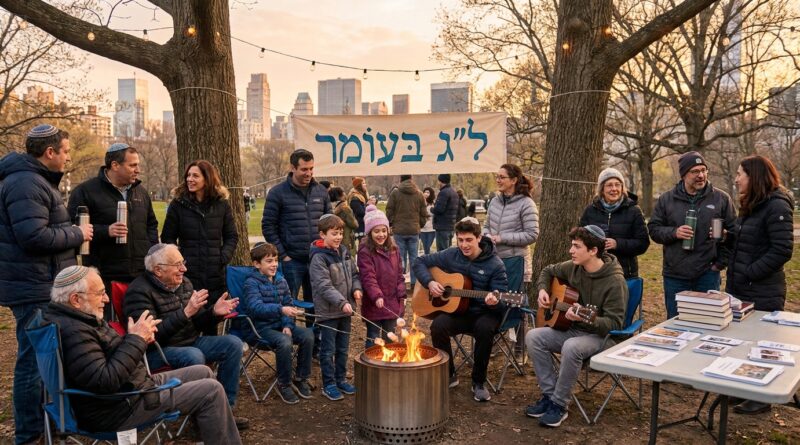
Lag BaOmer 2026 Is Almost Here: The Bonfire Holiday Quietly Turning Jewish Parks Into Pop-Up Villages
Your calendar has probably felt heavy lately. One memorial day leads into another, the headlines do not let up, and then suddenly your phone lights up with three different invites to a Lag BaOmer bonfire. If your honest reaction is, “Wait, remind me what this one is again?” you are not alone. For plenty of Jews, Lag BaOmer lives somewhere between “kids with bows and arrows” and “someone forgot to tell me we are all meeting in a park at 7 p.m.” But that fuzzy, slightly chaotic quality is also why the holiday matters right now. It is one of the few dates on the Jewish calendar that feels lighter without feeling shallow. It gets people outside. It gives kids something to do. It lets adults talk without rows of folding chairs and a formal program. And in 2026, that may be exactly what many communities need most: one hopeful night that feels Jewish, local, warm, and human.
⚡ In a Hurry? Key Takeaways
- Lag BaOmer 2026 is a perfect excuse for a simple community bonfire that feels festive, Jewish, and low-pressure.
- Start with a “pop-up village” plan: give people tiny jobs like fire safety buddy, snack host, or story circle lead so guests become helpers.
- Keep it safe and welcoming with permits, a backup weather plan, kid zones, clear timing, and one person fully in charge of fire rules.
What Lag BaOmer actually is, in plain English
Lag BaOmer lands on the 33rd day of the Omer, the seven-week count between Passover and Shavuot. Traditionally, the Omer period carries a quieter, semi-mourning tone. Lag BaOmer breaks that mood for a day.
Depending on which teaching you grew up with, the day is linked to the end of a plague among Rabbi Akiva’s students, the yahrzeit of Rabbi Shimon bar Yochai, mystical light, and long-standing customs like bonfires, outings, music, weddings, and kids playing with bows and arrows.
You do not need to master every historical thread to host a meaningful event. The basic idea is enough. After a serious stretch of the calendar, this is the day when Jewish life steps outside, lights a fire, and lets people breathe.
Why this holiday is suddenly showing up everywhere
If you are seeing more Lag BaOmer events from JCCs, day schools, camps, synagogues, and informal friend groups, that is not random. The holiday solves a real problem.
People want community, but many do not want another formal gathering. Parents want Jewish life that does not involve asking their kids to sit still. Teens want somewhere to be that does not feel fake. Newcomers want a way in that does not require knowing all the right tunes or sanctuary etiquette.
A bonfire does something beautifully low-tech. It creates a center. People gather around it naturally. Conversations happen sideways. Nobody has to perform. That is why Lag BaOmer 2026 community bonfire ideas matter right now. They are less about event planning and more about rebuilding the habit of being together.
The “pop-up village” model that makes a bonfire work
The smartest way to run a Lag BaOmer event is not to put five exhausted volunteers in charge of everything. It is to create a temporary little village.
Think of it like this. Instead of inviting people to “come to our bonfire,” invite them to help create one small part of it. Tiny roles are easier to say yes to, especially for people who feel awkward, busy, or only half-connected to the community.
Good micro-roles to assign
Fire safety buddy. This person is not the firefighter, but they make sure kids keep distance, chairs are placed sensibly, and water buckets and extinguisher stay visible.
Story circle host. A warm adult or teen who gets a small group talking with easy prompts like, “What is one Jewish memory you still carry?” or “What gives you hope this spring?”
S’mores chevruta. Pair people up to make snacks and swap one question card. It sounds silly. It works.
Song starter. Not a concert leader. Just someone who can begin a niggun, camp song, or simple Hebrew chorus if the moment feels right.
Welcome walker. This person watches for people arriving alone and brings them into a cluster. Hugely important.
Kids’ trail captain. Runs a flashlight walk, scavenger hunt, or bow-and-arrow craft table away from the fire itself.
Tea and cocoa station host. For many adults, this will quietly become the social center of the night.
How to plan a Lag BaOmer bonfire without turning it into a production
Step 1: Pick the right scale
Do not start by imagining a giant festival unless you already have the staff and permits for one. A strong Lag BaOmer gathering can be 20 people in a backyard fire pit, 50 people at a synagogue lawn, or 200 at a park with proper approval.
Ask one question first: what size can we host safely and warmly?
Step 2: Choose a site with boring practical needs in mind
This is the unglamorous part, and it matters. Look for a location with legal fire use, restrooms or portable toilets, parking, a flat walking path, and enough distance between the fire and the crowd.
If you are using a public park, check local rules now. Some towns ban open flames outright. Others require a permit, a contained fire pit, or a staff member present.
Step 3: Build the evening around three anchors
You do not need a packed schedule. You need a beginning, a middle, and an ending.
Beginning: Arrival, name tags if needed, snacks, simple activity for kids, low-key music.
Middle: Lighting the fire, brief teaching or blessing, songs, storytelling, roasting food.
Ending: One shared moment, maybe Havdalah-style singing energy without making it actual Havdalah, plus clear cleanup and goodbye.
If you skip this structure, events can drift. If you overdo it, they feel stiff. Aim for gentle structure.
Step 4: Give every age group a reason to come
Kids need movement. Teens need a little freedom plus a little responsibility. Adults need conversation. Older adults need comfortable seating, good lighting, and easy access.
That means your setup should include more than “fire in middle, good luck.” Add folding chairs, a quieter conversation patch, a kid activity table, and a food area that is not jammed right against the flames.
Easy Lag BaOmer 2026 community bonfire ideas that people will actually enjoy
For families with kids
Set up a bow-and-arrow craft made from safe materials, or use foam archery with supervision. Add glow-stick bracelet making, nature scavenger cards, and a “find something that looks like a Hebrew letter” walk.
For teens
Make them useful. Really. Teens often show up when they are trusted with real jobs. Let them run setup playlists, manage the cocoa station, lead younger kids in games, or handle the group photo wall.
For mixed-age groups
Try a “Jewish campfire cards” bowl with prompts such as “Who taught you your favorite Jewish song?” or “What ritual do you wish more people understood?” This creates conversation without forcing everyone into one big discussion.
For spiritual depth without heaviness
Share one short teaching about light, resilience, or community. Keep it under three minutes. People can absorb a lot more wisdom by a fire than during a 25-minute speech.
For food that stays simple
S’mores are easy, but they do not have to be the whole menu. Add baked potatoes in foil, corn, watermelon, kosher hot dogs, marshmallows, tea, and fruit. If your crowd keeps kosher at different levels, label everything clearly and avoid making people ask awkward questions.
How to make the event feel welcoming, not cliquey
This is where many community gatherings quietly fail. Not because the food was bad or the program was weak, but because newcomers could not crack the social code.
Fix that on purpose.
Have greeters. Introduce people by name. Create at least one activity where strangers naturally pair up. Make signage clear. Tell people where to put chairs, where kids can play, and when the main moments happen.
A good line for invitations is: “Come as you are. Bring a chair if you have one. We will have a role for you if you want one, and plenty of space if you just want to come be with people.”
That one sentence lowers the social pressure dramatically.
Safety is not the boring part. It is what makes the joy possible.
No one remembers the permit paperwork fondly, but everyone remembers the event where a child ran too close to the fire or there was confusion when weather changed.
Basic fire safety checklist
Use a legal, approved fire setup. Keep a hose, water buckets, and an extinguisher on site. Mark a clear no-go ring around the fire. Keep long roasting sticks instead of short skewers. Tie back loose sleeves and hair near the flames. Put one adult in charge of fire calls, full stop.
General event safety checklist
Have a first-aid kit. Share the site address with all volunteers. Know where the nearest bathroom is. Have lighting for paths and parking. Create a weather backup plan before you send invites, not after.
If there is one rule to remember, it is this: warmth should never depend on chaos.
A sample schedule for a two-hour community bonfire
6:30 p.m. Arrival, snacks, kid crafts, welcome team active
6:50 p.m. Opening hello, what Lag BaOmer is, quick safety notes
7:00 p.m. Fire lighting and blessing
7:10 p.m. Roasting food, mingle time, story circles begin
7:35 p.m. One group song or short teaching
7:45 p.m. Teen-led game, family photo, more snacks
8:05 p.m. Closing reflection, thanks to volunteers, next gathering plug
8:15 p.m. Cleanup crews and safe fire shutdown
That is enough. You are not producing a conference. You are creating a human evening.
What small communities can do if a real bonfire is not possible
Not every city, school, or synagogue can host open flames. That does not mean the holiday is off the table.
Use a contained fire pit. If that is also off-limits, build the night around lanterns, battery candles, grilled food, storytelling, and an outdoor singalong. The point is not to win a lumber contest. The point is gathering around shared light.
You can also create a “distributed bonfire” model. Several families host tiny backyard fires or patios on the same night, then everyone joins for one central opening and closing moment. It is scrappy. It works.
Why this matters more than it might seem
It is easy to look at Lag BaOmer and think, nice, a bonfire. But for many communities, it is doing a deeper job.
It offers Jewish life without asking people to pick a faction, issue, or identity test first. It gives space for Israel-focused Jews, justice-focused Jews, regular synagogue goers, occasional drop-ins, exhausted parents, and skeptical teens to stand around one circle of light and just be there together.
That is not small.
At a Glance: Comparison
| Feature/Aspect | Details | Verdict |
|---|---|---|
| Large public bonfire | High energy, great visibility, more permits, more staffing, stronger safety needs | Best for established institutions with volunteers and logistics support |
| Medium community gathering | 50 to 100 people, easy to personalize, enough scale for mixed ages, manageable planning load | Sweet spot for most synagogues, JCCs, and neighborhood groups |
| Small backyard or shared fire pit event | Very warm feel, low cost, easier hosting, limited reach and accessibility | Best for scrappy communities that want something repeatable every year |
Conclusion
Lag BaOmer can look modest on paper. A fire, some songs, snacks, kids running around. But that is exactly why it works. Right now, Jewish communities are pivoting from a dense season of memorial days and Israel-focused gatherings into the first big outdoor, kid-friendly, hope-filled holiday on the calendar. Local JCCs and synagogues across North America are already promoting Lag BaOmer bonfires, parades, and family festivals, because the day has become a rare pressure valve, one night where all generations can be together, outside, doing something joyful and recognizably Jewish without needing a sanctuary or a sound system. A practical, step-by-step pop-up village model helps communities use this week’s bonfires to quietly rebuild trust between parents and teens, newcomers and regulars, Israel-focused and justice-focused Jews, through micro-roles like fire safety buddy, story circle host, and s’mores chevruta that turn spectators into co-hosts. In a moment when many feel disconnected from institutions but still want to show up, a repeatable Lag BaOmer template gives even small, scrappy circles a way to create something safe, intergenerational, rooted in tradition, and worth repeating next year.