Jewish American Heritage Month Is Coming: The Simple ‘Local Heritage Walk’ Any Community Can Launch This Week
Jewish American Heritage Month is almost here, and a lot of organizers are feeling the same panic. The banner is easy. The mayoral proclamation is easy. The hard part is creating something that does not feel generic, rushed, or disconnected from the people who actually live in your town. If your synagogue, JCC, campus Hillel, or local federation is staring at a half-finished plan right now, there is a simple fix. Start a local heritage walk.
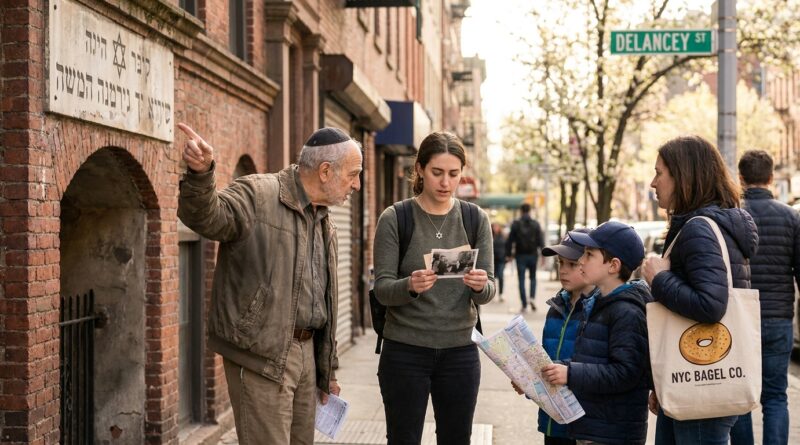
This is not a museum-grade project that takes six months and a grant writer. It can be small, warm, and doable this week. Pick five to eight stops tied to Jewish life in your city. A bakery, an old storefront, a school, a former meeting hall, a family business, a memorial, or even a street corner where something meaningful happened. Add short stories, old photos if you have them, and one guide who can keep things moving. Suddenly, Jewish American Heritage Month stops being abstract and starts feeling local, human, and real.
⚡ In a Hurry? Key Takeaways
- A local heritage walk is one of the easiest Jewish American Heritage Month community event ideas to launch quickly and make feel personal.
- Keep it simple. Choose 5 to 8 local stops, write a 2-minute story for each one, and invite people to walk together for 45 to 60 minutes.
- Use public, accessible routes and coordinate basic safety, permissions, and weather backup plans so the event feels welcoming, not stressful.
Why this works better than another generic program
People are tired of being talked at. They want to recognize their own block, their own school, their own grandparents’ street. That is why a heritage walk works.
It takes a huge national observance and shrinks it to human size. Instead of saying, “Jewish Americans contributed to this country,” you are saying, “Jewish families helped build this neighborhood, shopped here, prayed here, argued here, celebrated here.”
That shift matters. It turns history into memory. It also gives non-Jewish neighbors a much easier on-ramp. A walk feels open and curious. It does not ask people to sit through a formal panel if they are unsure whether the event is “for them.”
The simple local heritage walk blueprint
Step 1: Pick a tight route
Do not try to cover the whole city. That is where good ideas go to die. Pick one area that people can walk comfortably in under an hour.
Good options include:
- Downtown main street
- Near an old synagogue or Jewish cemetery
- A campus district
- A historic shopping corridor
- A neighborhood where Jewish families once clustered
If your city does not have obvious Jewish landmarks, that is fine. The point is not grandeur. The point is connection.
Step 2: Find 5 to 8 stops
Each stop should answer one question: what Jewish story happened here?
Your stops might include:
- A former deli, bakery, or grocery
- The first synagogue building, even if it is now something else
- A park used for community gatherings
- A refugee family’s first apartment block
- A Jewish-owned hardware store or clothing shop
- A school attended by generations of Jewish kids
- A public building tied to civil rights, labor, medicine, education, or public service
If one site no longer exists, use the sidewalk outside it. That can be powerful too. “This is where it stood” is still a story.
Step 3: Keep each story short
This is the part many organizers overcomplicate. You do not need a lecture. You need a clear, memorable story that lasts about two minutes.
Use this simple format for every stop:
- What was here?
- Who was connected to it?
- Why does it matter now?
For example: “This storefront was Cohen’s Bakery from 1948 to 1989. Families came here every Friday for challah, but it was also where new arrivals found jobs, apartments, and news in Yiddish and English. It matters now because this block was not only a business district. It was a landing place.”
How to build it in one week
Day 1: Make the list
Call two older community members, one local historian, and one person who always seems to know everybody’s family stories. Ask them for possible stops.
Day 2: Confirm the route
Walk it yourself. Time it. Check sidewalks, parking, bathrooms, and noise levels.
Day 3: Write the stop cards
One page per stop. Big font. No jargon. If possible, print an old photo or bring it on a tablet.
Day 4: Recruit one guide and one helper
The guide talks. The helper watches the group, handles late arrivals, and helps anyone who needs assistance.
Day 5: Publish the invite
Keep the wording simple: date, meeting point, length, whether it is wheelchair-friendly, and whether RSVP is needed.
Day 6: Do a test walk
Run through the whole route with two people who were not involved in planning. If they get confused, bored, or lost, fix it now.
Day 7: Host it
Bring water, printed maps, and a backup umbrella plan. Done.
What to say in the invitation
Many groups stumble here because they make the event sound too formal or too vague. Try language like this:
“Join us for a Jewish American Heritage Month community walk through downtown. We will visit six local sites and hear short stories about the Jewish families, businesses, and institutions that shaped our city. Open to all. About 50 minutes. Comfortable shoes recommended.”
That is enough. Clear beats fancy.
How to make it feel rooted, not performative
Use names, not just institutions
“Temple Beth Something was founded in 1912” is fine. “Rose and Max brought folding chairs for the first services” is better. Specific people make history stick.
Mix joy with struggle
Do not make the whole walk about antisemitism or the whole walk about nostalgia. Real community history includes prayer, business, migration, comedy, volunteer work, politics, recipes, grief, and success. Use the full mix.
Invite family memories
At the end of the walk, ask, “Does anyone here have a local Jewish story of their own?” That one question can turn a program into an ongoing community archive.
What if your town has very little visible Jewish history?
That does not mean there is no history. It often means it was never gathered in one place.
Try these substitutes:
- “Lives on this block” stories from old directories or oral histories
- A walk focused on one decade, such as postwar arrivals
- A campus-based route around student life, activism, and faculty contributions
- A “firsts” route, first congregation, first Jewish elected official, first kosher business
- A memory walk where each stop features one family photograph and short quote
The walk does not need ten historic plaques to be valid. It needs honest storytelling.
Safety and logistics people will thank you for later
This is the unglamorous part, but it matters.
- Choose daylight hours if possible.
- Use well-trafficked public streets.
- Share a contact number in the RSVP email.
- Note accessibility details up front.
- Have a rain plan, either a new date or an indoor version with slides.
- If a stop is on private property, ask permission first.
- If your community has security concerns, coordinate quietly with local partners.
A calm, well-organized event helps people relax and actually listen.
Ways to make the walk better without making it harder
Add one printed handout
A single sheet with the map, the stops, and one old photo goes a long way. People love taking something home.
End with food if you can
Even cookies and seltzer help. People linger, talk, and swap memories.
Record new stories
Set up a simple sign at the end: “Share your family memory from this town.” Use note cards or a QR code to a short form.
Repeat it next year
You do not need a brand-new idea every May. You can update the route, add one new stop, and build a tradition.
Sample heritage walk themes you can steal
- Jewish Main Street. Shops, trades, and meeting places.
- From Arrival to Belonging. Immigration and first homes.
- Jewish Women of the Neighborhood. Organizers, teachers, founders, artists.
- Campus Jewish Life Then and Now.
- Prayer, Protest, and Public Service.
- The Foods That Built Community.
If you are searching for practical Jewish American Heritage Month community event ideas, this is the sweet spot. It is public-facing, affordable, adaptable, and personal.
At a Glance: Comparison
| Feature/Aspect | Details | Verdict |
|---|---|---|
| Setup Time | Can be planned in a few days with a small team, especially if you keep the route short and the stories brief. | Excellent for last-minute organizers |
| Community Impact | Puts Jewish stories in public view and helps neighbors connect with real local history instead of abstract headlines. | High value for both Jews and non-Jews |
| Cost | Usually low. Main costs are printing, light refreshments, and optional audio or signage. | Budget-friendly and easy to repeat |
Conclusion
You do not need a giant budget, a famous speaker, or a perfect archive to mark Jewish American Heritage Month in a way that feels alive. A local heritage walk is small enough to launch this week and meaningful enough to matter. That is the real value. Cities and campuses across the U.S. are already announcing celebrations, but many Jews still feel unseen or flattened into headlines instead of neighbors. A walk changes that. It turns a big national observance into a simple ritual of pride and visibility. It gives nervous organizers a concrete plan they can actually use. And it invites people to meet Jewish life where it has always been strongest, on the street, in memory, and in community.