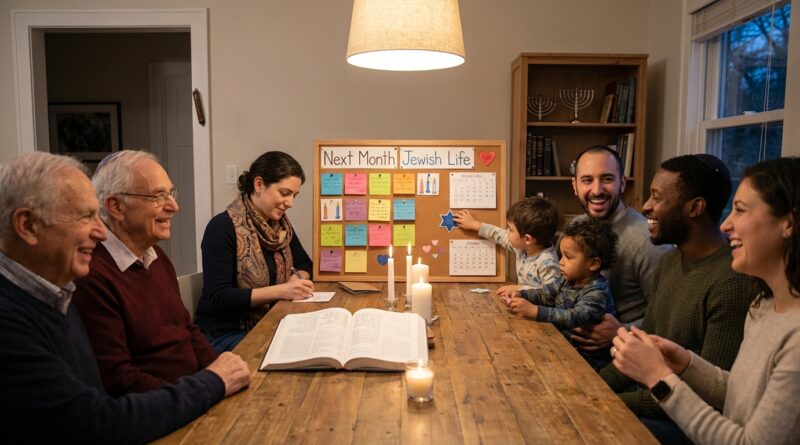
Shabbat Mevorchim April 2026: The Quiet Pre‑Rosh Chodesh Shabbat That’s Turning Into A Global Reset For Jewish Community Life
If your Jewish calendar feels like it went from a full sprint at Passover straight into an emotional traffic jam, you are not imagining it. A lot of people hit this stretch of spring feeling wrung out. The house is finally recovering from Pesach. The family group chats are still buzzing. Then, almost immediately, the mood turns toward Yom HaShoah, Yom HaZikaron and Yom HaAtzmaut. That is a lot for one heart to carry in a short span. This is why Shabbat Mevorchim in April 2026 is getting fresh attention. It has always been the Shabbat when we bless the coming month. But many communities are starting to treat it as something more practical too. Think of it as a quiet reset button. Not another major production. Not another heavy observance. Just a rooted, gentle pause to catch your breath, look ahead and reconnect with actual people nearby.
⚡ In a Hurry? Key Takeaways
- Shabbat Mevorchim community ideas 2026 center on using this pre-Rosh Chodesh Shabbat as a calm monthly reset after Passover and before the next run of intense commemorations.
- The easiest way to start is simple: add one reflective conversation, one look-ahead moment, and one concrete act of community care this Shabbat.
- This approach works because it asks for almost no prep, stays grounded in tradition, and helps people reconnect without emotional overload.
Why this particular Shabbat feels different in April 2026
Shabbat Mevorchim is not new. The custom of blessing the upcoming month is familiar in many synagogues. What feels new is the need around it.
April 2026 lands in a very specific emotional pocket. Passover has just passed. People are tired, sometimes financially stretched, and often a little socially dislocated after travel, hosting, cleaning and a week of changed routines. Then the Jewish calendar starts moving toward some of the most emotionally charged modern days of the year.
That creates a real problem. People want to re-enter Jewish life. They just do not want to be hit with another giant ask.
That is where this Shabbat is becoming useful. It offers a soft landing. It says: pause here first. Bless the next month. Notice where you are. Decide how you want to show up.
What communities are actually doing with Shabbat Mevorchim
This is not about inventing a new holiday. It is more like changing the settings on something you already use.
In practical terms, communities are using Shabbat Mevorchim as a monthly rhythm marker. Not dramatic. Just intentional. The goal is to make Jewish life feel sustainable again.
1. A short “where are we now?” check-in
Some rabbis and lay leaders are using a few minutes before or after services for a simple reflection. What did this past month ask of us? What are we carrying from Passover? What do we need before the next set of communal moments arrives?
This does not need to turn into public therapy. In fact, it works better when it stays light and clear. A two-minute framing from the bimah. A Kiddush table prompt. A small group conversation after lunch.
2. A preview of the next month
Shabbat Mevorchim literally points toward the new month, so communities are leaning into that. They are giving people a plain-language preview of what is coming. Not just dates, but mood.
For example: next week may include remembrance, grief, gratitude and celebration in quick succession. Here is what the community is planning. Here is where you can attend. Here is where you can help. Here is where kids are welcome. Here is where things will be quieter.
That kind of preview lowers stress. It helps people pace themselves.
3. One small communal commitment
This is the piece that turns a nice idea into a real reset. Many communities are asking everyone to choose one concrete action for the coming month.
Examples include:
- Invite one person or family for a simple Shabbat meal.
- Sign up to attend one remembrance event, even if only briefly.
- Call someone who was alone over Passover.
- Volunteer once at synagogue, school or a local hesed project.
- Commit to showing up for weekday minyan one time this month.
The point is not perfection. The point is re-entry.
Why this “global reset” idea is catching on
Because it fits how people actually live now.
Jewish communities today are mixed in every possible way. Some people attend synagogue weekly. Some come only on major holidays. Some are deeply connected online but barely know who lives three blocks away. Some are carrying grief. Some are carrying burnout. Some are trying to come back after a long gap and feel awkward about it.
A huge event can bring people in, but it can also tire them out. A gentle recurring ritual often works better. It creates a reliable point of return.
That is why Shabbat Mevorchim community ideas 2026 are resonating beyond one denomination or one country. The format is flexible. The timing is smart. And the emotional ask is manageable.
How to use Shabbat Mevorchim at home, even if your community is not doing much
You do not need a formal program. You need about ten minutes and a little honesty.
A simple three-step home reset
Step 1: Name the last month.
At the table, ask: what took the most energy out of us this past month? What felt meaningful? What felt hard?
Step 2: Name the next month.
Ask: what is coming up that we do not want to drift into unprepared? This could be a communal event, a yahrzeit, Israel-related commemorations, school stress, or just the need to get back into a normal routine.
Step 3: Choose one action.
Each person picks one doable Jewish or communal act for the coming month. Keep it small enough that it will happen.
If you have kids, make it concrete. Not “be nicer.” Try “bring cookies to the new family,” “go with dad to shul once,” or “make a card for someone who is alone.”
Good Shabbat Mevorchim community ideas for 2026
If you help run a synagogue, school, minyan or neighborhood group, here are ideas that do not require a committee marathon.
The low-effort, high-value list
- A one-page month-ahead handout. Include key dates, emotional notes, volunteer options and family-friendly entry points.
- A Kiddush conversation card. Put one question on tables, such as “What kind of support do people need most this month?”
- A communal blessing board. Let people write one hope for the new month and one way they will help someone else.
- A “sit with someone new” Kiddush. Simple. Slightly awkward. Surprisingly effective.
- A post-Pesach reset meal train. Focus on new parents, mourners, older members or anyone who had a rough holiday.
- A five-minute Israel calendar primer. Especially useful in communities where some people know the dates deeply and others do not.
None of this needs to be flashy. In fact, the quieter it is, the more likely people are to trust it.
What not to do
There is a temptation to turn every meaningful moment into a branded initiative. Resist that.
Shabbat Mevorchim works because it does not demand center stage. If you overload it with programming, long speeches or too many emotional expectations, you lose the softness people are craving.
A few things to avoid:
- Do not turn the whole Shabbat into a giant theme event.
- Do not assume everyone processed Passover the same way.
- Do not force intense sharing in public settings.
- Do not confuse more content with more care.
The sweet spot is structure without pressure.
Why this matters especially before Yom HaShoah, Yom HaZikaron and Yom HaAtzmaut
These days ask a lot of people. Even those who do not attend formal ceremonies often feel the weight of them. They carry memory, loss, peoplehood, political complexity, pride and pain, often all at once.
Walking into that stretch while still spiritually scrambled from Passover is hard. Walking into it after a calm Shabbat that helped you reconnect with your community is easier.
That does not remove the emotions. It gives them a container.
And that may be the most useful thing a community can offer right now. Not bigger feelings, but better support around the feelings that are already there.
For people who feel disconnected from synagogue life
This may be the best part of the whole idea. Shabbat Mevorchim is gentle enough for people who are on the edge of communal life, not firmly in the center of it.
You do not need to know all the tunes. You do not need to have hosted a perfect Seder. You do not need a polished answer about how connected you feel.
You can just show up. Listen to the blessing for the new month. Have one real conversation. Pick one way to stay connected.
That is a manageable on-ramp. And right now, manageable is good.
At a Glance: Comparison
| Feature/Aspect | Details | Verdict |
|---|---|---|
| Emotional load | Much lighter than a major holiday or memorial day event. Built for reflection, not overload. | Best used as a reset, not a replacement for bigger observances. |
| Prep required | Very low. A short announcement, one table prompt, or one family conversation can be enough. | Excellent for communities and households with limited time. |
| Community impact | Helps people reconnect in small, repeatable ways and creates a monthly rhythm of showing up. | High value over time, especially when kept simple and consistent. |
Conclusion
Shabbat Mevorchim rarely gets top billing, and that may be exactly why it matters so much right now. We are in the Shabbat that blesses the coming Rosh Chodesh, right on the heels of Passover and just before the modern Israeli remembrance and independence days begin. That can leave people spiritually off-balance and socially scattered. Communities worldwide are quietly experimenting with turning this specific Shabbat into a softer landing pad, a time to process the past few weeks, preview what is coming next on the Jewish calendar and recommit to concrete, local ways of showing up with each other. The beauty of framing Shabbat Mevorchim as a monthly reset ritual is that it gives you something real to do this week with almost no prep. It is traditional. It is emotionally timely. And it can help Jewish life feel less like a series of spikes and more like a rhythm you can actually live with.