2 Iyar Today: How Small, Local Events Are Quietly Rewiring Jewish Community After a Hard Year
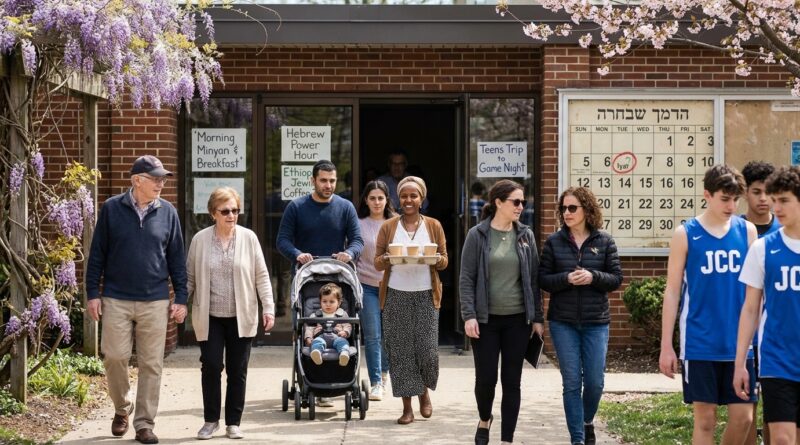
A lot of Jews woke up this Sunday with that familiar split-screen feeling. One eye is on the headlines. The other is on real life. Kids need breakfast. Minyan starts at 8:30. Someone is hosting a learning session at the JCC. Someone else is loading teens onto a bus for a day trip. If that sounds small, that is exactly the point. On 2 Iyar 2026, there is no major built-in holiday carrying the day for us in most communities. It is an ordinary Jewish date. After a hard year, ordinary can feel almost invisible. But it can also be healing. The quiet engine of Jewish life is not only the giant rally, the emergency fundraiser, or the memorial program. It is the Sunday shacharit in Queens, the communal breakfast in Miami, the federation coffee meetup in a smaller city that barely makes social media. If you feel disconnected, do one simple thing. Find one Jewish community event within driving distance today or this week, and go.
⚡ In a Hurry? Key Takeaways
- 2 Iyar may be an ordinary calendar day, but that is exactly why local Jewish community events matter right now.
- Pick one event within driving distance this week, show up, and share one useful contact or insight with three other Jews.
- Small gatherings are often lower-pressure, more personal, and better for rebuilding steady community connection than another round of doomscrolling.
Why an ordinary day can matter more than a big one
When the Jewish calendar hands you a major date, the structure is built in. People know where to go. Synagogues plan around it. Group chats light up. On 2 Iyar, not so much.
That can make the day feel spiritually flat. Or it can open up a different kind of opportunity. You are not being pulled by the biggest story in the room. You get to choose one small act of belonging.
This is the quiet rewrite happening in many communities. After a year shaped by grief, anxiety, security worries, and endless commentary, plenty of Jews are looking for something more human-sized. Not less serious. Just more sustainable.
What “Jewish community events 2 Iyar 2026” really looks like on the ground
It usually does not look dramatic. It looks like a synagogue breakfast after services. It looks like a young families music circle. It looks like adult education with twelve people and stale rugelach. It looks like a JCC volunteer day, a teen outing, a Hebrew book club, a federation coffee, or a Sunday learning session that never trends online.
These events often stay hidden because they live inside email newsletters, WhatsApp groups, and bulletin PDFs. If you are not already “in,” you may assume nothing is happening. That is often wrong.
In places like Queens or Miami, there may be dozens of options. In smaller cities, there may be only one or two. That does not make them less important. In many ways, it makes them more important.
Small rooms do a different job
Large public events are good at signaling solidarity. Small local events are good at building trust. You meet the person who knows who needs a Shabbat invitation. You find the rabbi who actually remembers your name. You hear that the synagogue down the road needs help for a kids program. None of that shows up in national headlines, but that is how community gets stitched back together.
Why people are newly hungry for this
Many Jews are tired. Tired of reaction. Tired of explaining themselves. Tired of treating every Jewish moment like it has to carry the whole weight of history.
That does not mean the hard things are over. It means people need a way to keep living Jewishly without burning out.
Ordinary community events do that. They create repetition. Repetition is underrated. It is how people go from isolated to known. It is how institutions stay alive. It is how a person who shows up once for breakfast ends up helping organize a holiday drive six months later.
How to find one event fast, even if you are out of the loop
If you want a practical move for Jewish community events 2 Iyar 2026, start here.
1. Search by place, not by idea
Do not just search “Jewish events near me.” Search for actual institutions within a 20 to 40 minute drive. Synagogues. JCCs. Federations. Chabad houses. Hillel if you are near a campus. Jewish family service groups. Israeli cultural groups.
Then check their websites, Facebook pages, Instagram, and event calendars. A lot of communities post badly but host beautifully.
2. Look at today, then this week
If today is too tight, expand the window. The goal is not to win the internet. The goal is to get physically into a room where Jewish life is happening.
3. Choose low-friction events
If you are feeling depleted, pick something easy to enter. Breakfast after services. A public lecture. A volunteer shift. A family event. A lunch-and-learn. You do not need to begin with the deepest possible experience. You just need to begin.
4. Text one person before you go
Even if you are going alone, send one text. “I’m trying out this event at 11. Want to join?” Half of community-building is making it easier for someone else to say yes.
What to do when you get there
You do not need to become the mayor of the Jewish people.
Keep it simple. Introduce yourself to one organizer. Stay long enough to talk to two people. Ask one useful question, like: “What else is happening this month?” or “What kind of turnout do you usually get?” That is often how hidden community life becomes visible.
If the event is not your style, that is fine. You are not marrying the institution. You are taking the pulse of your local Jewish map.
A good goal for one ordinary day
Leave with one of these:
- A new contact
- A future event to attend
- A volunteer opportunity
- A better sense of which local institutions are alive and trying
The three-person rule
Here is the part that turns a private outing into community repair. After you go, share one insight or one contact with three other Jews.
Not a grand speech. Not a long post. Just something simple.
“I went to a breakfast at Beth ___ this morning. Small crowd, very warm. Their rabbi is starting a Tuesday class.”
Or: “The JCC in town has a family program next weekend. Looks welcoming.”
Or: “I met someone organizing rides for seniors. Thought of you.”
This matters because local Jewish life often has a visibility problem, not an existence problem. The event happened. The issue is that only twenty people knew.
Why this helps small synagogues and JCCs in particular
Big institutions usually have stronger marketing. Smaller ones often do not. But smaller places can be where a lot of real care lives.
A tiny congregation with a kiddush and a handful of regulars may look modest from the outside. From the inside, it may be the place holding together older members, new families, or Jews who do not feel at home elsewhere.
Showing up helps in immediate ways. Attendance encourages organizers. A few extra people can change the feel of a room. New faces can become donors, volunteers, teachers, or simply proof that the effort is worth continuing.
What this is not
This is not a call to ignore pain. It is not a pitch to replace serious remembrance or urgent advocacy with coffee and bagels.
It is a reminder that Jewish continuity is not only defended in moments of crisis. It is also practiced on unremarkable mornings.
That is part of what makes 2 Iyar useful. It strips away the idea that Jewish meaning only arrives on the officially big days. Sometimes it arrives because ten people came to learn, twenty stayed for breakfast, and one newcomer decided to come back.
At a Glance: Comparison
| Feature/Aspect | Details | Verdict |
|---|---|---|
| Big headline-driven events | High visibility, strong emotional impact, often centered on crisis, remembrance, or public response. | Important, but hard to sustain as the only model of community life. |
| Ordinary local gatherings on 2 Iyar | Minyanim, breakfasts, youth trips, classes, volunteer events, and small community meetups with low visibility. | Best option for rebuilding steady, human-scale connection. |
| Personal follow-through | Attending once, saving the contact, and telling three others what you found. | Small effort, high community payoff. |
Conclusion
Today is 2 Iyar, a completely ordinary day on the Jewish calendar in most communities, and that is exactly why it matters. While the wider conversation stays loud and heavy, Jewish centers from Queens to Miami to small-town federations are still running Sunday shacharit, communal breakfasts, youth trips, and learning sessions that almost no one outside their email list will ever hear about. You do not need to solve everything today. Just look up one event within driving distance today or this week, show up, and then share one insight or contact with three other Jews. That one move shifts attention from exhaustion to connection. It helps lift up small synagogues and JCCs. It gives local organizers a reason to keep going. Most of all, it creates a repeatable habit. Check the calendar. See what is near you. Ask one simple question: what tiny piece of Jewish life around me can I nurture today?