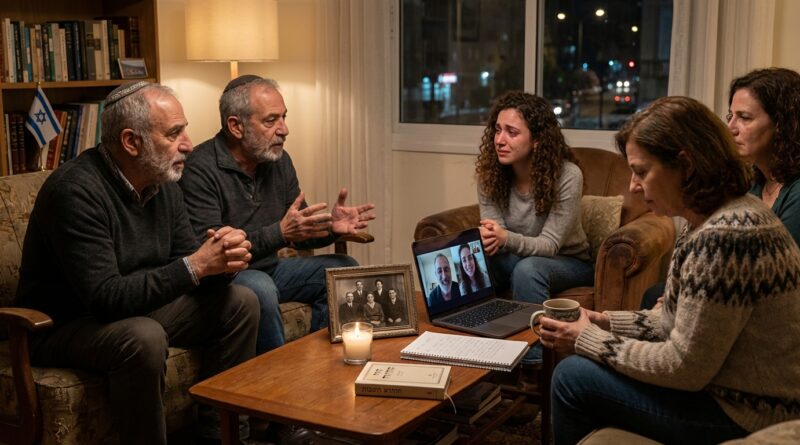
Yom HaShoah Tonight: How To Host A Small, Real Holocaust Remembrance Gathering That Actually Feels Honest
If Yom HaShoah keeps arriving as either a giant formal event or a heavy post you scroll past with a guilty feeling, you are not alone. A lot of people want to mark the night in a way that feels human, honest, and possible in a small apartment, around a kitchen table, or on a couch with a few people they trust. Especially this year, when many Jews already feel wrung out by the news, security worries, and endless arguments about memory and public language, the idea of organizing something meaningful can feel like one more impossible task. The good news is that a real Yom HaShoah gathering at home does not need to be polished, scholarly, or long. It just needs a little structure, one or two true stories, a candle, and room for people to be present. Think less ceremony production, more quiet act of witness. That is enough. More than enough, actually.
⚡ In a Hurry? Key Takeaways
- A meaningful Yom HaShoah gathering at home can be simple: light a candle, share one survivor or family story, sit with a prayer or moment of silence, and end with one concrete commitment.
- Keep it short and structured. Thirty to forty-five minutes is usually enough for family, roommates, or a few friends.
- You do not need to be an expert. Honest remembrance is better than a polished but distant event, and a gentle format is often easier on emotionally tired guests.
How to host a Yom HaShoah gathering at home without making it feel stiff
The trick is to stop thinking like an event planner.
You are not producing a memorial service for hundreds of people. You are making space for memory. That changes everything.
If you are wondering how to host a Yom HaShoah gathering at home, start with this goal: create one hour, or less, where people can remember the dead, honor survivors, and leave feeling a little more rooted than when they walked in.
A simple format that works for almost anyone
1. Invite a small circle
Three to ten people is plenty. Family. Roommates. A couple of friends. Neighbors from shul. Do not worry about making it big.
Your invite can be as simple as: “I’m hosting a short Yom HaShoah gathering tonight at home. We’ll light a candle, read one or two stories, say a few words, and sit together for about 30 to 45 minutes.”
That wording helps people know this is not a dinner party and not a lecture.
2. Set the room on purpose
You need very little:
- One memorial candle or yahrzeit candle
- A printed story, poem, testimony, or name list
- Chairs in a circle, or around a table
- Tissues and water
- Phones on silent
If you want, place a few photos, a book, or stones on the table. Keep it spare. Too much setup can make people self-conscious.
3. Open with one sentence about why you are gathering
This matters more than people realize.
Try something like: “I didn’t want Yom HaShoah to pass tonight as just another date online, so I wanted us to stop, remember real people, and be together for a little while.”
That is enough to ground the room.
4. Light a candle
Ask one person to light the candle, or invite everyone to stand while you do it.
You can keep silence for 30 seconds or a full minute. If silence feels awkward, say names. Even a few names changes the atmosphere.
5. Share one real story, not ten
This is where many home gatherings go wrong. People think more content means more meaning. Usually it just overwhelms everyone.
Choose one survivor testimony, one family story, one diary passage, or one account from your community. Read it slowly. Let it breathe.
If you do not have a family connection, that is okay. You are still allowed to remember. A museum archive, testimony project, synagogue handout, or reliable Holocaust education site can help you find a short reading.
If you want to make the evening part of something larger, you might also look at Yom HaShoah 2026: Turning Holocaust Remembrance Into A 24‑Hour Global Jewish Teach‑In. It is useful if your small gathering leaves people wanting one more serious way to learn afterward.
6. Add a few words in Hebrew, even if you are rusty
You do not need to sound perfect. Familiar words can help people settle into the moment.
You might say:
- “Yehi zichram baruch.” May their memory be a blessing.
- “Zachor.” Remember.
- “El malei rachamim,” if someone present knows it and wants to lead part of it.
If nobody is comfortable leading a formal prayer, do not force it. A simple “May we remember them with honesty and care” works too.
7. Give people one prompt to respond to
Keep the prompt focused. Not abstract. Not academic.
Good options:
- “What part of the story stayed with you?”
- “Who are we remembering tonight, by name or by connection?”
- “What does Jewish resilience mean to you right now?”
You do not need everyone to speak. In fact, tell people that passing is okay.
8. End with one small commitment
This is what keeps the gathering from becoming only a heavy emotional moment that disappears by morning.
Ask each person, or just yourself, to name one thing for the coming week:
- Call an older relative and ask for a family memory
- Read one testimony instead of scrolling
- Donate to Holocaust education
- Learn the name of one victim from your family’s town or region
- Attend a local or online teach-in
Small commitments are often the ones people actually keep.
What to say if you are worried about “doing it wrong”
Say this to yourself first: sincerity counts.
A home gathering is not less valid because it is informal. It is not disrespectful because you are not a rabbi, historian, or educator. The only things to avoid are turning the night into a political argument, a performance of grief, or a history free-for-all with shaky facts.
Stay grounded in remembrance. Stay with real people and real stories.
A 35-minute sample plan you can copy tonight
Minute 1 to 5
Welcome everyone. Explain why you wanted to gather. Ask for phones away.
Minute 5 to 7
Light the candle. Hold silence.
Minute 7 to 17
Read one testimony, diary passage, family story, or a short reflection.
Minute 17 to 27
Invite brief responses with one question.
Minute 27 to 32
Say a few Hebrew words, a prayer, or a closing reflection.
Minute 32 to 35
Name one action for the coming week.
That is a complete gathering. No slideshow needed. No one has to sing unless they want to. No fancy handout required.
If children or teens will be there
Keep it shorter and more concrete.
Use one age-appropriate story about a person, not a pile of statistics. Let them light or help place the candle if that feels right. Invite simple questions. Do not force emotional reactions. Some kids get quiet. Some fidget. That does not mean the moment is not landing.
You can ask: “What is one thing you want to remember about this person?” That is often enough.
If your guests are emotionally worn out already
This is probably true for more people than not in 2026.
So build gentleness into the night. Tell people ahead of time that this will be brief and grounded. Offer an option to step out for air. Serve tea afterward if you want. It is okay if the gathering ends quietly instead of in deep discussion.
Not every meaningful Jewish moment has to be intense to count.
What not to do
- Do not turn the night into a debate about current politics
- Do not overwhelm people with hours of graphic material
- Do not make guests feel tested on history knowledge
- Do not pressure anyone to share family trauma publicly
- Do not confuse “bigger” with “more respectful”
The best small gatherings usually feel quiet, clear, and a little unfinished in a good way. They leave room for memory to keep working on people later.
At a Glance: Comparison
| Feature/Aspect | Details | Verdict |
|---|---|---|
| Group size | Best with 3 to 10 people, which keeps the room personal and low-pressure | Small is better |
| Length | Thirty to forty-five minutes is enough for candle lighting, one story, reflection, and a closing commitment | Keep it short |
| Content choice | Use one true story or testimony instead of lots of material that can blur together | Depth beats volume |
Conclusion
Yom HaShoah this year is landing in the middle of a lot of exhaustion. That is exactly why a small gathering at home can matter so much. It lets you step away from doomscrolling, alerts, and arguments, and do something rooted instead. Light one candle. Tell one true story. Say a few Hebrew words, even imperfectly. Sit with people you trust. End with one simple promise for the week ahead. That is not a lesser version of remembrance. For many people, it is the most honest one. And when more homes do this, quietly and sincerely, Jewish memory stops feeling like something outsourced to big institutions and starts feeling like what it has always been. Ours to carry, together.