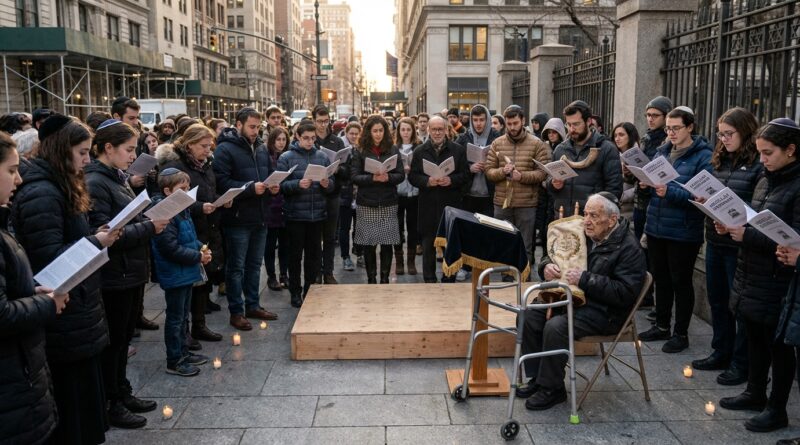
Community Yom HaShoah Tonight: How Public Readings Of Megillat HaShoah Are Quietly Becoming Judaism’s Newest Shared Ritual
If you have ever thought, “I want to mark Yom HaShoah, but I do not know where to go or what I am supposed to do once I get there,” you are not alone. For a lot of Jews, especially younger adults and people who are not deeply plugged into synagogue life, the usual options can feel thin or intimidating. A candle at home can feel too private. A big official ceremony can feel like walking into the middle of something you do not fully know how to join. That is part of why public readings of Megillat HaShoah are quietly becoming one of the most meaningful community Yom HaShoah events tonight. They give people something to do together, not just something to watch. If you are searching for a community Yom HaShoah events Megillat HaShoah reading 2026 guide, the good news is this: you do not need perfect knowledge, the right background, or a polished performance. You just need a willingness to show up, listen, and carry memory with other people.
⚡ In a Hurry? Key Takeaways
- Public Megillat HaShoah readings are becoming a powerful way to mark Yom HaShoah because they turn remembrance into a shared act, not just a formal program.
- If you go tonight, arrive a few minutes early, follow the community’s lead, and choose one simple act of participation like reading, listening closely, or staying for the closing song or prayer.
- You do not need to be an expert, connected to a synagogue, or emotionally “ready” in some perfect way to attend respectfully and meaningfully.
Why this ritual is catching on
Yom HaShoah has always carried a hard tension. It is communal, but it can feel lonely. It is public, but often passive. Many commemorations ask people to sit, listen, and leave. That matters, of course. But for many communities, that format no longer feels like enough.
Megillat HaShoah readings are different. Like the reading of other Jewish texts on sacred dates, they create a structure people can enter together. There is a beginning, a middle, a cadence, a sense that memory is being carried through voices in a room. That shared act matters. It gives shape to grief and history without turning the evening into spectacle.
That is one reason more synagogues, JCCs, schools, and citywide coalitions are building community Yom HaShoah events around these readings. Some are held in sanctuaries. Some in public squares. Some move countywide from one host site to another each year. The format can vary, but the emotional logic is similar. Instead of asking people to observe from the outside, it lets them step inside remembrance.
What Megillat HaShoah actually is
For people new to it, the name can sound more formal than it is. Megillat HaShoah is a liturgical text created for Holocaust remembrance. Different communities may use slightly different versions or pair the reading with poems, survivor testimony, names of the murdered, psalms, El Malei Rachamim, Kaddish, or contemporary reflections.
The key point is not mastering the text in advance. The key point is understanding the purpose. This is a communal vessel for memory. It gives language and ritual framing to a catastrophe that can otherwise feel too large, too abstract, or too familiar from repeated mention.
For many attendees, especially people who did not grow up with robust Yom HaShoah practice, that structure can make the night feel more grounded. You are not just attending “an event.” You are taking part in a ritual.
What to expect if you go tonight
A room that is serious, but usually welcoming
If you are worried about walking in and feeling out of place, that fear is common. Most public readings are set up to be accessible. There may be printed booklets or projected text. A rabbi, educator, cantor, or community leader often explains the order of the evening before it begins.
You are unlikely to be the only person there who is new. In fact, many of these gatherings are growing because they attract people who have not attended a Yom HaShoah program in years, or ever.
Multiple voices, not one “main performer”
Many Megillat HaShoah readings are shared among clergy, lay leaders, teens, educators, survivors, descendants, and community members. That matters. It makes the ritual feel collective by design. No one person is carrying the full weight.
Moments of silence, music, and names
Some readings are text-heavy. Others are woven with music, candles, or the reading of names. If the event is in a public square or large communal space, the atmosphere may be more civic. If it is in a synagogue, it may feel more liturgical. Both are valid. The question is not which is more authentic. The question is which helps your community remember together.
How to participate without feeling performative
This is the part many people worry about most. They do not want to show up and feel fake. They do not want to post a selfie. They do not want to be there just to say they were there. Good instinct.
Here is a simple way to think about it. Go to be present, not impressive.
Three grounded ways to join in
1. Arrive early enough to settle.
Give yourself ten extra minutes. That small buffer helps more than you think. You can get a program, find a seat, and catch the emotional tone of the room before the reading begins.
2. Pick one intentional act.
You do not need to do everything. Choose one thing. Read when invited. Stand for memorial prayers. Light a candle if offered. Stay through the end instead of slipping out. One concrete act often creates more connection than vague good intentions.
3. Let silence do some work.
Not every meaningful response needs words. You do not need to force a public display of emotion. You do not need to post online from the event. Quiet attention is participation.
If you are unaffiliated, you are still allowed to come
This may sound obvious, but it needs saying. A lot of people assume these gatherings are “for synagogue members” or “for people who already know the prayers.” That is often not true. Community Yom HaShoah events are increasingly designed to meet exactly this moment, where many Jews are seeking connection but do not want to fake fluency.
If the event is public, you belong there. If there is Hebrew you do not know, follow the English or simply listen. If others stand, you can stand. If there is responsive reading, join if you are comfortable. If not, attentive presence is enough.
How communities are making these events feel more alive
One quiet shift in recent years is that organizers are getting more creative without making the night feel gimmicky. That balance is hard, but when it works, it works beautifully.
Some communities now hold countywide gatherings so smaller congregations and organizations can mark Yom HaShoah together instead of splitting attendance across many small events. Others bring the reading into libraries, civic buildings, university campuses, or outdoor public spaces. Some invite teens and young adults to read sections alongside older community members, making the chain of memory visible in the room itself.
That is part of why this ritual feels new while still feeling Jewish. It is flexible enough to travel, but structured enough to hold meaning.
How to find the right event tonight
If you are looking for a community Yom HaShoah events Megillat HaShoah reading 2026 option near you, start local and practical.
Check these places first
Look at the websites or social feeds of:
- Local synagogues across denominations
- Your JCC
- Holocaust museums or memorial centers
- Jewish federations
- Campus Hillels
- Israeli community councils or local Boards of Rabbis
Search terms that usually work well include “Yom HaShoah community reading,” “Megillat HaShoah tonight,” “Holocaust remembrance service near me,” and your city name plus “Yom HaShoah.”
If you find several options, do not overthink it. Pick the one you can realistically attend. The best ritual is the one you actually show up for.
How to know if a reading is a good fit
Not every event will suit every person, and that is fine.
A good fit may look like this
- The event description explains the format clearly
- It welcomes the broader community, not just members
- There is a mix of ritual and explanation
- The tone is memorial-focused, not overly polished
- You can imagine staying present for the full program
If you are anxious about going alone, invite one friend with a simple text: “I want to mark Yom HaShoah tonight in a real way. Want to come with me?” That is often all it takes.
What to do after the reading
The end of the event matters too. Try not to rush straight back into normal scrolling and noise.
Take five minutes outside or in your car before moving on. Think of one line that stayed with you. One name, if names were read. One feeling. If you came with someone, say one honest sentence about what landed. Not a speech. Just one sentence.
That small pause helps the evening become memory, not just attendance.
Why this matters right now
As survivor generations thin, communities are facing a hard reality. Memory cannot rely only on living witnesses forever. Ritual is one of the ways a people keeps faith with history when firsthand testimony becomes rarer. Public readings of Megillat HaShoah are not replacing survivor testimony. They are helping carry it forward.
And they do something else too. They make room for people who have felt disconnected from organized Jewish life but still want a serious, rooted way to remember. That may be the most important development of all.
At a Glance: Comparison
| Feature/Aspect | Details | Verdict |
|---|---|---|
| Traditional formal ceremony | Usually features speeches, music, candles, and audience observation with limited participation. | Meaningful, but can feel passive for newcomers. |
| Public Megillat HaShoah reading | Shared text, multiple voices, ritual structure, and a stronger sense of collective participation. | Best choice for people seeking a deeper, more grounded communal experience. |
| Private home observance | Lighting a candle, reading testimony, or saying a prayer on your own. | Valuable and intimate, but may feel isolating if you want shared presence. |
Conclusion
Tonight does not have to be another year where Yom HaShoah passes by in a blur of heavy headlines and vague intentions. Across synagogues, JCCs, campuses, and public spaces, communities are building rituals that make remembrance feel shared, serious, and accessible. Public readings of Megillat HaShoah are part of that change. They offer a way in for people who want something deeper than a post or a perfunctory candle, but who also do not want to feel overwhelmed or out of place. If you attend tonight, you do not need to perform grief or prove your credentials. You just need to come with care. That is the real value of these community Yom HaShoah events. They turn a day that can feel lonely into one held by many voices at once, and they connect you not only to local community, but to a living chain of Jewish memory being carried forward in real time.