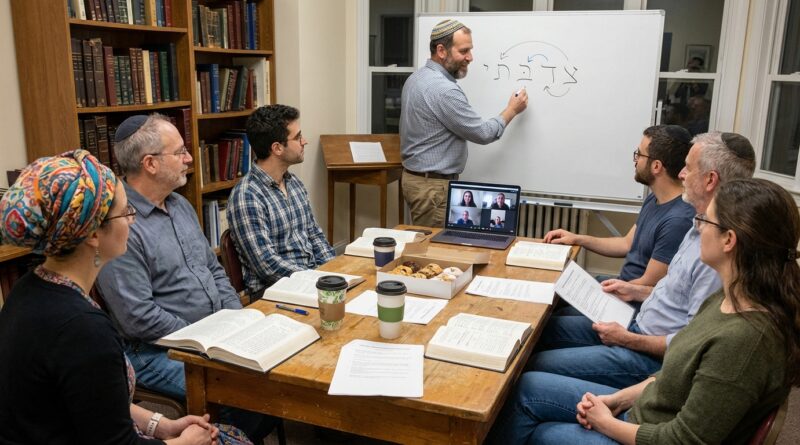
Tonight in Jewish Communities: The Weeknight Classes Quietly Reinventing Adult Jewish Learning
You have probably seen them all week. A Hebrew refresher at the JCC. A Tuesday night Torah circle at a synagogue you have never entered. A Zoom class that says “all levels welcome,” which somehow makes you more suspicious, not less. That feeling is fair. After weeks of holidays, memorial days, and heavy communal emotion, many people want a gentler way back into Jewish life. Not another event that feels like school, or worse, a polite setup for a donation ask. The good news is that a lot of these weeknight classes really are different. They are smaller, lower pressure, and built for adults who are rusty, curious, busy, or just tired. If you have been searching for Jewish adult education classes near me and wondering what is actually worth your evening, there is a simple way to sort the welcoming options from the ones that will drain your energy.
⚡ In a Hurry? Key Takeaways
- Tonight’s best Jewish adult classes are usually the small, practical ones: Hebrew reading refreshers, text study circles, chanting groups, and drop-in Zoom sessions.
- Pick a class based on your energy level, not your guilt. Start with one session that is labeled beginner-friendly, drop-in, or no membership required.
- A good class should feel welcoming and clear about cost, time, and expectations. If it sounds like a fundraising event in disguise, skip it.
Why these classes matter right now
The Jewish calendar has a rhythm to it. Some stretches are loud, packed, and emotional. Then there are the quieter weeks, when community life gets rebuilt in classrooms, libraries, side rooms, and laptop screens.
That is where a lot of adult Jewish learning is happening right now across North America. Not in giant conferences. Not only in formal seminaries. In ordinary weeknight spaces where adults show up after work, still in jeans, with tea in hand, hoping to remember the aleph-bet, understand a prayer they have mouthed for years, or just meet other Jews without small-talk pressure.
If that sounds familiar, it fits a broader shift already visible in local Jewish life. We have seen communities move from headline-sized gatherings to smaller, steadier forms of connection, as described in 2 Iyar Today: How Small, Local Events Are Quietly Rewiring Jewish Community After a Hard Year. Adult classes are part of that same turn. They are less dramatic, but often more lasting.
What is actually worth showing up for?
Not every class flyer deserves your Tuesday night. The useful ones usually share three things. They are clear, low-pressure, and specific.
Look for practical classes, not vague inspiration
A flyer that says “Explore Jewish wisdom” can mean almost anything. A flyer that says “Learn to read Hebrew in 6 weeks” tells you exactly what you are getting.
Classes that tend to work well for busy adults include:
- Hebrew reading bootcamps for beginners or returners
- Haftarah or Torah trope chanting circles
- Parsha study groups with coffee or tea
- Jewish history nights with one topic per session
- Prayerbook Hebrew refreshers
- Hybrid Zoom classes where cameras are optional and drop-ins are welcome
Specific beats abstract. If the goal is obvious, it is easier to know whether the class matches your mood and your schedule.
Beginner-friendly should mean beginner-friendly
This is a big one. Some programs say “all levels welcome” but are really built for people who already know a lot. You can often spot the difference by reading the details.
Good signs:
- The description says no prior knowledge needed
- There is plain language about what happens in each session
- The teacher is named, and their style is described
- The class mentions transliteration, handouts, or recorded sessions
- You can attend one session before committing to more
If the description is full of insider language and assumes you already know the books, prayers, and calendar terms, it may not be the easiest re-entry point.
How to choose based on your actual energy level
This is where most people go wrong. They pick the class they think they should take, not the one they can realistically enjoy after a long day.
If you are mentally fried
Choose something social and lightly structured. A text-and-tea night, an intro discussion group, or a casual Zoom class works well. You want room to listen without feeling tested.
If you want a concrete skill
Go for Hebrew decoding, prayerbook reading, or chanting. Skill-based classes can be surprisingly satisfying because you leave knowing you can do one thing better than before.
If you are feeling disconnected
Pick the smaller room over the bigger event. Eight to fifteen people is often the sweet spot. Big lectures can be interesting, but small circles are where names get learned and friendships start.
If your schedule is chaotic
Hybrid or drop-in Zoom classes may be your best bet. A lot of synagogues and JCCs now quietly offer excellent online options, especially in weeknight slots. You do not have to be a member to benefit.
How to tell if a class is welcoming before you go
You do not need a perfect insider radar. A few small checks can save you a wasted evening.
Check the signup page
If you have to click through six forms, create an account, and choose a donation tier before you even know what the class is, that is a warning sign. A straightforward registration page usually points to a straightforward program.
Email one question
Ask something simple: “I am rusty and not a member. Is this a good fit for a beginner?”
The answer tells you a lot. If the reply is warm, clear, and fast, chances are the room will be too.
Notice the language
“Open to all.” “No Hebrew required.” “Drop-ins welcome.” “Come as you are.” These phrases are not magic, but they often signal that the organizers have thought about newcomers on purpose.
Where to find Jewish adult education classes near me
If you are actively searching for Jewish adult education classes near me, start local, then widen out.
Best places to check first
- Your nearest synagogue, even if you are not a member
- The local JCC website or events page
- Federation community calendars
- Independent minyan newsletters
- Jewish Facebook groups or neighborhood WhatsApp chats
- Community bulletin boards in kosher markets or cafes
Do not assume denomination is a dealbreaker. Reform, Conservative, Orthodox, Reconstructionist, and independent communities all run adult learning. The best fit may be less about label and more about tone, class size, and whether the instructor likes teaching regular adults.
Red flags that tell you to skip it
Some events are simply not built for the person they claim to invite.
- No class outline, no teacher bio, no idea what happens when you arrive
- Heavy pressure to join, donate, or commit before attending once
- Descriptions that sound impressive but explain nothing
- Very late start times for a weeknight class with lots of required prep
- Language that makes beginners feel like a burden
You are allowed to be picky. A class that asks for your evening should earn it.
What the best weeknight classes give you
The real value is not just information. It is confidence.
A Hebrew reading class can make synagogue feel less alien. A chanting circle can turn anxiety into practice. A text study group can give you one thoughtful hour in the week where you are not doom-scrolling. And a recurring class, even a small one, can quietly rebuild your Jewish social world without forcing you into a big public event.
That is why these spaces matter more than they may look on paper. They are doing the quiet maintenance work of community. Not flashy. Very useful.
At a Glance: Comparison
| Feature/Aspect | Details | Verdict |
|---|---|---|
| Best type for beginners | Hebrew refreshers, intro text circles, and drop-in Zoom classes with no prior knowledge required | Usually worth trying first |
| Time and energy demand | One-hour weeknight sessions, especially hybrid or casual formats, are easiest after a long day | Best for re-entry |
| What to avoid | Vague descriptions, insider-heavy language, or events that feel like membership or fundraising funnels | Skip without guilt |
Conclusion
You do not need to become a “serious scholar” by next Thursday. You just need one good doorway back in. Right now, across North America, mid-week Jewish life is being carried by small but steady adult learning spaces: Hebrew reading bootcamps, Haftarah chanting circles, text-and-tea nights, and hybrid Zoom classes that almost anyone can try. That is the real story of this moment. The big commemorations matter, but so does the quieter work that comes after. Knowledge gets rebuilt. Confidence comes back. Friendships start in folding chairs and Zoom boxes. So if you have been circling flyers and hesitating, keep it simple. Pick one nearby or online class that fits your actual energy level. Show up in jeans, bring curiosity, and leave perfectionism at the door.