Today’s Jewish Mother’s Day Gatherings: The Quiet Library Events And Shul Brunches Turning Secular Brunch Day Into A Jewish Gratitude Ritual
Mother’s Day can feel oddly empty when the whole plan is just fighting for a brunch reservation and handing over a card. If you are Jewish, or part of a Jewish family, that can feel even more off. You want to honor your mom, savta, stepmom, aunt, rebbetzin, or the woman who always made you feel fed and seen. But a generic prix fixe menu does not always hold that kind of love. That is why more families are quietly turning to Jewish Mother’s Day events like library story hours, synagogue brunches, and craft circles that bring memory, food, and community into the day. These gatherings are not flashy. That is part of the point. They give people a softer way to mark the holiday, especially if family is complicated, money is tight, or everyone is too tired for a big production. They turn a mainstream holiday into something warmer, more local, and a lot more Jewish.
⚡ In a Hurry? Key Takeaways
- Jewish Mother’s Day events are turning a generic holiday into something rooted in memory, gratitude, and community.
- Look for low-pressure options like shul brunches, PJ Library storytimes, flower arranging, or intergenerational crafts at local JCCs and synagogues.
- These events do more than honor moms. They also support Jewish spaces and help lonely or disconnected people feel included.
Why these gatherings matter right now
There is nothing wrong with brunch. The problem is when brunch is the whole story.
For a lot of Jewish families, Mother’s Day lands in an awkward spot. It is not a Jewish holiday, but it touches something deeply Jewish anyway. Gratitude. Care work. Memory. The women who kept the recipes, remembered the yahrzeits, packed the school lunches, mailed the checks, hosted the seders, and somehow knew where everyone’s sweater was.
That is why Jewish Mother’s Day events are catching on in such a quiet but meaningful way. They give families a place to say thank you in a setting that actually fits their lives. Not performative. Not overplanned. Just real.
What Jewish Mother’s Day events look like on the ground
Quiet library storytimes
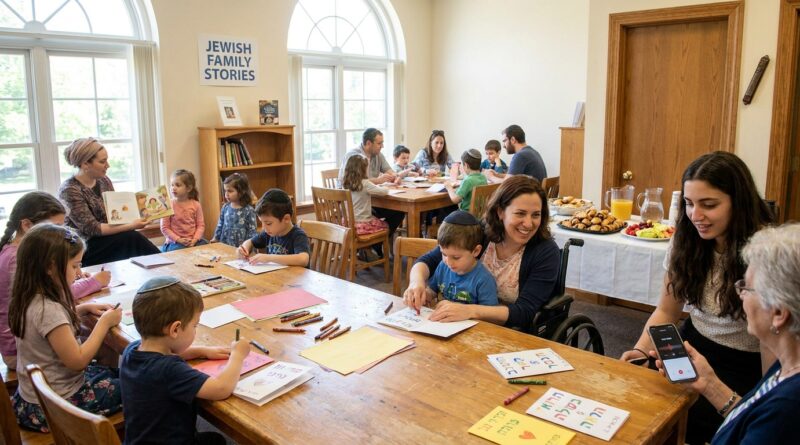
Some of the loveliest events are happening in libraries and family centers. Think PJ Library style read-alouds, songs, snacks, and a simple craft where kids make a card, decorate a flower pot, or draw a family tree.
These work because they are low stakes. You do not need to dress up. You do not need a perfect family photo. You just show up. A baby can cry. A toddler can smear glue everywhere. A grandmother can sit in the back and smile.
For interfaith or less affiliated families, this can be the easiest entry point. It feels welcoming, not formal. Jewish, but not intimidating.
Shul brunches after services
Then there is the classic synagogue version. Kiddush lunch with a little extra intention. Maybe flowers on the tables. Maybe a few words honoring mothers, grandmothers, and caregivers. Maybe children come up with handmade blessings or a short song.
This is where a routine communal meal becomes something deeper. You are not just taking Mom out. You are placing gratitude inside community. That matters. Especially now, when so many institutions are trying to keep people connected without asking for some giant commitment.
Multi-generational craft circles
These may be the most underrated option of all. A JCC room full of grandmothers, moms, kids, teens, and a few people who came alone but were welcomed in anyway. They make challah covers, flower crowns, memory books, or framed family recipes.
It sounds simple because it is simple. But simple is often what people need most.
Why this feels more meaningful than a restaurant meal
A restaurant gives you a table for ninety minutes. A community event gives you context.
That is the difference.
At a Jewish Mother’s Day event, the day becomes about more than consumption. It becomes about continuity. The grandmother who came from somewhere else. The mother who held things together after a hard year. The neighbor who invited you for Shabbat when you had nowhere to go. The aunt who is not technically your mom but absolutely counts.
That wider lens is especially helpful for people who feel mixed emotions around Mother’s Day. Not everyone is celebrating in a neat Hallmark way. Some are grieving. Some are estranged. Some are trying to conceive. Some lost mothers. Some never had a safe one.
Jewish communal spaces, at their best, know how to hold joy and ache at the same time. That makes these gatherings feel more honest.
How to find the right event for your family
Start local and small
Check your synagogue, JCC, PJ Library chapter, Jewish federation calendar, and neighborhood library. Search directly for “Jewish Mother’s Day events” plus your city. Also try “Mother’s Day brunch synagogue,” “Jewish family storytime,” or “JCC Mother’s Day craft.”
Match the event to your energy level
If your family is tired, do not pick the biggest thing on the list just because it sounds impressive. Choose the easiest one to attend. A one-hour library event may mean a lot more than a fancy meal that leaves everyone stressed.
Think beyond biology
If there is a woman in your life who mothered you in some way, this day can include her too. Many of the best events naturally make room for grandmothers, adoptive moms, chosen family, and community elders.
Ask what the tone will be
This is especially useful if the holiday is tender for your family. Some events are upbeat and child-centered. Others are more reflective. It is okay to call or email and ask. A good organizer will be glad you did.
What synagogues and Jewish groups are getting right
The smartest communities are not trying to compete with upscale restaurants. They are offering something restaurants cannot.
They are creating room for storytelling. Room for blessings. Room for generations to sit together. Room for people who come because they are celebrating, and room for people who come because they do not want to be alone.
That is a practical kind of care. It also helps local Jewish institutions at a time when many are stretched thin. Every person who walks in for a brunch, craft circle, or storytime is not just attending an event. They are helping keep a community space alive.
What to do if there is no formal event near you
You can make your own version without much effort.
Try a mini Jewish gratitude ritual at home
Light candles if that feels right. Serve bagels, babka, fruit, or your family’s favorite comfort food. Ask everyone at the table to share one memory of the woman being honored. If she is no longer alive, say her name out loud. That alone can change the whole feeling of the day.
Use your regular spaces
A public park, a library room, or a synagogue social hall can be enough. You do not need a big budget. You need intention.
Keep it easy
One song. One story. One recipe card. One bouquet. People remember warmth, not production value.
Who benefits most from these events
Pretty much everyone, but especially:
- Families who want a Jewish way to mark Mother’s Day without making it a major project
- Interfaith households looking for a gentle entry into Jewish communal life
- Grandparents who want shared time, not just gifts
- Single parents and caregivers who want support, not pressure
- People who feel lonely on Mother’s Day and do better in a welcoming public setting
That last group matters a lot. Holidays can sharpen loneliness. A simple brunch at shul or a storytime in the library can be a bridge back into community for someone who has been drifting.
At a Glance: Comparison
| Feature/Aspect | Details | Verdict |
|---|---|---|
| Traditional restaurant brunch | Convenient, familiar, but often rushed, expensive, and disconnected from family memory or Jewish life | Fine as a meal, weaker as a meaningful ritual |
| Synagogue or JCC brunch | Adds blessings, community, and a sense of shared gratitude while staying easy to attend | Best all-around option for warmth and connection |
| Library storytime or craft circle | Low-cost, child-friendly, welcoming to less affiliated or mixed-background families | Best entry point for families who want something gentle and real |
Conclusion
Mother’s Day weekend is full of programming, but very little of it speaks the language of Jewish memory and community care. That is why Jewish Mother’s Day events matter more than they may seem to at first glance. A storytime, a kiddush brunch, or a craft circle can give families a ready-made way to honor the women who keep Jewish homes and relationships going. It also helps strengthen the local institutions many people say they miss but rarely enter. Most of all, it meets people where they are. Busy, tired, grieving, grateful, a little disconnected, or all of the above. You do not need to radically change your schedule to make the day feel more rooted. You just need a setting that makes room for love, memory, and showing up. Sometimes that starts with coffee and rugelach in a synagogue social hall. Sometimes it starts with a child gluing paper flowers at the library. Either way, it counts.