Tonight’s Last-Night JAHM Gatherings: The Grassroots Events Quietly Turning ‘Jewish Heritage Month Flew By’ Into One Honest, Local Celebration
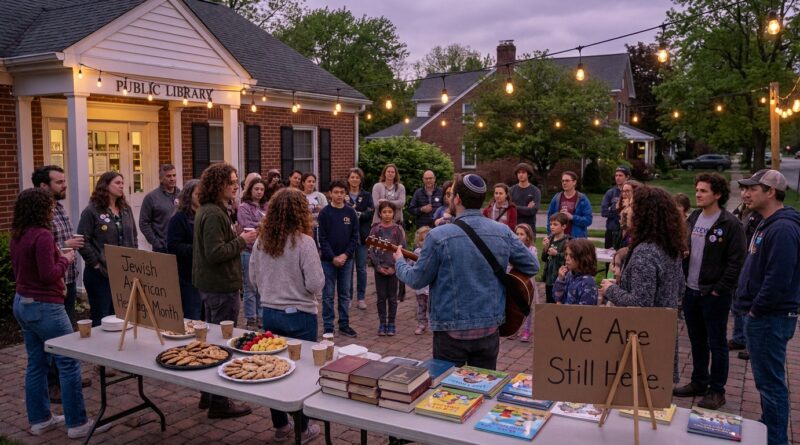
Maybe Jewish American Heritage Month is ending and you are having that familiar, slightly lousy thought: wait, did anything actually happen here? Maybe your city issued a nice proclamation, your school posted one graphic, and that was about it. Meanwhile, Jewish life has felt tense, public, and fragile all at once. So if you missed the official programming, or there barely was any, you are not failing. The calendar is. The good news is that the last night or two of the month is still enough time for something real. Not a gala. Not a panel nobody can get to. Just a small, local gathering that says Jewish life is here, in public, with warmth. If you are looking for Jewish American Heritage Month community event ideas that normal people can pull off after work, tonight is actually perfect. Low stakes. Short notice. Honest. A table, a walk, a story circle, a dessert meetup. That still counts. In fact, it may count more.
⚡ In a Hurry? Key Takeaways
- A last-night Jewish American Heritage Month gathering can be simple, local, and meaningful, even if you start planning today.
- Pick one easy format such as a dessert table, neighborhood walk, story circle, or park meetup, then text five to fifteen people and keep it to one hour.
- Use common-sense safety, choose a comfortable public or semi-public location, and focus on warmth over perfection.
Why the last night matters more than people think
There is something uniquely frustrating about a heritage month that passes with almost no lived experience attached to it. You see the official words. You do not feel the actual community.
That gap has been especially sharp lately. Many Jews are being seen through the narrow lens of crisis, security, politics, or conflict. Those things are real. But they are not the whole story. A small local event can widen the picture fast.
This is why last-minute does not mean pointless. It can mean honest. It can mean the people who are actually around, showing up as themselves, without a giant committee or a perfect flyer.
The rule for tonight: keep it small, visible, and easy
If you are trying to come up with Jewish American Heritage Month community event ideas on short notice, use this three-part filter:
1. Small
Think 5 to 20 people, not 100. A smaller group is easier to organize, easier to host, and more likely to happen.
2. Visible
Visible does not have to mean loud. It can simply mean people gathering in a library room, a park picnic area, a coffee shop back table, or someone’s front porch. The point is that Jewish life is happening in ordinary public space, not hidden behind a press release.
3. Easy
If it needs catering, custom graphics, multiple speakers, or permits you do not already have, skip it. The best event tonight is the one that actually takes place.
Four gathering ideas you can still pull off tonight
1. The dessert and stories table
This is the easiest one. Ask everyone to bring a dessert, snack, or drink that means something to them. Rugelach from the bakery. Black and white cookies. Tea and store-bought brownies. It does not need to be fancy.
Then use one prompt: “What is one Jewish memory, tradition, song, recipe, book, or family story you want to keep alive?”
That is the event. Really.
You can host it in a home, apartment common room, synagogue lobby, JCC corner, library meeting room, or even outside if the weather cooperates.
2. The neighborhood Jewish joy walk
Meet at a public park, downtown strip, or neighborhood loop and take a 30 to 45 minute walk. End with iced coffee or ice cream.
The structure is simple. Pair people up for ten minutes at a time with prompts like:
- What part of Jewish life do you wish your neighbors understood better?
- What made you feel proud this month?
- What do you want kids to remember about being Jewish in America?
This format works especially well for people who do not love sitting in a circle.
3. The bring-one-friend open house
If allies have been asking what they can do, this is a good doorway. Invite each Jewish guest to bring one non-Jewish friend, coworker, or neighbor. Keep it casual. Snacks, music, and a short welcome from the host.
You are not asking anyone to solve antisemitism in an hour. You are making Jewish life legible, local, and human.
A sentence like this is enough: “We did not want Jewish American Heritage Month to pass as just another civic line on the calendar, so we opened our door for one evening.”
4. The family-friendly story hour or craft circle
If you want children involved, keep expectations low and warmth high. Read a picture book, do a simple craft, sing one song, and let the kids eat cookies. That is a success.
If you want a fuller kid-centered model, it is worth looking at Tonight’s Jewish Heritage Month Story Hours: The Kid-Friendly Circles Quietly Turning ‘My Child Only Hears About Us In Crisis’ Into Warm, Everyday Pride. It is a good reminder that children do not only need lessons about danger. They need ordinary, public pride too.
A simple script you can copy and send right now
You do not need polished outreach. You need a clear text.
Try this:
“Jewish American Heritage Month is ending, and I realized I do not want it to pass with nothing real happening here. I am putting together a very simple gathering tonight from 7 to 8 at [location]. Bring a snack if you want. We will share one story, memory, or favorite piece of Jewish culture and just be together. Friends and supportive neighbors welcome. Message me if you are in.”
That works by text, WhatsApp, email, Facebook, synagogue listserv, school parent group, or a neighborhood chat.
How to choose the right location fast
On a rushed timeline, location matters more than branding.
Best options
- A living room, patio, or apartment lounge
- A library meeting room, if already available
- A coffee shop with a side room or large table
- A park picnic table in a familiar area
- A synagogue, JCC, or school space that can say yes quickly
What to prioritize
- Easy parking or walkability
- Good lighting
- Bathrooms nearby
- A setting where people can hear each other
- A place that feels calm, not exposed
If public visibility feels good, great. If semi-private feels wiser, that is also fine. “Visible” should never mean reckless.
Safety without turning the whole night into a security briefing
This is the balancing act a lot of people are tired of. You want to be open, but you also do not want to ignore reality.
So use common sense:
- Share the exact location directly with invited guests if you are unsure about posting it widely.
- Choose a place with regular foot traffic or known staff.
- Keep the event short. One hour is enough.
- Ask one person to be the point person at the door or entrance.
- If kids are attending, make sure adults know who is supervising them.
The goal is not to act afraid. It is to make practical choices so people can relax once they arrive.
What to actually do once people are there
This is where hosts sometimes overthink things. You do not need a full program.
Use this one-hour outline:
Minute 0 to 10
People arrive, grab food, settle in.
Minute 10 to 15
Host says welcome and one sentence about why you gathered.
Minute 15 to 45
Go around with one prompt. Examples:
- What is one Jewish American story, object, food, song, or person you want remembered?
- What do you love that gets lost when Jewish life is only talked about in crisis mode?
- What would you want a neighbor to understand about Jewish life here?
Minute 45 to 60
Let people mingle. If you want, close by asking whether this should happen again next month in the same simple format.
What makes these gatherings work
They work because they lower the emotional barrier. A lot of people are carrying disappointment. They did not see much public recognition. They feel wary. They are tired of performative statements. A small gathering gives them something they can trust because they can see it and touch it.
They also work because they are repeatable. If tonight goes well, this can become a monthly salon, a park meetup, a rotating Shabbat-adjacent dessert hour, or a kids’ story circle. It stops being about rescuing one month and starts becoming local culture.
At a Glance: Comparison
| Feature/Aspect | Details | Verdict |
|---|---|---|
| Speed to organize | Dessert meetups, walks, and story circles can be planned in a few texts and held the same evening. | Best choice for last-night action |
| Cost | Most formats cost little or nothing if guests bring snacks and you use an existing space. | Accessible for small communities |
| Community impact | Face-to-face time creates warmth, visibility, and practical next steps in a way proclamations often do not. | High emotional value |
Conclusion
Tonight does not have to be grand to be real. That is the whole point. Jewish American Heritage Month is still technically on the calendar in a lot of places, but many Jews have spent the month feeling either unseen or reduced to alerts, statements, and symbolism. A small gathering in the final night or two can interrupt that feeling. It gives people a low-pressure way to say, plainly and publicly, we are here. It lets neighbors talk to neighbors. It lets children see Jewish joy in ordinary space. It gives allies a door to walk through instead of another vague instruction to “show support.” And maybe most importantly, it turns the flat feeling of “I missed it again” into something alive. A table. A walk. A circle. A room with voices in it. In a year when proclamations have felt thin, that kind of simple local presence can do more than people think. Start small tonight, and you may end up building the thing you wished had existed all month.