Tonight’s Jewish Heritage Month Story Hours: The Kid-Friendly Circles Quietly Turning ‘My Child Only Hears About Us In Crisis’ Into Warm, Everyday Pride
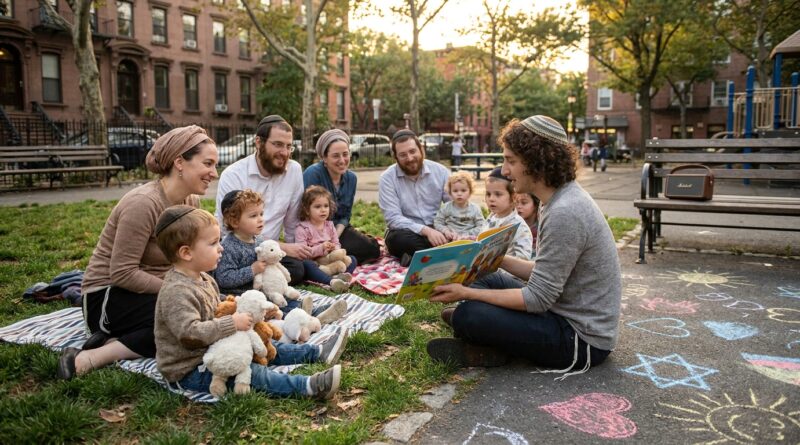
Parents are tired, and not in a vague way. They are tired of opening the news and seeing Jewish life framed as danger, debate, or something that only adults discuss on panels with folding chairs and bad microphones. By May, Jewish American Heritage Month is supposed to feel affirming, but for many families it can land as another round of events that are too heavy, too late at night, or simply not meant for little kids. The quiet question underneath all of it is simple. Where can my child hear Jewish stories that feel warm, normal, and safe? The good news is you do not need a grant, a stage, or a formal program to answer that. A small Jewish American Heritage Month kids story hour can start tonight in a library corner, synagogue playroom, living room, or park blanket circle, and it can give children something many have been missing lately: everyday pride.
⚡ In a Hurry? Key Takeaways
- A Jewish American Heritage Month kids story hour works best when it is short, gentle, and centered on joy, family, food, music, kindness, and belonging.
- You can start one tonight with 3 books, 1 song, a simple snack, and a 30-minute plan in any low-key community space.
- The goal is not to teach everything. It is to give children a safe, happy association with Jewish life during an anxious news cycle.
Why this matters right now
May is full of proclamations, museum posts, civic recognitions, and grown-up heritage programming. That all has value. But if you are parenting a preschooler or early elementary kid, it can feel like the month is happening over your child’s head.
Kids do not need a lecture on identity. They need a lap, a picture book, a silly question, and a room where Jewish life feels ordinary in the best possible way.
That is why story hour works. It lowers the pressure. It gives families a soft landing place. And it turns “heritage” from an abstract word into something a child can touch, hear, laugh at, and remember.
What a kid-friendly Jewish story hour should actually do
For this kind of event, the bar is not “impressive.” The bar is “calming, welcoming, and easy to repeat.”
Keep it short
Think 25 to 35 minutes. That is enough time for a hello song, two or three books, one simple activity, and a goodbye.
Keep it warm
Pick stories about family, holidays, neighborhood life, music, friendship, questions, food, helping others, and Jewish diversity. You are building familiarity, not assigning homework.
Keep it open
Some families know every Hebrew song. Some know almost none. Say things clearly. Explain words without making a big production out of it. No one should feel behind.
Keep it age-appropriate
If the adults are carrying stress from the headlines, that is real. But story hour for young kids is not the place to pass that stress down. Let this hour be the breath out.
A simple format communities can copy tonight
If you are looking for practical Jewish American Heritage Month kids story hour ideas, use this plug-and-play format.
The 30-minute story circle
1. Welcome, 5 minutes
Sit in a circle. Offer name tags if you want, but skip them if they create fuss. Start with a greeting like, “We are here to share Jewish stories and songs.”
2. First book, 5 minutes
Choose a gentle, picture-rich book with a clear emotional hook. Family meal stories, holiday preparation, neighborhood stories, or bedtime-themed books all work well.
3. Song or movement break, 3 minutes
A simple clapping song, a circle dance, or a stretch keeps little kids with you.
4. Second book, 5 minutes
Pick a book that shows Jewish life as varied and everyday. Bonus points if it reflects Sephardi, Mizrahi, Israeli, Soviet Jewish, Ethiopian Jewish, interfaith, multiracial, or disability-inclusive experiences.
5. Tiny activity, 7 minutes
Color a challah page. Make paper stars. Smell spice jars. Match holiday objects. Let kids draw “my family tradition.” Keep supplies cheap and cleanup easy.
6. Goodbye ritual, 3 to 5 minutes
End the same way each time. A goodbye song, a sticker, or a simple line like, “Jewish stories are part of our everyday lives,” gives children a comforting finish.
What kinds of stories work best
The best books for this setting are not necessarily the most famous ones. They are the ones that make kids feel cozy, curious, and included.
Good themes to use
- Shabbat and family meals
- Baking, gardening, music, and neighborhood life
- Acts of kindness and helping others
- Jewish holidays explained through child-sized moments
- Stories about asking questions
- Stories showing many kinds of Jewish families
The tone to aim for
Gentle. Bright. Reassuring. Curious. You want a child to walk out thinking, “That felt nice,” not “I learned that being Jewish means being scared.”
How to host it if you have no budget
This is the beauty of the format. You probably already have what you need.
Use borrowed books
Public libraries are often the easiest place to start. If your library has little or nothing on display for May, pair your story hour with the kind of simple visibility described in Today’s Jewish Heritage Month Library Pop‑Ups: The Tiny Book Displays Quietly Turning ‘My Town Forgot We Exist’ Into A Visible Jewish Corner. A small display plus one story circle can change the whole feeling of a room.
Use easy spaces
A synagogue classroom is fine, but so is a library rug, JCC nook, daycare corner, apartment common room, or shaded patch of grass at a playground.
Skip complicated crafts
Children do not need a Pinterest-level project. Crayons and one sheet of paper are enough. The story is the event.
Ask one person to lead and one to greet
That is often all the staffing you need. One adult reads. One helps late arrivals settle in and points out bathrooms and snacks.
How to make families feel safe and included
This part matters as much as the books.
Say who it is for
Use welcoming language in your invitation. Try: “For toddlers, preschoolers, early elementary kids, and the grown-ups who love them.”
Explain the vibe
Tell families upfront that it will be gentle and age-appropriate. That one sentence can bring in parents who are nervous their child will hear something too intense.
Make room for different levels of Jewish knowledge
Not every family uses Hebrew at home. Not every family belongs to a synagogue. Some are interfaith. Some are new to community life. Avoid insider shorthand when plain words will do.
Offer sensory flexibility
If possible, have a side area for kids who want to stand, wiggle, or color while listening. Story hour should feel humane, not strict.
What to say if a parent asks for “something positive”
You do not need a polished mission statement. Just be honest.
Say: “We wanted a place where kids could hear Jewish stories that are about everyday joy, not just hard news.”
That is clear. It is true. And most parents will understand immediately.
What not to overcomplicate
It is easy to talk yourself out of doing this by assuming you need official branding, a speaker series, registration software, or a full month calendar.
You do not.
If three families show up and the kids sit on the floor eating pretzels while hearing a sweet story about Shabbat or a Jewish grandparent, the event worked. The point is repetition and tone, not scale.
Three ready-to-use story hour themes
1. Jewish joy at home
Books about family meals, songs, bedtime rituals, grandparent visits, and holiday prep. Activity: draw your favorite family tradition.
2. Jewish neighborhoods and helpers
Books about community, kindness, tzedakah, visiting, sharing food, and saying hello. Activity: decorate a paper “kindness card.”
3. Jewish music, food, and color
Books with strong sensory details. Challah, candles, spices, dancing, market scenes, and singing all play well with younger kids. Activity: spice-smelling station or paper challah braids.
At a Glance: Comparison
| Feature/Aspect | Details | Verdict |
|---|---|---|
| Setup effort | Needs a few books, a reader, floor space, and a simple welcome plan | Very easy to launch tonight |
| Best audience | Toddlers, preschoolers, early elementary kids, and parents who want a low-pressure Jewish space | Strong fit for families shut out of adult-focused events |
| Main value | Builds warm, ordinary Jewish visibility through stories, songs, and shared moments | High emotional payoff with almost no budget |
Conclusion
Jewish American Heritage Month is peaking right now, and a lot of the public energy around it still skews toward speeches, civic recognition, and adult programming. That has its place. But young children and their worn-out parents need something else too. They need a soft place to land. A simple story hour gives communities a way to start immediately, without permits, committees, or much money at all. More importantly, it changes what Jewish visibility feels like. Instead of heritage being a poster on a wall or a proclamation at city hall, it becomes a child sitting cross-legged on the floor, hearing a warm story, nibbling a snack, and feeling that being Jewish means joy, curiosity, and belonging. That is not a small thing. It may be the most useful event of the month.