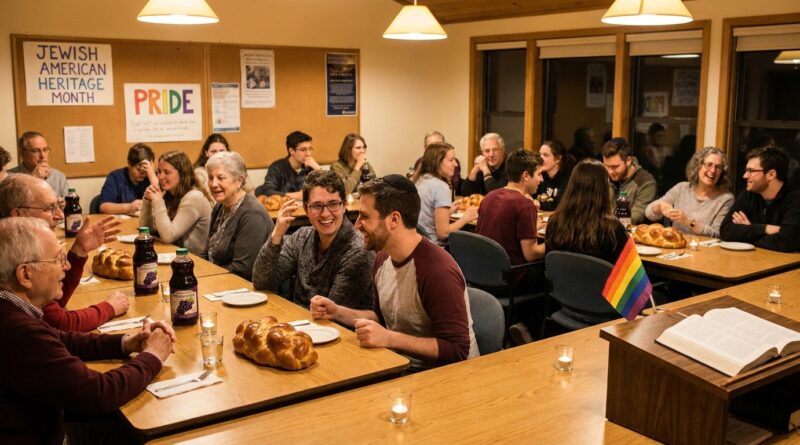
Tonight’s Jewish Pride Shabbat Dinners: The Local Tables Quietly Turning ‘I Feel Alone In This Climate’ Into A Room Full Of Allies
You can only read so many ugly headlines before it starts to feel personal. Maybe you have been doomscrolling stories about antisemitism, seeing hostile comments pile up, and asking yourself a simple question. Is there anywhere offline that feels safe, warm, and normal to be visibly Jewish right now? That feeling is real. A lot of people are carrying it. The good news is that tonight and this weekend, in cities and suburbs across North America, small Jewish Pride Shabbat dinners are doing something big. They are turning isolation into actual human company. Not a statement on social media. A table. A blessing. A meal. A room where LGBTQ Jews, allies, friends, and family can show up as they are. If you have been searching for a Jewish Pride Shabbat dinner near me and feeling unsure where to start, this is one of those moments where a small local invitation can matter more than a giant public event.
⚡ In a Hurry? Key Takeaways
- Yes, Jewish Pride Shabbat dinners are happening locally in many communities this week, often through synagogues, JCCs, Moishe Houses, Hillels, federations, and grassroots LGBTQ Jewish groups.
- If you are not sure how to ask, use a simple outreach note: “Hi, I’m looking for a Jewish Pride Shabbat dinner near me or an LGBTQ-inclusive Shabbat this weekend. Is there one you’d recommend, and is it okay to come solo?”
- These smaller dinners can feel safer and more welcoming than big public events because they center real connection, clear hosts, and community norms around belonging.
Why these dinners matter right now
Big rallies have their place. Public solidarity matters. But many people do not need another poster or press release tonight. They need somewhere to sit down.
That is why this mix of Pride season, Jewish American Heritage Month programming, and regular Friday night Shabbat dinners feels so timely. It is not flashy. It is local. And that is the point.
A Jewish Pride Shabbat dinner near me is not just a search term. For a lot of people, it is really a search for three things at once. Safety. Belonging. Normalcy.
When a local rabbi, host family, community organizer, or LGBTQ Jewish group opens a table, they are quietly answering a hard emotional question. You do not have to figure this out alone.
What a Jewish Pride Shabbat dinner usually looks like
If you have never been to one, do not picture anything too complicated.
In many communities, it looks like a regular Shabbat dinner with a little more intentionality. Candles. Kiddush. Challah. A potluck or catered meal. Maybe a short welcome that names Pride month, Jewish identity, or support for LGBTQ members and families. Sometimes there is a discussion prompt. Sometimes there is singing. Sometimes it is just dinner and a chance to exhale.
The strongest version of these gatherings is simple. People know they are expected. People know the room is meant to be inclusive. People know they do not need to explain themselves to be there.
Who hosts them
You may find these dinners through:
- Synagogues across denominations
- JCCs and local Jewish community centers
- Moishe House and peer-led young adult groups
- Hillel and campus Jewish organizations
- Federation calendars
- LGBTQ Jewish networks and Pride collectives
- Private hosts sharing invitations through community email lists or social media
Who they are for
Usually, more people than you think. LGBTQ Jews, interfaith couples, Jewish families with queer kids, allies, people returning to Jewish life after a long gap, and people who simply do not want to spend another Friday night feeling on edge.
How to find a Jewish Pride Shabbat dinner near me tonight
Start local and keep it boring. Boring works.
Search your city name with terms like “Jewish Pride Shabbat,” “LGBTQ Shabbat,” “Pride Friday night dinner,” “inclusive synagogue Shabbat dinner,” or “queer Jewish community” and your neighborhood.
Then check the places that already gather Jews offline. Synagogue event calendars. JCC listings. Federation websites. Instagram accounts for local rabbis and Jewish young adult groups. Community Facebook groups. Hillel pages, even if you are not a student, because they often repost citywide events.
If you have seen broader community dinner projects before, you already know how much these local tables can do. That is part of why articles like Tonight’s Shabbat 250 Gatherings: The Local Dinners Quietly Turning America’s Birthday Into A Jewish Gratitude Ritual resonate. The format works because shared meals work. People connect faster around a table than in almost any other setting.
If you are nervous, use this exact outreach script
You do not need to craft the perfect message. Send something short and clear.
Email or DM script
Hi, I’m looking for a Jewish Pride Shabbat dinner near me or an LGBTQ-inclusive Shabbat this weekend. I have been hoping to find something welcoming and community-focused. Do you know of a dinner or service you would recommend, and is it okay to come on my own?
If you want to ask about safety too
Hi, I’m interested in attending. Could you tell me a little about the setting, who usually comes, and whether there is someone I can check in with when I arrive? I’m coming solo and would appreciate a bit of guidance.
If you are reaching out to a friend
Hey, this is a little vulnerable, but I do not want to do Shabbat alone this week. Have you heard of any Jewish Pride Shabbat dinner near me, or would you want to go with me if you find one?
That last sentence matters. A lot of people are waiting for someone else to say it first.
How to tell if an event is actually welcoming
Not every listing says much. That can make it hard to know whether a dinner is truly inclusive or just generally open.
Look for a few clues:
- The event page names LGBTQ inclusion directly
- There is a real host, rabbi, organizer, or contact person listed
- The language sounds warm and specific, not vague and corporate
- It says whether solo attendees are welcome
- It includes practical details like accessibility, cost, dietary notes, or security check-in
If the page does not say, ask. A good host will not be annoyed by a normal question. In fact, the answer usually tells you a lot about the culture of the event.
What to do if there is nothing obvious in your area
This happens more than you would think. It does not mean there is no community. It may just mean nobody used the words you were searching for.
Try adjacent paths
Search for a regular Shabbat dinner at an inclusive synagogue, then ask if there is a Pride-themed table, an LGBTQ chavurah, or another welcoming group gathering this month.
You can also contact local clergy directly. Rabbis and cantors often know about informal dinners that are not heavily advertised.
Start very small
If there is truly nothing listed, your first move does not need to be “host a major event.” It can be one text to two people.
“I was hoping to find a Jewish Pride Shabbat dinner near me and did not see one. Want to do a low-key Shabbat dinner Friday and invite a couple of people who could use company?”
That is how some of the best local rituals start. Not with a campaign. With one person deciding that lonely should not be the default setting.
Why the small table can feel stronger than the big event
There is a reason these dinners land so deeply. They are not asking you to perform identity in public. They are giving you a place to rest inside it.
A packed rally can be energizing, but it can also be overwhelming. A Shabbat table is slower. You can hear people. You can ask a real question. You can leave with names, numbers, and actual plans.
That is how community gets rebuilt. Not only through statements, but through repetition. Friday after Friday. One invitation at a time.
What to bring if you get invited
Do not overthink this.
- If asked, bring a dessert, salad, or nonalcoholic drink
- Dress neatly but comfortably
- Arrive on time or a few minutes early
- Tell the host if it is your first time
- If you are anxious, ask if there is a greeter or someone who can meet you at the door
The host does not need you to be impressive. They need you to come.
At a Glance: Comparison
| Feature/Aspect | Details | Verdict |
|---|---|---|
| Finding one locally | Best sources are synagogue calendars, JCCs, federations, Moishe House, Hillel, and LGBTQ Jewish groups. Search with your city name plus “Jewish Pride Shabbat dinner near me.” | Very doable, especially if you send one direct message instead of just browsing. |
| Comfort level for first-timers | Smaller dinners often feel less intimidating than rallies or large services, especially if there is a host contact and solo guests are welcomed. | Usually the easiest entry point back into community. |
| Safety and belonging | The best events clearly name LGBTQ inclusion, logistics, and who to contact. That clarity helps people feel expected, not like an afterthought. | A strong option when you want real-world connection without a lot of noise. |
Conclusion
If you have been feeling both hyper-visible in the news and strangely alone in daily life, this is a good week to trade the scroll for a seat at a table. Across North America, local communities are quietly pairing Pride season, Jewish American Heritage Month proclamations, and regular Friday night dinners into small but powerful Shabbat gatherings built around belonging, safety, and LGBTQ inclusion. Once you name the thing you are looking for, a Jewish Pride Shabbat dinner near me, it gets easier to find it or ask for it. And once you send one short message, the vague feeling of “I should be more involved” turns into an actual plan for tonight or this weekend. That is the real value here. Not just being inspired, but being in the room. Sometimes community does not arrive with a headline. Sometimes it looks like challah, a folding chair, and someone saying, “I’m glad you came.”