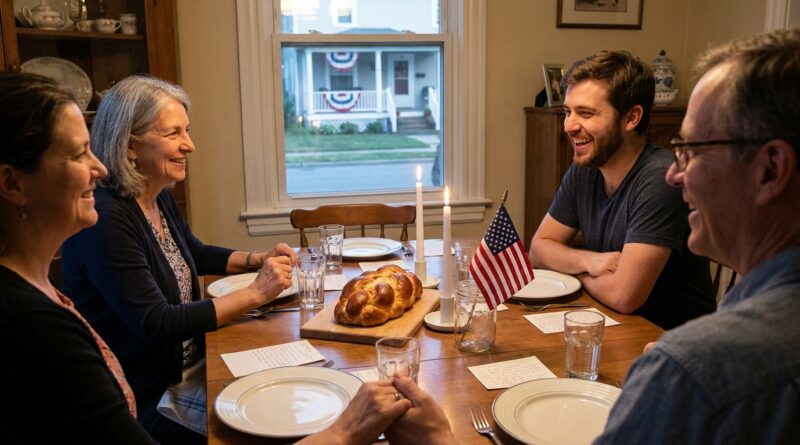
Tonight’s Shabbat 250 Gatherings: The Local Dinners Quietly Turning America’s Birthday Into A Jewish Gratitude Ritual
If you have been seeing chatter about Shabbat 250 Jewish community events and thinking, “Okay, but what does that actually change about my Friday night?” you are not alone. A lot of people are tired. Tired of big civic anniversaries turning into political arguments. Tired of headlines that make Jewish life feel tense, public, and fragile. What makes Shabbat 250 different is that it is small on purpose. It takes a giant national milestone, America’s 250th birthday, and brings it down to the dinner table. Not a rally. Not a branding campaign. Just candles, food, familiar blessings, and one simple question: what does it mean to feel grateful as Jews in America right now? That is why these gatherings matter. They give people a sane, local, human-sized way to feel connected tonight, even if they have zero interest in making a whole production out of it.
⚡ In a Hurry? Key Takeaways
- Shabbat 250 Jewish community events turn America’s 250th into intimate Friday night dinners centered on Jewish gratitude and belonging.
- You can copy the idea tonight in under an hour. Invite a few people, ask everyone to share one American Jewish memory, and keep the meal simple.
- For many communities, especially smaller ones, this format feels safer, warmer, and more meaningful than one more public event or online argument.
What Shabbat 250 actually is
At its core, Shabbat 250 is not complicated. It is a local Shabbat gathering tied to the larger national moment of the United States approaching its 250th birthday. The big idea is simple. Instead of treating the anniversary as something abstract, communities are using Friday night to ask what Jewish life in America has meant, and what they want it to look like next.
That can happen in a synagogue social hall, a JCC, a rabbi’s home, a backyard, or a dining room with six folding chairs that do not quite match. The point is not polish. The point is participation.
For readers trying to make sense of the headlines, here is the plain-English version: Shabbat 250 Jewish community events are about turning a civic anniversary into a Jewish moment of memory, thanks, and connection.
Why this is catching on now
The timing makes sense. A lot of Jews are carrying two feelings at once. Pride, because American Jewish life has been creative, generous, and deeply rooted. Unease, because being visibly Jewish in public can feel harder than it did a few years ago.
That emotional mix is exactly why a Friday night table works so well. It is local. It is familiar. It gives people room to be honest without having to perform certainty.
You do not have to solve American history over challah. You just have to make room for real conversation. Maybe someone talks about grandparents who arrived with almost nothing. Maybe someone remembers the first time they felt safe enough to wear a Jewish star in public. Maybe a teenager talks about what it feels like to be proudly Jewish at school right now.
Those stories are the event.
What happens at one of these dinners
Most gatherings follow a very basic rhythm. Light candles. Make Kiddush. Eat. Then add one prompt that ties Jewish memory to American life.
Some common table prompts
Hosts might ask guests to share:
- One American Jewish memory that shaped them
- One freedom they are grateful for
- One place in America where they felt Jewish community in action
- One hope for the next generation of Jewish life in the United States
That is enough. You do not need a scholar, a panel, or printed discussion cards with fancy branding. In fact, the gatherings often work better when they feel normal.
Why small communities may benefit the most
Big cities often have plenty of Jewish programming. Smaller communities do not always have that luxury. That is one reason this format matters. It scales down beautifully.
If your town has one synagogue, one lay leader, and a text thread, you can still do this. If your Jewish life happens mostly around kitchen islands and carpools, you can still do this. The barrier to entry is low.
That is part of a larger trend, too. Communities are rediscovering that meaningful Jewish life does not always need to be expensive or formal. You can see the same instinct in Tonight’s Small-Town ‘Spring Celebration of Community’: The Quiet Tzedakah Party Rewiring How Synagogues Survive, where smaller, more grounded gatherings are helping people show up in ways that feel real instead of draining.
How to host your own tonight without overthinking it
If there is no official Shabbat 250 event near you, that does not mean you are excluded. This idea is easy to borrow.
The under-an-hour version
- Invite 4 to 10 people. Text is fine.
- Keep food simple. Rotisserie chicken, salad, challah, wine or grape juice works.
- Tell guests to bring one American Jewish memory, object, or story.
- Open dinner with blessings and one sentence about why you are gathering.
- Go around the table and let each person share.
That is it. No one is grading your centerpieces.
A sample opening line
You could say: “With America turning 250, I wanted to use Shabbat to think about what Jewish life here has given us, and what we want to protect and build together.”
Simple beats perfect every time.
What to do if people are anxious, not celebratory
This is important. Gratitude does not mean pretending everything is fine. Some guests may feel conflicted. Some may be grieving. Some may be angry or scared. A good Shabbat 250 gathering can hold that.
You are not hosting a pep rally. You are hosting a table.
That means the conversation can include complexity. People can say they feel lucky to be Jewish in America and still worried about antisemitism. They can feel attached to this country and disappointed by parts of it. Mature gratitude has room for both.
One helpful ground rule
Ask guests to speak from personal experience instead of trying to win a debate. “Here is what I have lived” goes much better over dinner than “Here is why everyone else is wrong.”
How to find Shabbat 250 Jewish community events near you
If you want an organized event instead of hosting, check the usual local channels first:
- Synagogue email newsletters
- JCC calendars
- Federation event pages
- Jewish Facebook groups and community WhatsApp chats
- Hillel and Moishe House listings for younger adults
And if you do not see the words “Shabbat 250,” look for gatherings using similar language like community Shabbat, America 250 dinner, Jewish gratitude Shabbat, civic memory dinner, or Friday night community table. Different places may use different names, but the spirit is the same.
Why this matters more than it may seem
From the outside, a small dinner can look modest. From the inside, it can be powerful. It reminds people that Jewish belonging is not only built through institutions or statements. It is built through repeated acts of welcome.
A Friday night meal says: you do not have to process this year alone. You do not have to choose between civic pride and Jewish honesty. You do not have to wait for some giant national event to feel part of a national story.
That is the quiet strength of Shabbat 250 Jewish community events. They connect the local and the national without making people feel like props in somebody else’s message.
At a Glance: Comparison
| Feature/Aspect | Details | Verdict |
|---|---|---|
| Scale | Usually small, local dinners or community Shabbat gatherings rather than giant public productions. | Easier to join, host, and repeat. |
| Emotional tone | Built for gratitude and reflection, with room for mixed feelings about Jewish life in America right now. | More grounding than doomscrolling or political arguing. |
| DIY potential | Can be copied quickly with a few guests, a simple meal, and one shared story prompt. | Excellent for smaller communities and last-minute planners. |
Conclusion
Shabbat 250 is quietly becoming the next big shared moment on the Jewish calendar, not because it is flashy, but because it feels human. It links local communities into a larger story about Jewish belonging in the United States without asking people to become slogans. If you notice a dinner or event in your city tonight, now you know what it is really offering. And if your town has nothing on the calendar, you still have a template that can come together in under an hour. Invite a few people. Ask each person to bring one American Jewish memory. Light candles, eat, and let the conversation do its work. In a year when many people feel both proud and uneasy about being visibly Jewish in public, this kind of intimate, values-driven Shabbat can help you feel safer, more rooted, and more seen. Sometimes the most important national moments start with a very ordinary table.