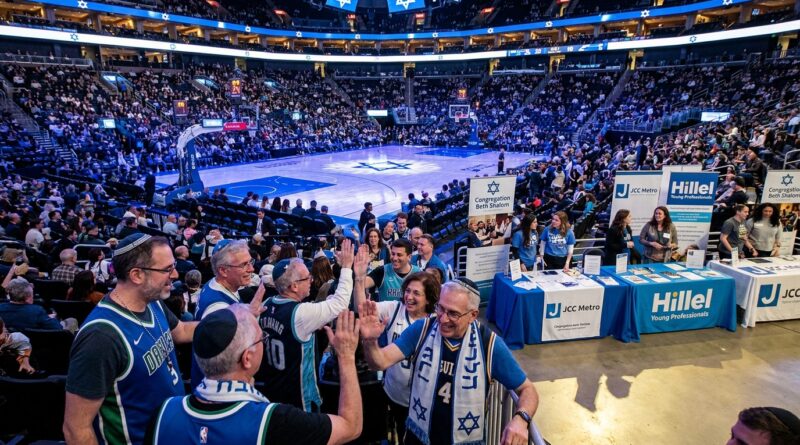
Today’s Jewish Heritage Sports Nights: The Arena Events Quietly Turning ‘Being Jewish Feels Invisible Here’ Into Loud, Visible Pride
It is a strange feeling to love your team, love the noise of the crowd, love the rhythm of a big game, and still feel like your Jewish life is happening somewhere else. A lot of fans know that split. You go to a Jewish heritage night basketball game hoping for something real, maybe a moment of recognition, maybe a sign that being Jewish is not just tolerated but welcome. Then sometimes it ends up feeling thin. A themed T-shirt. A quick menorah graphic. A nice try, but not much heart.
The good news is that these nights can mean more than the marketing splash. Right now, they are some of the most public Jewish gatherings many cities have. If you know what to look for, the real value is often not center court. It is at the community table on the concourse, the pregame meetup, the federation staffer introducing people, or the family beside you that came for the same reason you did. That is where a fun night can turn into actual belonging.
⚡ In a Hurry? Key Takeaways
- Jewish heritage nights work best when you treat them as a doorway to community, not just a themed game promotion.
- Check the ticket page, team socials, local JCCs, federations, and campus or young adult groups to find the meetups and tables that matter.
- If you are worried it will feel performative, go with one small goal, meet one person, join one mailing list, or stop at one community booth.
Why these nights matter more than they used to
For many people, a Jewish heritage night basketball game is not just another themed event. It may be the easiest public Jewish space to enter without feeling like you need background knowledge, a synagogue connection, or the right level of observance.
That matters. Sports are one of the few places where people show up as they are. Families come. College students come. People who have not done anything Jewish in years come. Fans who are deeply involved in Jewish life come too. That mix is powerful.
It also helps solve a real problem. Plenty of Jews feel visible only in private spaces and invisible in public ones. A packed arena changes that. Seeing Hebrew on a scoreboard, a local rabbi doing a welcome, a Jewish youth group filling a section, or Israeli dance music during a timeout is not everything. But it is not nothing either.
What makes a Jewish heritage night feel real, and what makes it feel fake
The thin version
You have probably seen it. A team sells a special ticket package. There is a themed hat or jersey. A quick mention happens at halftime. Then the night moves on. Nobody tells you where the Jewish groups are. Nobody introduces local organizations. There is no sense of story, history, or community.
That kind of event is not evil. It is just shallow. It can leave people with the same lonely feeling they walked in with.
The version that actually helps
The better events do a few simple things well. They create a gathering point before the game. They bring in local Jewish organizations, not just as decoration but as active hosts. They offer group seating so people are not scattered. They make room for different kinds of Jews, from day school families to unaffiliated twenty-somethings to grandparents who just love basketball.
The event starts feeling real when you can answer three questions easily. Who else is here. Where do I find them. What can I do next if I want more connection after tonight.
How to find the best Jewish heritage night basketball game near you
Start with the team, but do not stop there
Most fans begin on the team website, and that is fine. Search the team name plus “Jewish heritage night basketball game” or “Jewish heritage night.” Look for ticket offers, special promo codes, and notes about limited edition items.
But the team site usually only tells half the story. The better clues are often elsewhere.
Check local Jewish organizations
Look at the websites and social feeds for:
- Jewish Community Centers
- Jewish federations
- Hillel and campus groups
- Young adult Jewish networks
- Local synagogues
- Jewish family service groups
These groups often post the details you actually need, like where the meetup starts, which section people are sitting in, whether there is a kosher food option, and whether there is a postgame hangout.
Search during Jewish American Heritage Month, but not only then
May is a big month because of Jewish American Heritage Month. Hanukkah season also brings more themed events. Still, do not assume that is the whole calendar. Some teams run these nights around Israeli culture festivals, local community anniversaries, college alumni tie-ins, or interfaith outreach weeks.
How to get more out of the night than a souvenir
Go in with one small goal
If you expect one event to suddenly solve loneliness, it probably will not. That is too much pressure for a basketball game. Instead, pick one small win.
- Meet one new person
- Talk to one community table
- Join one email list
- Find one future event you might attend
That keeps the night from becoming all-or-nothing.
Arrive early
This is the easiest trick and the most overlooked. The strongest community moments usually happen before tipoff. Once the game starts, everybody focuses on the court. If you show up 30 to 45 minutes early, you are much more likely to find the community booths, rabbis, organizers, youth groups, and casual conversations that make the night feel human.
Ask the simple question
If you stop at a table and say, “This is my first time at one of these. What should I know?” you will usually get a much better answer than if you stand there reading brochures. People running these nights want to help. Let them.
What to watch for if you are worried about safety or tension
For some readers, the hesitation is not just whether the night will feel shallow. It is whether it will feel tense. That concern is real, especially now.
Before you go, check whether the hosting organizations have posted entry details, security guidance, bag rules, or meetup instructions. If you are attending with kids or older relatives, choose a clear meetup point and make sure everyone has tickets and phone batteries handled before arrival.
If public visibility feels emotionally complicated, that does not make you overly cautious. It makes you honest. You can still go, but plan it in a way that lowers stress. Sit with the group block if one exists. Arrive together. Leave together. Keep the night simple.
Why these events reach people synagogue programs often do not
There is a reason these nights keep growing. They reach people who would never sign up for “community engagement” but will absolutely buy a ticket to see their team.
Arena events lower the social stakes. You do not have to know the prayers. You do not have to know anybody. You do not have to explain where you fit religiously. You can just show up as a fan. For many Jews, that is the most comfortable on-ramp there is.
That is why the smaller details matter so much. A Jewish heritage night basketball game is often less about the game itself and more about making connection feel normal, casual, and public.
How teams and organizers can do better
If teams really want these nights to matter, they should think beyond merchandise. The best versions include:
- Clear community partners listed on the event page
- A pregame mixer or photo spot with purpose
- Jewish organizations placed in easy-to-find areas
- Recognition of local Jewish history, not just generic symbols
- Group seating that helps strangers become a crowd
- Follow-up information so the night does not end at the buzzer
That is not complicated. It just takes intention.
If you are going alone, read this part
Going alone can feel awkward, but it can also be easier than dragging a reluctant friend. If the event has a designated organizer, message them ahead of time and ask where solo attendees should meet. Many group sales pages have a contact email. Use it.
You do not need to become best friends with everyone in your row. Just create one soft landing point. One familiar face changes the whole night.
At a Glance: Comparison
| Feature/Aspect | Details | Verdict |
|---|---|---|
| Promo vs community | A giveaway and scoreboard mention are nice, but meetups, group seating, and partner tables create actual connection. | Community beats swag every time. |
| Where to find details | Team websites list tickets, while JCCs, federations, Hillels, and synagogue pages often list the useful extras. | Check both, not just the team page. |
| Best way to attend | Arrive early, find the community booth, and set one simple social goal for the night. | Small plans make the night feel much bigger. |
Conclusion
Jewish heritage nights are not perfect, and some of them absolutely feel more polished than personal. But right now they are also some of the most visible public Jewish events in North America. That gives them real value. If you look past the halftime show and the themed merch, you can often find the part that matters most: the community table tucked into the concourse, the organizer who knows everyone, the family sitting nearby because they wanted the same feeling of recognition you did. A Jewish heritage night basketball game can be more than a one-off ticketed event. It can be a low-pressure first step into actual connection, especially for people who would never walk into a synagogue program cold. Sometimes belonging starts with a seat in the stands, then grows from there.