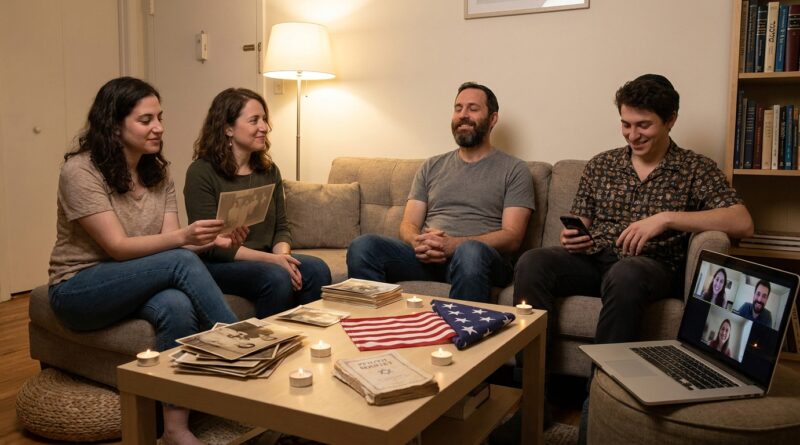
Tonight’s Jewish Heritage Month Memorial Circles: The Small Gatherings Quietly Turning ‘I Only See Jewish Trauma In Headlines’ Into Real Stories, Songs And Names
You see the proclamations. You see the school posts about Jewish American Heritage Month. You might even nod along, maybe light a candle, maybe read one moving thread online. But a lot of people still feel oddly outside of it all. Jewish life shows up as breaking news, public history, or somebody else’s program. Not as something you can quietly step into tonight with people you know. That is why these small memorial circles matter. A few chairs in a living room. A printed list of names. One song people can manage. A prompt about a grandparent, a teacher, a neighbor, or a Jewish memory that still aches a little. Suddenly, “heritage month” stops being a banner and becomes time you can feel in your body. If you have been craving a Jewish American Heritage Month community memorial event that feels real, personal, and not overly produced, the answer may be much smaller than you think.
⚡ In a Hurry? Key Takeaways
- A small home or community memorial circle can turn Jewish American Heritage Month into a lived experience, not just a public slogan.
- Start simple. Gather 5 to 15 people, light a candle, read names, share one story each, and close with a song or blessing.
- You do not need to be a rabbi or expert to host this well. A clear structure and gentle tone are usually enough to make people feel safe and included.
Why these small gatherings are landing right now
There is a very specific kind of tiredness in the Jewish community right now. You care. You want to mark the month. You want to remember people properly. But large public events can feel formal, political, or simply exhausting.
At the same time, Memorial Day weekend already puts people in a reflective mood. Families are home. Schedules loosen a bit. People are thinking about service, loss, memory, and belonging. That makes tonight a natural opening for a Jewish American Heritage Month community memorial event that is intimate instead of institutional.
And intimate is the key word here. Not because big events are bad, but because many people need something they can actually enter. No stage fright. No need to know all the Hebrew. No pressure to perform grief in public.
What a memorial circle actually looks like
If “memorial circle” sounds abstract, think less conference and more hosted evening. It can happen in a living room, backyard, synagogue library, apartment common room, or community center side room.
The basic shape
A good circle is usually 45 to 90 minutes. That is long enough to settle in, but short enough that people do not burn out.
One person hosts. Another can help with timing. You place chairs in a circle if possible. In the center, keep it simple. A candle, a few photos, stones, printed names, maybe a small tablecloth.
Then you move through a gentle order:
- Welcome and purpose
- Lighting a yahrzeit candle or memorial candle
- Reading names of loved ones or community members
- Short story sharing
- One song, poem, psalm, or prayer
- A quiet closing and invitation to connect after
That is it. You are not trying to recreate a full service. You are making room for memory.
Why “names, stories, songs” works so well
People often freeze when they think they need to “teach Jewish heritage.” That sounds huge. But names, stories, and songs are manageable. More than that, they are how memory actually travels.
Names make loss concrete
Headlines flatten Jewish pain into categories. Names bring back scale and humanity. A circle where people say, “I want to remember my Aunt Ruth,” or “my grandfather Chaim,” changes the emotional temperature in the room immediately.
Stories keep heritage from turning into a museum label
When someone says, “He always sang this at the table,” or “She came here with two suitcases and never stopped feeding people,” Jewish life becomes textured again. Not generic. Not only tragic. Real.
Songs help when words run out
You do not need a polished vocalist. In fact, that can make people more self-conscious. One accessible song, niggun, or even a familiar recording can carry a room through the moment where speech no longer does the job.
How to host one tonight without making it complicated
This is where many good ideas die. People think, “I love this, but I do not know enough.” You probably know enough.
Keep the invite short
Text a few people. Be direct. Try something like: “A few of us are gathering tonight for a small Jewish memorial circle for Jewish American Heritage Month. We’ll light a candle, share names and stories, and sing one song. Come as you are.”
Tell people what to bring
Ask for one of the following:
- A name of someone they want remembered
- A short family story
- A photo or object
- A poem, psalm, or song
Giving people a lane helps a lot. It lowers the pressure.
Set the tone at the start
Say out loud that people can pass. Say that not everyone has a neat family narrative. Say that Jewish memory includes joy, migration, rupture, humor, music, military service, neighborhood life, and ordinary love. That permission matters.
Do not overprogram
The biggest mistake is trying to cram in too much history, too many readings, or a full educational agenda. Leave pauses. Let people breathe.
For people who feel disconnected from “organized Jewish life”
This format is especially helpful if you are not a regular synagogue-goer, or if your Jewish identity has felt thin, interrupted, or mostly reactive lately.
You do not need to arrive with perfect knowledge. You do not need the “right” accent, upbringing, politics, or level of observance. A circle works because it starts from lived experience. Who are your people. What do you carry. What do you want named.
That is also why this can gently bring in people who usually stay on the edge. Adult children who never attend events. Interfaith relatives. Neighbors who care but do not know where they fit. Give them a clear role and a soft landing.
How this fits into Jewish American Heritage Month
Jewish American Heritage Month often gets treated like a public history unit. Important, yes. But a bit distant. Proclamations, exhibits, school posts, civic recognition. All good things. Still, many Jews do not feel personally changed by them.
A memorial circle adds the missing layer. It says heritage is not only what towns recognize. It is what communities remember together.
If your group wants a daytime or weekend follow-up, a good companion idea is Jewish American Heritage Month Is Coming: The Simple ‘Local Heritage Walk’ Any Community Can Launch This Week. A heritage walk helps people map Jewish presence in public space. A memorial circle helps them feel Jewish time in a more personal way. The two formats actually pair beautifully.
A simple sample outline you can copy
Opening, 10 minutes
Welcome everyone. Explain that the goal is to honor memory during Jewish American Heritage Month in a way that is personal and communal.
Candle lighting, 5 minutes
Light one candle for shared loss, or invite a few people to light candles for family members or communities.
Reading of names, 10 to 15 minutes
Pass around a sheet, or invite people to say names aloud one by one. Keep a slow pace.
Story circle, 20 to 30 minutes
Prompt: “Tell us about one person, one object, one song, or one memory you do not want lost.” Let people pass if they want.
Song or reading, 5 to 10 minutes
Choose something singable or listenable. Do not worry about perfection.
Closing, 5 minutes
End with gratitude, a brief blessing, Psalm excerpt, or simply: “May their memories be for a blessing, and may we carry them together.”
What makes people feel safe in the room
A good host is not the smartest person in the room. A good host is the one who makes the room easier to enter.
Three small things that help a lot
- Say at the beginning that sharing is optional.
- Keep the group small enough that nobody has to fight for space.
- Have tissues, water, and a calm ending so people are not dropped back into the night too abruptly.
If the group includes people carrying fresh grief or trauma, avoid surprises. Tell them the format in advance. Keep lighting and sound comfortable. Let people step out easily.
At a Glance: Comparison
| Feature/Aspect | Details | Verdict |
|---|---|---|
| Ease of hosting | Needs only a host, a small space, a candle, and a loose outline. No major budget or formal institution required. | Excellent for first-time organizers |
| Emotional impact | Reading names and sharing family stories creates a stronger personal connection than a generic heritage post or proclamation. | High value, especially for disconnected participants |
| Accessibility | Works for mixed backgrounds and different levels of Jewish knowledge. People can contribute with a memory, object, or song. | Strong choice for inclusive community building |
Conclusion
Right now, Jewish American Heritage Month proclamations are going out in towns and school districts across the country, and many communities are layering them onto Memorial Day remembrance. Yet a lot of Jews still feel like spectators to both civic ritual and Jewish grief. That is what makes the small memorial circle so useful. It gives people a way to mark loss without waiting for a big synagogue program or a polished public event. It lets non-experts step into leadership with something that feels modern, rooted, and deeply human. If the news has left you worn down, this kind of gathering can help reclaim Jewish memory as communal and nourishing, not only traumatic. And because people are already home tonight, already reflective, already looking for some sign that this month meant something, a small circle of names, stories, and songs may be exactly the right size.