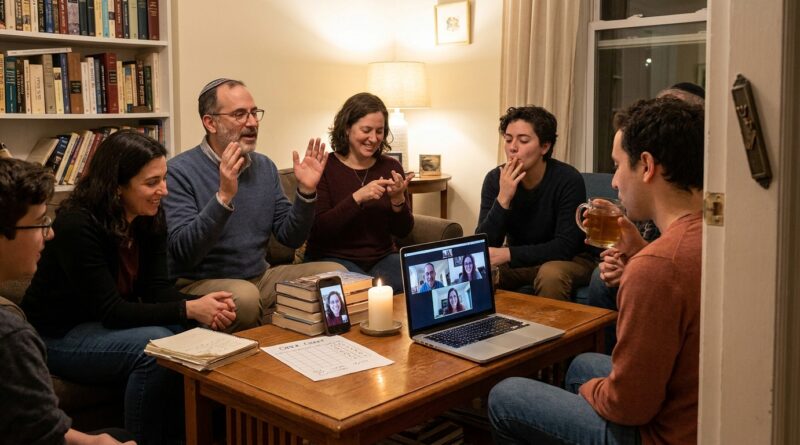
Tonight’s Omer Count Meetups: The Tiny Daily Ritual Quietly Holding Scattered Jewish Communities Together
You know you are supposed to be counting the Omer. Then real life happens. Work runs late. The group chat is chaotic. The news is heavy. By the time night rolls around, the count feels like one more Jewish thing you forgot to do correctly. That is exactly why small Omer meetups are quietly helping people right now. Not because they are flashy or deeply planned, but because they are tiny, repeatable, and human. A few people show up. Someone says the day’s count. Maybe there is tea, a folding chair, a park bench, or a quick FaceTime. That is enough. For people who feel spiritually flat between Passover and Shavuot, and emotionally worn down by fear, grief, or isolation, this little nightly ritual can become an anchor. If you have been wondering how to start a simple omer counting group, the good news is that it can be almost absurdly easy, and that is part of why it works.
⚡ In a Hurry? Key Takeaways
- A simple Omer counting group can be as small as 2 to 5 people meeting for 5 to 15 minutes after dark to say the count together.
- Start with one text, one time, and one format. Porch, park, dorm lounge, WhatsApp audio, or Zoom all work.
- Low pressure is the whole point. No hosting skills, deep liturgy knowledge, or big budget required.
Why this tiny ritual matters more than it looks like
The middle stretch of the Omer can feel oddly empty. Passover had momentum. Shavuot still feels far away. A lot of people drift in this period, even people who care about Jewish practice.
That drift feels sharper when the wider climate is tense. Rising antisemitism, family stress, campus pressure, scary headlines, and social media arguments all make Jewish life feel louder and lonelier at the same time.
A nightly Omer meetup does something deceptively simple. It puts one small piece of Jewish time back on the calendar. Not a huge event. Not a committee. Just a known moment when a few people pause and count together.
That predictability can calm the nervous system. It can also rebuild a sense of belonging. You do not need to solve everything. You just need one real touchpoint tonight, and then again tomorrow.
How to start a simple omer counting group
If you are overthinking this, that is normal. Most people assume Jewish gatherings need food, furniture, confidence, and a lot of Hebrew. They do not.
Here is the easiest version.
Step 1: Pick the smallest possible format
Choose one:
- Meet outside someone’s building for 10 minutes
- Sit on a park bench after dark
- Gather in a dorm lounge or apartment lobby
- Do a nightly WhatsApp voice note count
- Open a 7-minute Zoom room
If it feels almost too small, you are probably doing it right.
Step 2: Send one simple invitation
Do not write a manifesto. Try this:
“A few of us are going to count the Omer together tonight at 8:45. Super low key, 10 minutes, no experience needed. Want to come?”
That wording matters. “Low key” helps. “No experience needed” helps even more.
Step 3: Keep the structure the same every night
Consistency beats creativity here. People are more likely to join if they know what to expect.
A good basic flow:
- Quick hello
- Say what day of the Omer it is
- Recite the blessing if appropriate
- Say the count
- Optional one-minute check-in: “How is everyone doing?”
- Done
That can take less than 10 minutes.
You do not need to be “good at Jewish stuff” to host
This is one of the best parts. Omer meetups are forgiving.
You do not need a perfect voice. You do not need a beautiful table. You do not need to know every custom. You just need to know tonight’s number and invite one or two people.
If you want a fuller refresher on what the practice is and why this season can feel surprisingly powerful, Counting the Omer 2026: The 49-Day Practice Quietly Turning Passover Into A Real Life Reset gives helpful background without making it feel intimidating.
What makes these meetups work
Not every Jewish gathering feels emotionally safe right now. Some spaces are too political. Some are too formal. Some feel like you have to already belong before you arrive.
Omer groups can work because they are small enough to stay human.
They are low stakes
Nobody has to clean the whole apartment. Nobody needs to cook. Nobody has to sing in tune. It is closer to a shared pause than an event.
They are flexible
Students can meet outside the library. Young professionals can do it after work. Small town Jews can connect by video. Interfaith families can make it gentle and welcoming without anyone feeling tested.
They absorb anxiety well
When people are stressed, big plans often fail. Tiny rituals hold up better. They ask less and give more.
Three easy formats you can copy tonight
1. The sidewalk count
Best for neighbors, city friends, or apartment dwellers.
Meet outside one building at the same time every evening. Count. Chat for five minutes. Head home.
2. The rotating couch count
Best for a trusted small circle.
Each night a different person hosts for 15 minutes. Tea is optional. Snacks are optional. The count is the only required part.
3. The voice note chain
Best for busy schedules or long distances.
One person records the blessing and count. Others reply with “counted” or share a short reflection. It still creates rhythm, even if nobody is in the same room.
Common worries, answered
“What if I miss a night?”
Then you miss a night. Start again the next one. Perfection is not the goal. Continuity is.
“What if only two people come?”
Then you have a group. Two people who show up repeatedly can create a real sense of care.
“What if people want more depth?”
Add one optional line after the count. You can ask, “What are you carrying today?” or “What are you hoping for this week?” Keep it short and do not force it.
“What if people have different levels of observance?”
That is fine. Keep the tone respectful and clear. Tell people what to expect. A simple, welcoming format usually handles mixed backgrounds better than a formal service does.
How to keep it from turning into one more stressful obligation
This part is important. The whole value of an Omer group is that it should feel grounding, not draining.
- Do not overschedule extras
- Do not pressure people to share deeply
- Do not turn it into a debate space
- Do not keep changing times and formats
- Do not confuse “simple” with “not meaningful”
A good Omer meetup leaves people a little steadier than they were before.
Who benefits most from this right now
Almost anyone can. But these groups are especially helpful for:
- Students who want a Jewish touchpoint outside formal campus politics
- Young professionals who are too tired for big programming
- Small town Jews with limited local infrastructure
- Interfaith families looking for an easy shared ritual
- People who feel disconnected from synagogue life but still want practice
It is a small container. That is what makes it usable.
At a Glance: Comparison
| Feature/Aspect | Details | Verdict |
|---|---|---|
| Time commitment | Usually 5 to 15 minutes after dark, with optional short check-in | Easy to sustain |
| Setup required | A text invite, tonight’s count, and a consistent meeting spot or link | Very beginner-friendly |
| Community value | Creates regular contact, shared rhythm, and a small sense of being held together | High payoff for almost no cost |
Conclusion
Right now, a lot of people do not need a bigger production. They need one small, dependable Jewish practice that fits inside real life. That is what a nightly Omer meetup can be. In this stretch between Passover and Shavuot, when many people feel spiritually flat and communally unmoored, especially with scary news and rising antisemitism in the background, turning the nightly count into a tiny gathering can restore a sense of continuity, mutual care, and rootedness. It is not tied to big institutions or big budgets. It works for students, young professionals, small town Jews, and interfaith families because it is low stakes and emotionally safe. You do not need to fix the whole moment. You can just count tonight, with other people, and remember that you are not alone.