Tonight’s Yom HaZikaron Ceremonies: How Israelis Are Quietly Rewriting Memorial Day For a Fractured World
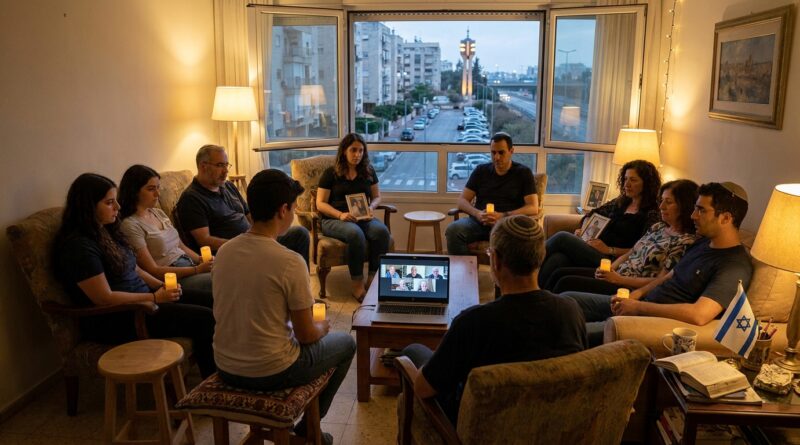
Tonight can feel oddly lonely. You want to stand with Israelis on Yom HaZikaron, but the big official ceremonies may feel too polished, too political, or simply too far from the people you are actually grieving with. That tension is real, especially this year. Many Jews in the Diaspora are carrying fresh loss, strained conversations with friends and family in Israel, and a deep tiredness with events that talk about unity without creating any. The quiet shift happening tonight is simple and human. Instead of only watching a stage, people are gathering in living rooms, JCC side rooms, synagogue classrooms, and WhatsApp video calls to hold a small memorial circle. One story. One photo. One small ritual action. If you are wondering how to mark Yom HaZikaron in the Diaspora in a way that feels honest, this may be the format that finally fits.
⚡ In a Hurry? Key Takeaways
- You do not need a large formal ceremony to mark Yom HaZikaron meaningfully in the Diaspora. A small memorial circle can be more honest and connecting.
- Use a simple format tonight: choose one person or story, share one photo, and end with one small ritual action like lighting a candle or giving tzedakah.
- Keep the gathering gentle and optional. The goal is shared memory and presence, not debate, performance, or perfect agreement.
Why smaller ceremonies are resonating this year
Yom HaZikaron has always asked a lot of people. It asks for memory, attention, and emotional honesty. This year, it asks for all that in a community that feels bruised.
For many Jews outside Israel, the old model is not working as well on its own. You stream the national ceremony. You hear powerful songs and speeches. You feel moved for a moment. Then the screen goes dark, and you are back in your kitchen, still holding grief that has no place to land.
That is why smaller, hybrid memorial circles are starting to matter. They do not replace the official ceremonies. They give people a second layer. A human layer.
If you want a broader look at how this is taking shape, Yom HaZikaron 2026: How Tonight’s Memorial Ceremonies Are Quietly Re‑Stitching a Frayed Global Jewish Community captures that larger mood well. The key shift is not flashy. People are moving from audience mode to relationship mode.
How to mark Yom HaZikaron in the Diaspora tonight
If you are looking for something practical, keep it small. Think less like event planning and more like setting a table.
Step 1: Choose one story
Pick one person to center. That could be a fallen soldier, a victim of terror, a hostage killed, a family friend, or someone connected to your community. If you do not know someone personally, ask an Israeli friend if there is a story they want remembered tonight.
One story is enough. In fact, one story is often better. It keeps the gathering from becoming abstract.
Step 2: Bring one photo
A photo changes the room. It reminds everyone that this is not a concept or a headline. It is a life.
If you are meeting in person, print it or place it on a phone next to a candle. If people are joining online, text the image ahead of time so everyone can look at the same face at the same moment.
Step 3: Add one small ritual action
You do not need to invent a whole service. Choose one act people can do together.
- Light a candle and sit in one minute of silence.
- Read Psalm 23, Psalm 121, El Malei Rachamim, or a short poem.
- Say the person’s name out loud.
- Give a small amount of tzedakah in their memory.
- Write one sentence about what you want to carry forward from their life.
The point is not to impress anyone. The point is to anchor grief in action.
A simple format you can copy tonight
Here is a 20 to 30 minute outline that works well for a living room, synagogue side room, or Zoom room.
Opening, 2 minutes
Welcome people. Say plainly why you are here: to mark Yom HaZikaron, to remember someone specific, and to do it in a way that feels personal and real.
Photo and name, 3 minutes
Show the photo. Say the person’s full name. If relevant, say where they lived, who loved them, and one fact that makes them feel human.
One story, 5 to 7 minutes
Ask one person to tell one story. Not a biography. Just one memory, one anecdote, one detail. Maybe they always made coffee for everyone else first. Maybe they loved bad jokes. Maybe they texted every Friday before Shabbat.
Silence or prayer, 2 minutes
Hold a minute of silence or read a short prayer. Let it be simple.
Round of reflection, 10 minutes
If the group is small, invite each person to answer one question: What stays with you from this person’s life? If the group is bigger, ask three or four people in advance to share so nobody feels put on the spot.
Closing action, 3 minutes
Light the candle, make a donation, sing a quiet song, or share one commitment. Then end. Do not overfill it. Leaving a little silence at the end is okay.
What makes these gatherings work
The best ones are not the most polished. They are the most grounded.
Keep the guest list intentional
Five people can be enough. Ten is plenty. A small group often creates more room for honesty than a packed hall.
Let people join remotely without apology
This is one of the most useful changes. A cousin in Tel Aviv can join for ten minutes. A friend in London can read a poem. A grandparent who cannot travel can still be part of the circle.
Hybrid does not make the gathering less real. For many Jewish families now, hybrid is the only way shared mourning can happen at all.
Make room for mixed feelings
Some people come feeling fiercely connected to Israel. Others come feeling hurt, distant, angry, or confused. A good memorial circle does not force everyone into the same emotional script.
You can say this out loud at the start: “People are arriving tonight with different feelings. We do not have to solve that. We are here to remember and to be present.”
What to avoid
A few small choices can protect the tone of the night.
Do not turn it into a panel discussion
This is the big one. The minute the gathering becomes a debate about politics, messaging, or communal blame, grief leaves the room.
Do not overload it with too many names and themes
Trying to include everyone can make nobody fully visible. Start with one person, one family, or one community. Narrow can be more caring.
Do not pressure people to speak
Some people will cry. Some will sit quietly. Some will keep their camera off. Let that be enough.
Why this matters beyond tonight
These small circles are doing more than filling a gap. They are teaching a different kind of Jewish communal life.
They show that memory does not have to be massive to be shared. They remind Diaspora Jews that showing up for Israel is not only about slogans or attendance numbers. Sometimes it is about calling one Israeli friend and asking, “Whose name are you carrying tonight?”
They also give Israelis something many of them are craving from abroad. Not just support in theory, but companionship in grief.
At a Glance: Comparison
| Feature/Aspect | Details | Verdict |
|---|---|---|
| Large public ceremony | Powerful atmosphere, national scale, often moving but can feel distant or overly scripted for some Diaspora viewers | Good for shared national context, but not always enough on its own |
| Small memorial circle | One story, one photo, one ritual action, with room for real conversation and silence | Best option for a personal and honest way to mark the day tonight |
| Hybrid gathering | Combines in-person warmth with online participation from Israeli friends or faraway family members | Especially useful for fractured families and global communities that still want to mourn together |
Conclusion
If you have been unsure how to mark Yom HaZikaron in the Diaspora, the answer may be smaller than you thought. Not another abstract unity program. Not a perfect communal statement. Just a few people, one remembered life, and one act that gives grief somewhere to go. That is why these quiet memorial circles matter tonight. Yom HaZikaron, beginning this evening on 4 Iyar, is sitting on top of fresh loss, frayed relationships between Israelis and the Diaspora, and a real exhaustion with public language that does not lead to real connection. A living room, a JCC side room, or a WhatsApp call cannot fix all of that. But it can create something solid and human. Choose one story, one photo, and one small ritual action. Start there. For many people this year, that is not a lesser way to remember. It may be the most honest one.